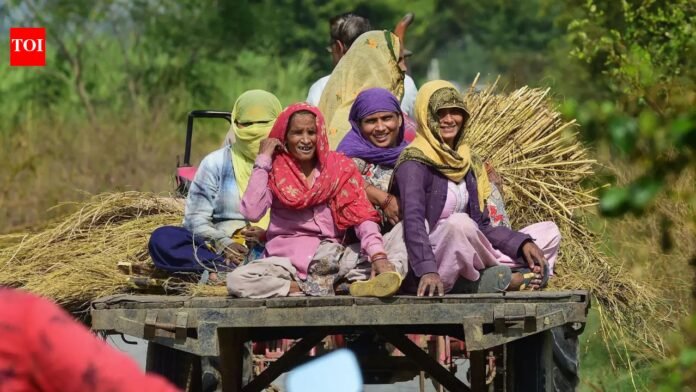
India’s ongoing push for women’s financial empowerment ahead of International Women’s Day has drawn attention to the changing role of women in the country’s economy. From gaining skills training and providing practical support for running small businesses to operating agricultural drones, women are increasingly taking on new financial roles and becoming active participants in India’s development story. Supported by a series of government initiatives over the past decade, an increasing number of women in rural and urban India have gained access to savings, credit, skills and markets, helping them build independent livelihoods and support their families. From savings schemes for girls to credit support, self-help groups (SHGs), entrepreneurship programs and technology-driven livelihoods, policy efforts are focused on bringing more women into the economic mainstream and ensuring inclusive growth that leaves no woman behind.One of the key initiatives to support girls’ economic security is the Sukanya Samriddhi Yojana (SSY), which was launched in 2015 under the Beti Bachao, Beti Padhao movement. The savings plan allows families to invest in a girl child’s education and future, offering an interest rate of 8.2% per annum as well as tax benefits. As of December 2025, deposits under the scheme had exceeded Rs 333 crore, according to government data. In rural areas, the Deendayal Antyodaya Yojana National Rural Livelihoods Mission (DAY-NRLM) has brought together more than 100 million women into self-help groups (SHGs) to provide credit, skill training and livelihood opportunities. The network has become one of the largest female-led community platforms in the world, with a repayment rate of over 98%. Technology is also introduced to expand revenue opportunities. Under the NaMo Drone Didi initiative, women from SHGs are being trained to operate agricultural drones for spraying fertilizers and pesticides, enabling them to earn income through drone rental services while promoting precision farming. Entrepreneurial initiatives are also gaining ground. Projects such as the Lakhpati Didi Movement aim to help women members of SHGs achieve an annual household income of over Rs 1 lakh through sustainable enterprises. Meanwhile, the Government e-Marketplace’s Womaniya initiative enables women-led businesses to offer goods and services directly to government buyers. Complementing these efforts are financial inclusion schemes such as Pradhan Mantri Jan Dhan Yojana, Pradhan Mantri Mudra Yojana and Stand-Up India, which provide banking services and collateral-free loans to women entrepreneurs.
From SHGs to drone technology: Inside India’s ongoing push for women’s economic empowerment

WEB DESK TEAMhttps://articles.thelocalreport.in
Our team of more than 15 experienced writers brings diverse perspectives, deep research, and on-the-ground insights to deliver accurate, timely, and engaging stories. From breaking news to in-depth analysis, they are committed to credibility, clarity, and responsible journalism across every category we cover.
Related articles
Recent articles