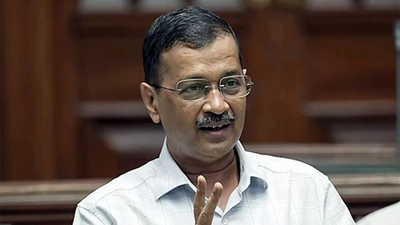

History doesn’t always stop in textbooks. Sometimes it is framed on the wall. A portrait of the ruler of Mysore in the 18th century at Malegaon Tipu SultanIts brief placement in the office of the newly elected deputy mayor sparked a political controversy that had repercussions far beyond the confines of the Municipal Corporation Building where it began. Within 48 hours, the image was removed by the civil administration department, and the matter escalated into a war of words between the chief ministers of Maharashtra Devendra Fadnavis and explain congress Chief Harshwardhan Sapkal said eight people were injured in Pune due to stone-pelting as protests broke out in several cities.In the center of the row is not only Tipu Sultan’s portrait, but also Sapkar’s statement comparing him to Chhatrapati Shivaji Maharaj as belonging to “the same brave alliance”. The chief minister called the comparison “unacceptable” and said Congress politicians should be “ashamed”. What follows is a familiar pattern in Indian public life, where history, memory, symbolism and contemporary political positioning intersect.
How the dispute unfolds
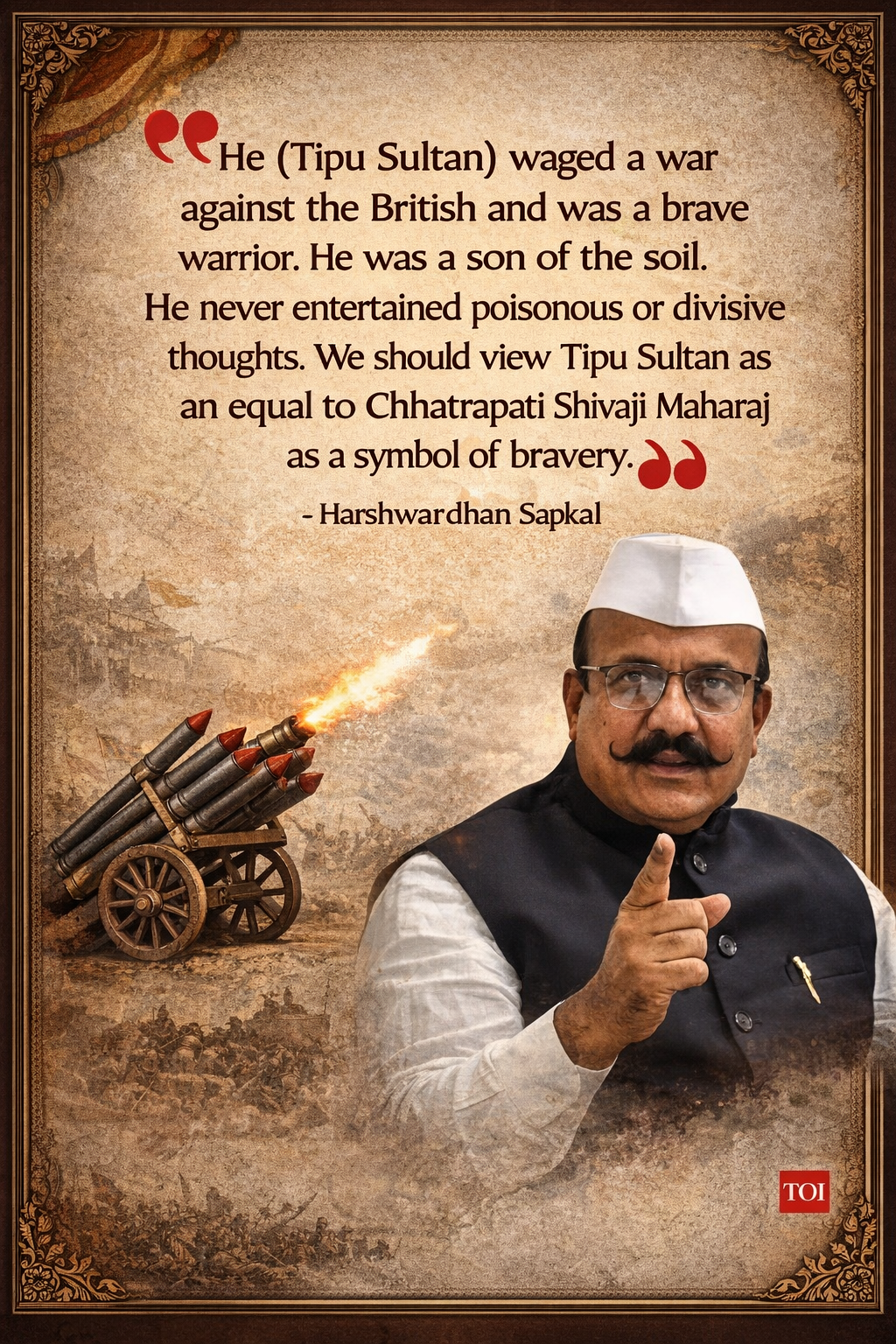
The controversy started with shiva sena Malegaon corporators have objected to the display of Tipu Sultan’s portrait in the office of Deputy Mayor Shaan-e-Hind Nihal Ahmed. A delegation met Malegaon mayor Ravindra Jadhav demanding his removal, warning that riots would ensue if the government failed to act. The Malegaon Municipal Corporation removed the portrait from its office on Saturday.Jadhav confirmed that the government checked the state government’s official protocol list, which lists leaders whose anniversaries are being celebrated and whose portraits are allowed to be displayed in government offices, before taking action. “Tipu Sultan’s name did not appear in the list. Therefore, the portrait was removed from the deputy mayor’s office,” MMC officials said.However, Ahmed defended the historical relevance of the figure. “Tipu Sultan fought against the British and was recognized for his bravery at the time. There are roads named after him in Mumbai and Nagpur. This is an attempt to divert attention from our work. Some people cannot understand that two Muslim women are the mayor and deputy mayor of Malegaon,” she told reporters.When asked about the controversy, Sapkar said while speaking in Buldana on Saturday, “He (Tipu Sultan) waged war against the British and was a brave warrior. He was a son of the soil. He never harbored poisonous or divisive ideas. We should consider Tipu Sultan as a symbol of bravery equal to Chhatrapati Shivaji Maharaj,” he said.
Sakpal’s remarks spark uproar
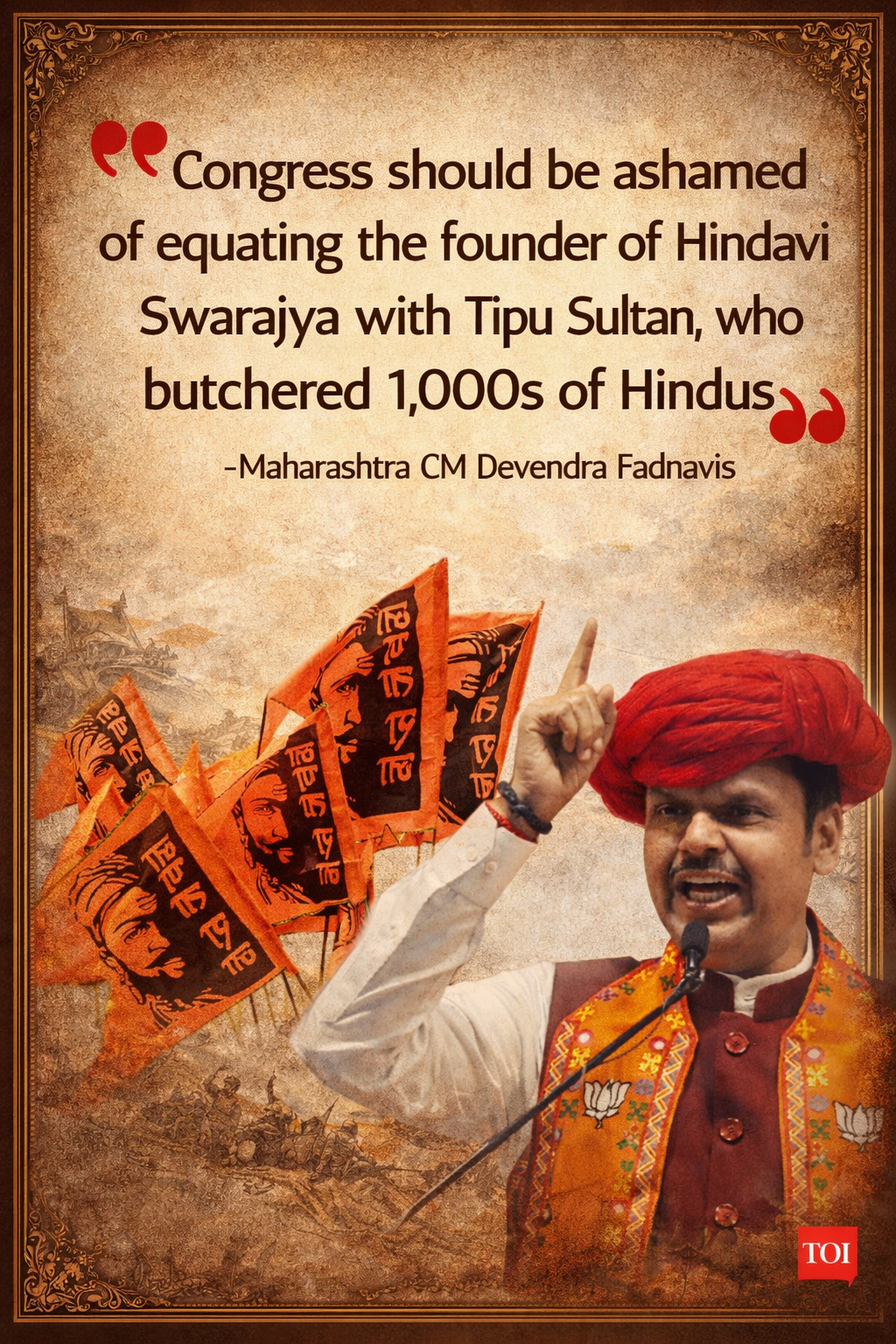
CM Fadnavis termed the comparison unacceptable. He said the Congress “should be ashamed of equating the founder of Swaraj India with Tipu Sultan who massacred thousands of Hindus”.The incident has reopened an age-old historical debate that regularly finds its way into political discussions, as the two figures occupy important but distinct spaces in Indian history.
CM Fadnavis strikes back
Shivaji = Tipu, or Shivaji > Tipu?
Chhatrapati Shivaji Maharaj, born in 1630, is widely regarded as the founder of the Maratha state and the architect of the Hindavi self-government. His military campaigns against the Mughal Empire and regional sultanates set the stage for a political landscape that would eventually develop into one of the most powerful empires in early modern India. Shivaji’s legacy in Maharashtra goes beyond historical admiration. He represents resistance, autonomy, regional pride and a warrior spirit deeply embedded in the socio-political consciousness of the country.
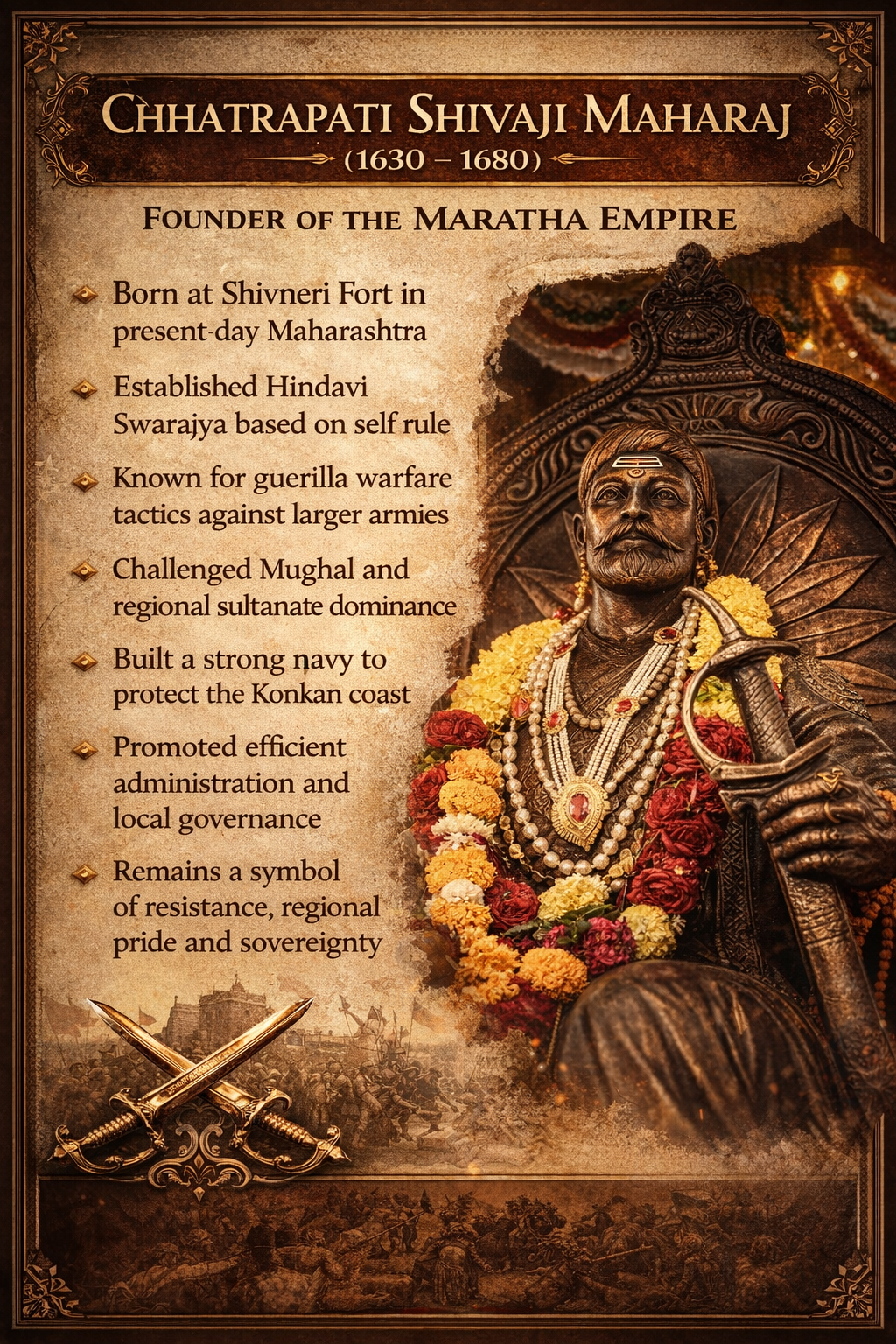
Chhatrapati Shivaji Maharaj
Tipu Sultan was born in 1751 and ruled the Kingdom of Mysore during a period of intense conflict between the Indian polity and the expanding British East India Company. Along with his father Hyder Ali, he waged many wars against the British army and is credited in many accounts as one of the first rulers to adopt modern military technology such as iron-clad rockets. Tipu Sultan was killed fighting the British during the siege of Srirangapatna in 1799.For many historians, Tipu Sultan’s significance lies in his continued resistance to colonial expansion. For others, especially in states like Karnataka and Kerala, he remains a controversial figure due to forced conversions, desecration of temples and harsh campaigns against certain communities.
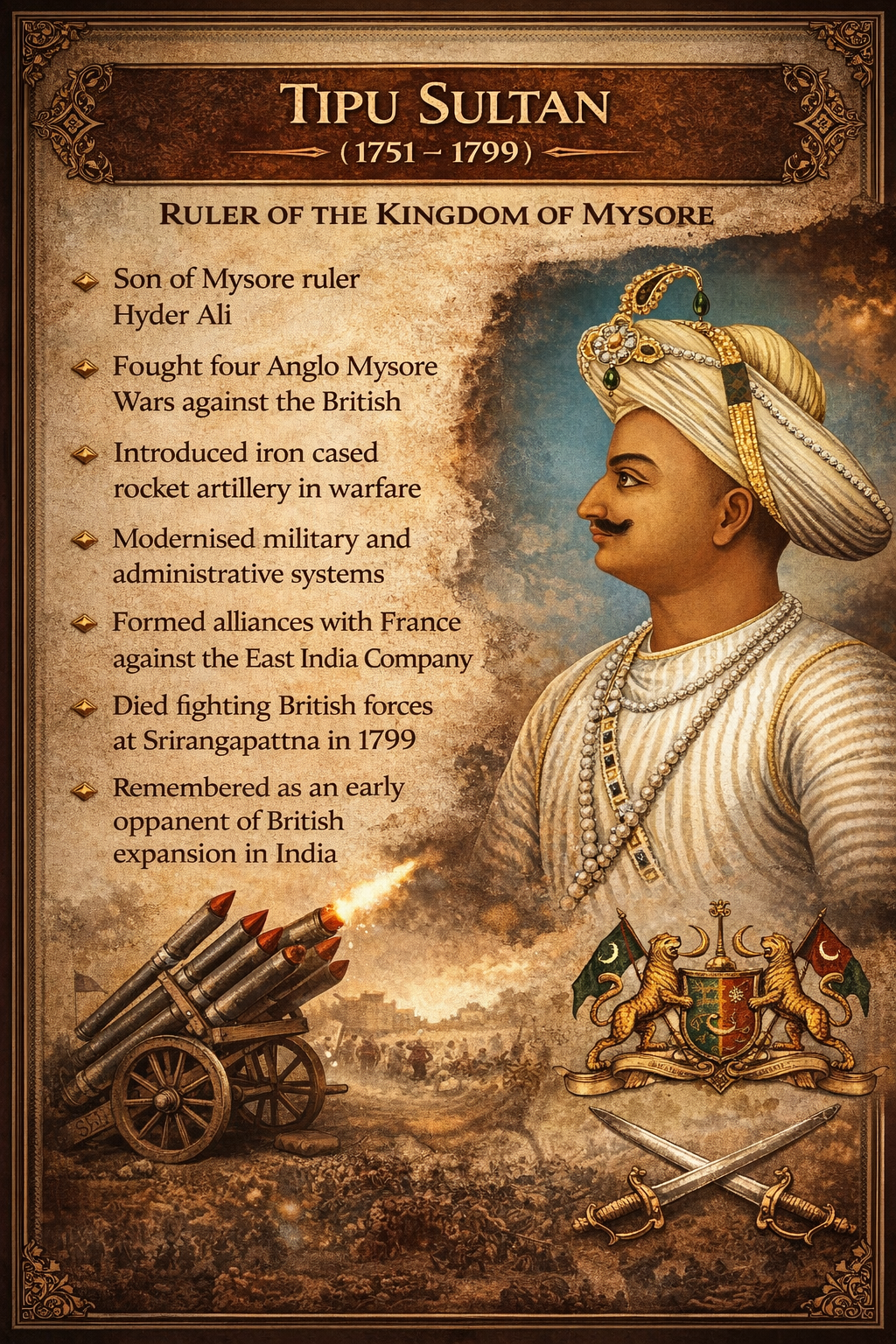
Tipu Sultan
Debate about his reign has raged for decades and is often shaped by political context and archival evidence. These different interpretations give Tipu Sultan a complicated afterlife in contemporary politics.
Why is it controversial?
In Maharashtra, Shivaji Maharaj occupies an almost sacred status in the ideological sphere, especially in the political vocabulary of the Bharatiya Janata Party (bjp) and Shiva Sena. Maratha rulers are often seen as symbols of indigenous sovereignty, military pride and cultural assertion. References to Indian Swaraj resonate strongly with narratives centered on civilizational identity and self-determination.Therefore, any attempt to compare Shivaji Maharaj with another historical figure, especially one whose legacy is contested, is politically sensitive.
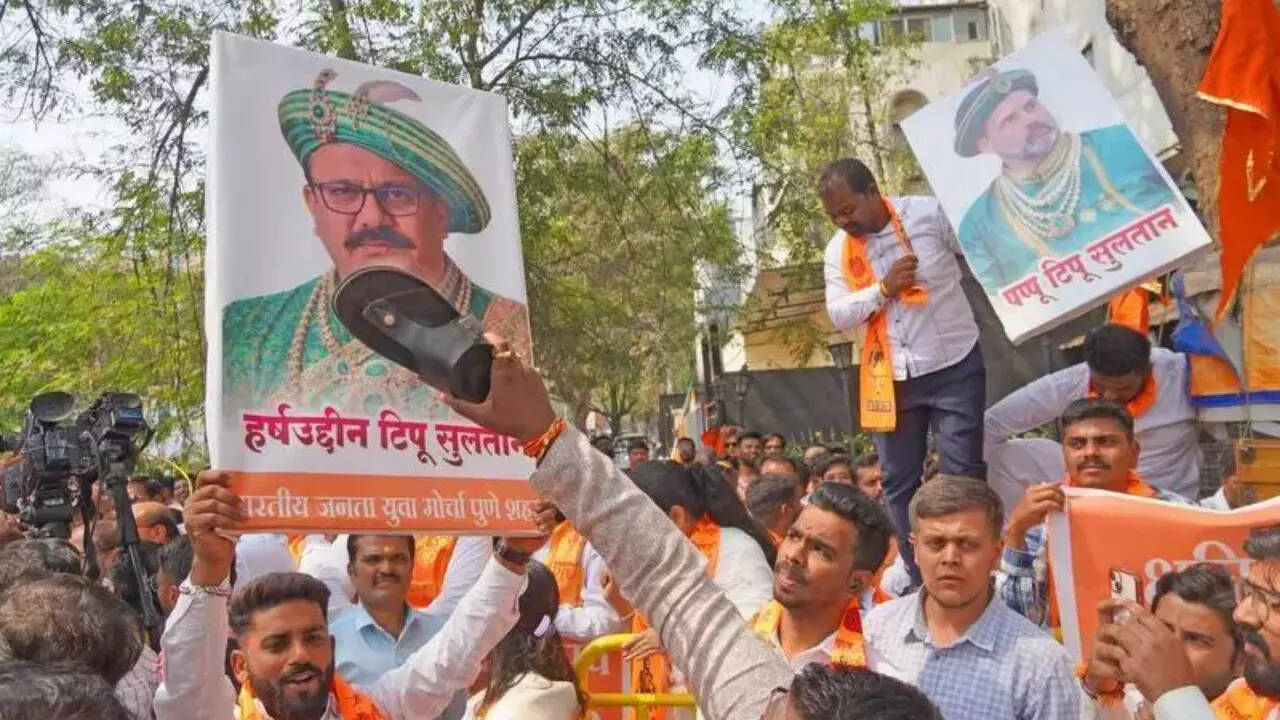
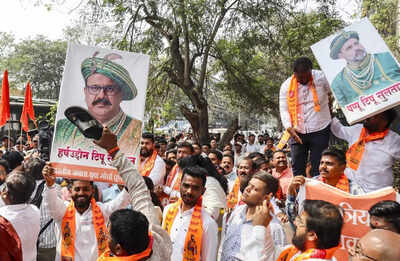
Bharatiya Janata Party activists protested outside the Parliament House in Pune against Maharashtra Congress president Harshwardhan Sapkar’s remarks equating Chhatrapati Shivaji Maharaj with Tipu Sultan.
BJP leaders believe comparisons dilute Shivaji Maharaj’s unique historical role. BJP Pune city president Dheeraj Ghate said: “Sapkar’s remarks have deeply hurt the sentiments of all those who worship Lord Chhatrapati Shivaji Maharaj. This is intentional to create a rift in society. “For the Congress Party, Tipu Sultan sometimes represented anti-colonial resistance and inclusive historical nationalism. In the southern states, especially Karnataka, the Congress government celebrated Tipu Jayanti, describing him as a freedom fighter who resisted British rule. Political opponents, particularly from the BJP and alliance groups, have long argued that such commemorations reflect an attempt at minority outreach to highlight Tipu’s anti-British legacy, which they see as part of a broader effort to counter the rise of a Hindu-centric historical narrative.This difference in emphasis reflects deeper ideological differences in how the past is used in today’s politics. While the BJP’s political messaging often emphasizes civilizational continuity and indigenous cultural pride consistent with Hindutva ideas, the Congress party tends to promote pluralistic interpretations of history, which critics often describe as politically lax or appeasement-driven.It is therefore important to invoke the political implications of any number. Shivaji Maharaj is a unifying icon for Maharashtra and a powerful symbol in the wider discussion of identity, sovereignty and cultural renaissance in relation to Hindutva politics. Tipu Sultan, by contrast, has often been the focus of debate, with critics interpreting his commemoration through the lens of Muslim appeasement versus majoritarian claims to historical identity.
From portrait to protest
The controversy over Malegaon quickly grew beyond the initial administrative decision. Supporters of the BJP and right-wing organizations staged protests in Nagpur, Nashik, Ahilya Nagar, Sangli, Solapur, Chhatrapati Sambhaji Nagar, Nanded, Latur and other places. In Pune, members of the Patit Pawan Sanghatana were the first to gather in front of the Congress Bhawan on Sunday morning to condemn Sapkal’s remarks.Around 12:30 pm, BJP workers, including Mayor Manjusha Nagpure, reached the spot and started shouting slogans and displaying posters. At that time, around 100 Congress workers reached the spot and started raising counter-slogans.“While both sides were shouting slogans, a stone was hurled. This triggered stone-pelting from members of both sides,” additional superintendent of police Manoj Patil said. “Two women police officers, two journalists and two workers from the BJP and Congress were injured. “The injuries are not serious,” he said.
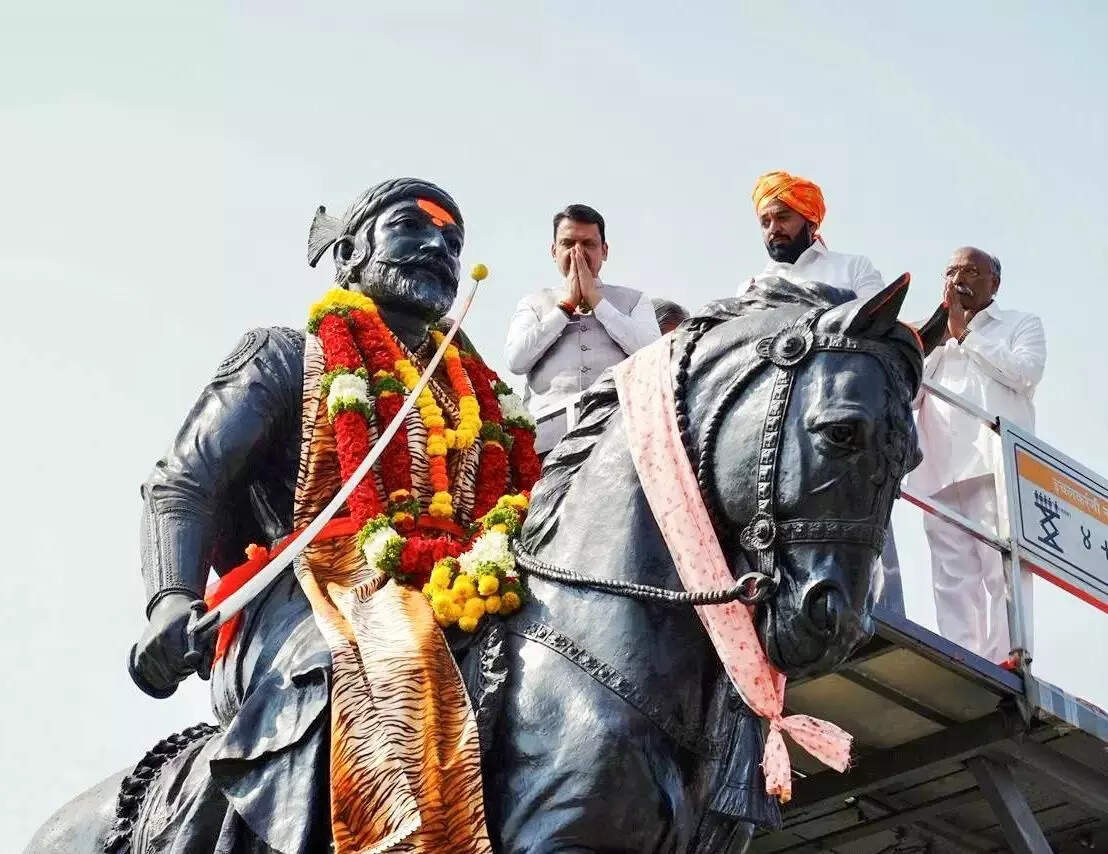
Maharashtra Chief Minister Devendra Fadnavis paid tribute to the greatest king Chhatrapati Shivaji Maharaj at the Shivtirtha of Ichalkaranji in Kolhapur.
The debate widened as political leaders became involved. AIMIM president Asaduddin Owaisi defended Tipu Sultan, saying “Tipu Sultan was killed fighting the British in 1799,” adding, “He did not go to jail or write love letters to the British.”Meanwhile, Telangana BJP chief N Ramchander Rao said AIMIM was “distorting history” by glorifying Tipu Sultan.Amid growing criticism, Sapkar later clarified his remarks. “My statement was misinterpreted by the BJP for political gain. I said there could not be a person like Shivaji Maharaj, from whom Tipu Sultan took inspiration.” He later expressed regret and said: “I did not say anything wrong about Chhatrapati Shivaji Maharaj. There is no question of comparison; I have not done it. “He described Shivaji Maharaj as “my ideal, my inspiration and my pride” and appealed for calm. “I sincerely regret if any Shia’s feelings were hurt by my inappropriate remarks. It was never my intention to hurt anyone’s feelings. Let’s put this matter aside.”However, the incident illustrates how historical figures continue to function as political symbols in contemporary India. Portraits in public offices are rarely neutral. They express not only admiration but also belonging, narrative, and sometimes ideological positioning.The controversy shows no immediate sign of abating as demonstrations spread and leaders blame each other over historical interpretations. The initial act of placing the portrait is a reminder that the past remains an active player in the present in Indian politics. The images on the walls often speak as loudly as the speeches beneath them.