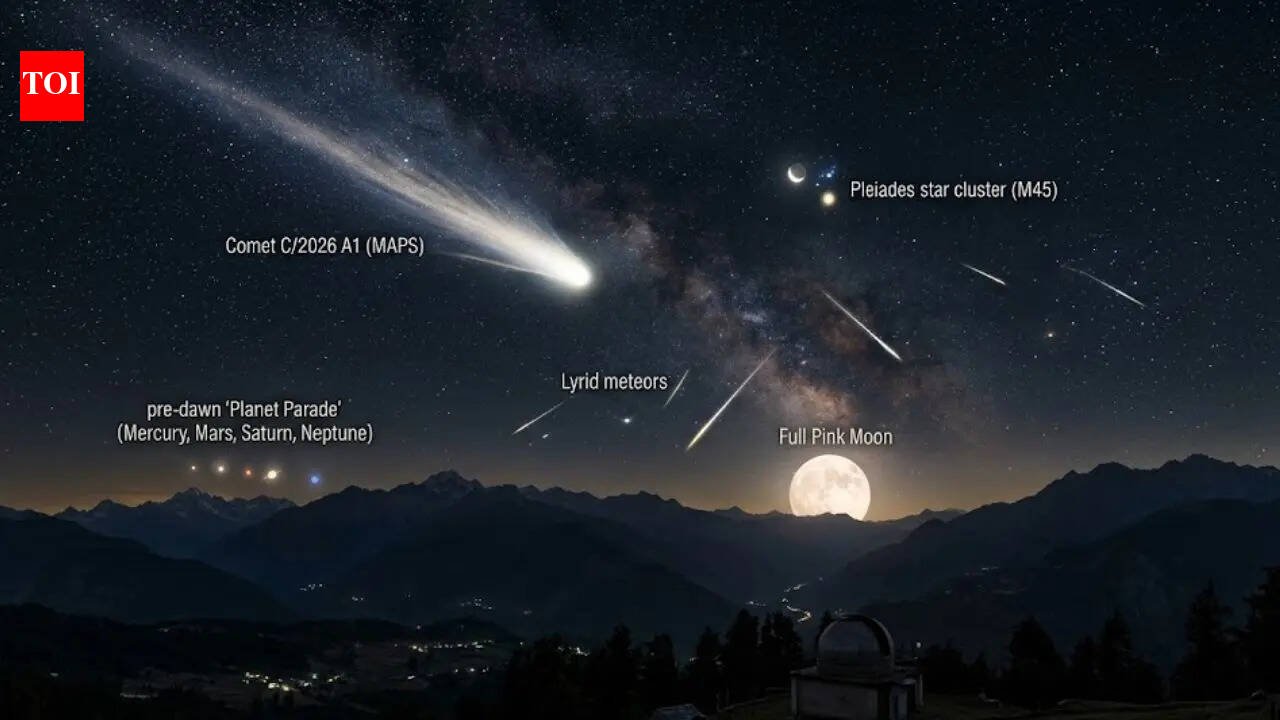

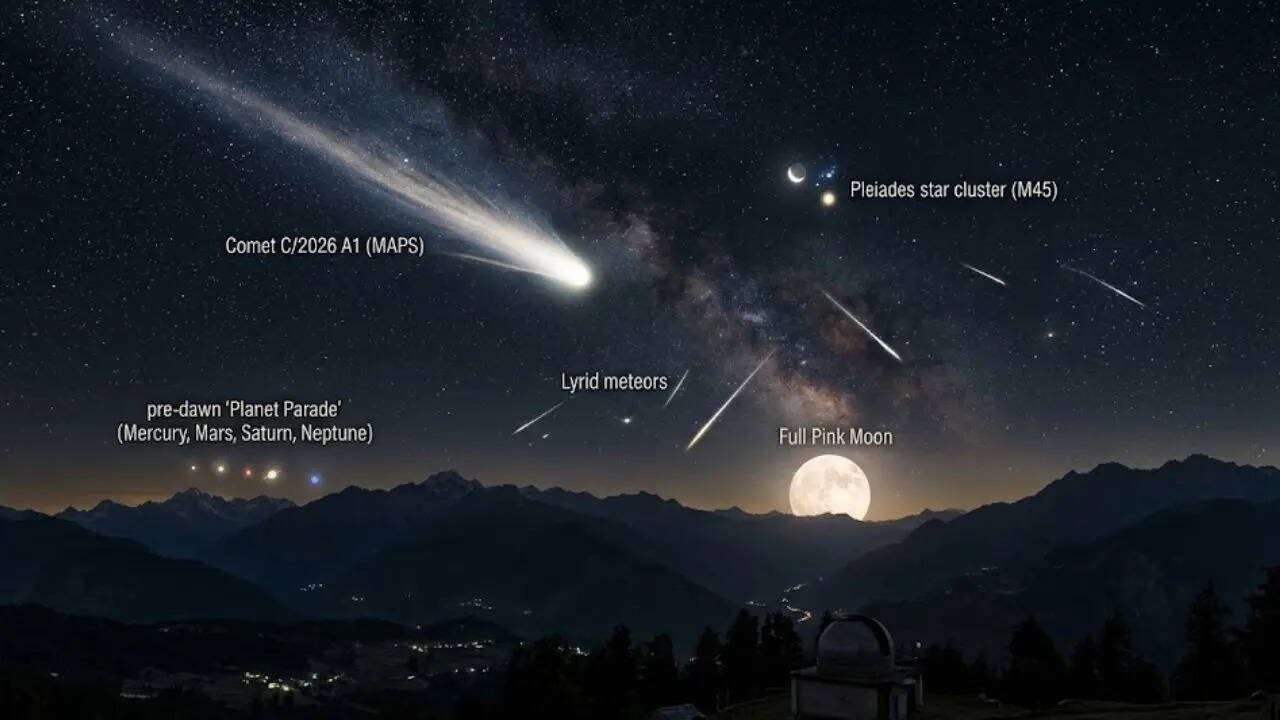
The comet is classified as a “sungrazer” and will pass approximately 850,000 miles from the Sun at perihelion. Comets are composed of ice and dirt, so they are called dirty snowballs. After reaching perihelion, adding solar energy to the comet will cause the comet to quickly sublimate into gas, creating a glowing coma that will be surrounded by a very long tail. If the core of this comet can withstand the influence of such a strong gravitational field, it may become a “great comet” in 2026, and the forward scattered light may make its tail visible even in the morning light.
PC: NASA Science