Forgotten Mexico City: A PhD student accidentally discovers a vast ancient civilization hidden beneath the jungle | World News

While looking through open survey materials for a Mexican environmental project, a doctoral student noticed some shapes that didn’t fit the idea of untouched jungle. These documents have been online for years; there’s nothing new about them. But once processed through archaeological mapping techniques, the patterns no longer look like random terrain. Roads, elevated platforms, and the like plan settlements rather than disperse the earth. What happens next is not a dramatic expedition into uncharted territory, but a quiet reassessment of information that was already obvious. A place that would later be named Valeriana began to take shape on the screen before anyone set foot there with new intentions.
LiDAR data reveals what’s hidden in the jungle
The discovery didn’t come from delving into dense forests or clearing vines from stonework. According to a study published by the University of Cambridge titled “Running out of space: environmental lidar and the crowded ancient landscape of Campeche, Mexico,” reveals that it comes from airborne laser scanning, which is used to digitally remove vegetation. Lidar, as it is known, shoots rapid pulses into the ground and measures the pulses that are reflected back, creating a map of the bare Earth beneath the tree canopy.In this case, the scan is for environmental monitoring. It is not marked as any archaeological object. This detail is important. Without this mismatch, the outlines of ancient city layout might have gone unnoticed. When the data was reprocessed, a pattern emerged that seemed too deliberate to ignore. Building blocks, interconnected spaces, what appear to be paths through parts of the forest floor that have long since been reclaimed.The region covers an area in the southeastern Mexican state of Campeche, not far from modern roads and settlements. The irony was not lost on later researchers. A place once large enough to house tens of thousands of people is now just steps away from daily traffic.
A forgotten city emerges amid layers of forest and time
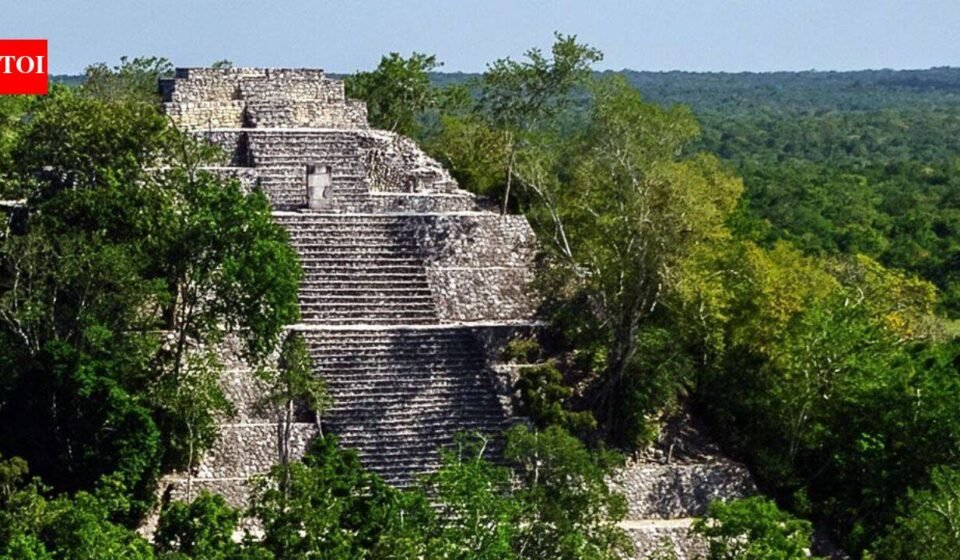
The scan revealed not a single ruin but an organized group of spaces. The two main centers are striking, located a few kilometers apart, with dense residential areas and connecting causeways between them. The impression is of planned growth rather than haphazard growth.There are stepped structures consistent with temple platforms, open plazas allowing gatherings, and courts designed for games that carried ritual and social importance in Mayan life. The layout suggests that the settlement had multiple levels of public, ceremonial and domestic spaces rather than an isolated cluster of dwellings.According to the BBC, the site covers approximately 16 square kilometres, but this number hardly reflects its actual significance. From above, it looks more like a stitched patchwork of human activity frozen beneath forest regeneration. Some estimates suggest that the population may have reached tens of thousands at its peak centuries ago, but this figure remains tentative.
How modern scanning reveals hidden patterns beneath density jungle canopy
Old scholarly writings have long described parts of tropical America as sparsely populated or even on the fringes of complex civilizations. As lidar surveys expanded across the region, this idea was gradually eroded.Valerian adds weight to different interpretations. Instead of scattered villages separated by wilderness, the landscape here appears more continuous, full of interconnected settlements. In this sense, the jungle is less an unspoiled backdrop than a later layer covering a once-inhabited world.A professor involved in the study described how the terrain was settled in a manner that is not obvious today. What looks like an empty forest from the ground becomes more structured from above, as if the land still remembers its previous organization even after centuries of overgrowth.
Environmental pressures and uncertain reasons behind valerian abandonment
There is no unified explanation for why places like Valeriana were abandoned. The most cautious reading avoids succinct conclusions. Still, environmental stress remains at the center of many discussions about the broader collapse of the Maya at the end of the first millennium.Periods of drought can put pressure on water storage and agricultural systems that are already operating at capacity. Reservoirs found at similar sites indicate careful management of seasonal rainfall, suggesting communities are adapting to unpredictable conditions rather than simply exploiting abundant resources.When populations are densely populated and resources are tightly balanced, even small changes in rainfall can affect food supplies, settlement stability, and political structure. At least that’s one way of thinking. The wars and subsequent destruction brought about by the arrival of the Spanish in the 16th century further exacerbated abandonment and change, although these events occurred after many urban centers had already declined.Valeriana itself is situated within wider historical uncertainty. Judging from superficial traces alone, its final years remain undecipherable.
The serendipity of modern discovery
What makes this story somewhat unusual is not just the city but the route it took to reappear. It is shown that the dataset has always been accessible to the public and was generated for environmental purposes rather than archaeological purposes. It’s only when someone looks at it carefully outside of its original framework that its meaning changes.Researchers later described it as being discovered almost by accident, buried deep in search results rather than hidden in the jungle. This detail has been retained, in part because it reshaped the idea of discovery itself. In this case, no new content is created. The information already exists. What has changed is the lens.Since then, multiple sites have emerged in the same survey area. The broader picture suggests occupation here was much denser than previously mapped, with thousands of buildings emerging once vegetation was digitally stripped away.