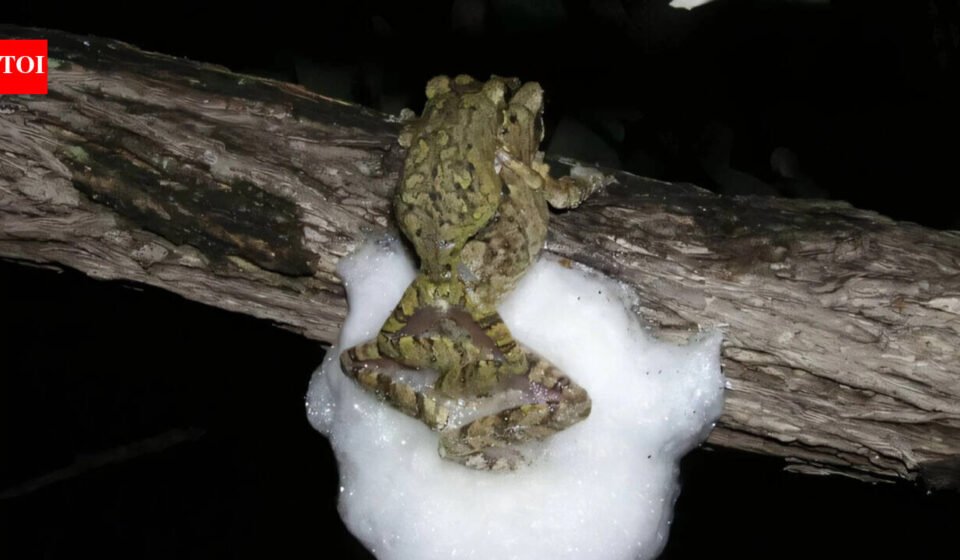
Female African tree frogs mate with several males at the same time; together they build a larger foam nest that protects hundreds of eggs from desiccation

Female African tree frogs mate with several male tree frogs at the same time, building a larger foam nest to protect hundreds of eggs from desiccation.This group-nesting behavior provides a new explanation for why females in many animal species mate with multiple partners, according to a study written by Phillip Byrne and Aimee Silla in The Conversation.The findings provide field evidence for a new scientific idea called the “nesting aid hypothesis,” proposed by a team of four frog experts with extensive experience in animal behavior, evolutionary biology and genetics.By studying wild African gray-bottled tree frogs (Chiromantis xerampelina) throughout their breeding season, the team found that extra male partners directly contribute to building better nests, giving the tadpoles a higher chance of survival.
Create a secure home
The African gray foam-nest tree frog lives in the warm savannas and dry forests of southeastern Africa. On hot, rainy summer nights from October to February, females climb branches hanging over the water to build their nests.Nesting takes five to six hours. The female releases fluid from her body, mixes it with water, and uses her hind legs to whip the fluid into a thick foam.In order to fertilize the hundreds of eggs laid within the nest, the female requires sperm from her male partner throughout the nest-building process. While females sometimes pair with just one male, most attract multiple partners simultaneously in a mating system called simultaneous polyandry. A female usually mates with five males at a time, but groups of 10 to 15 males are also common.During these group matings, male tree frogs do more than just fertilize eggs. They move their hind legs together with the female, stirring the liquid together. When more males join, the overall whipping intensity increases, creating a larger foam nest.
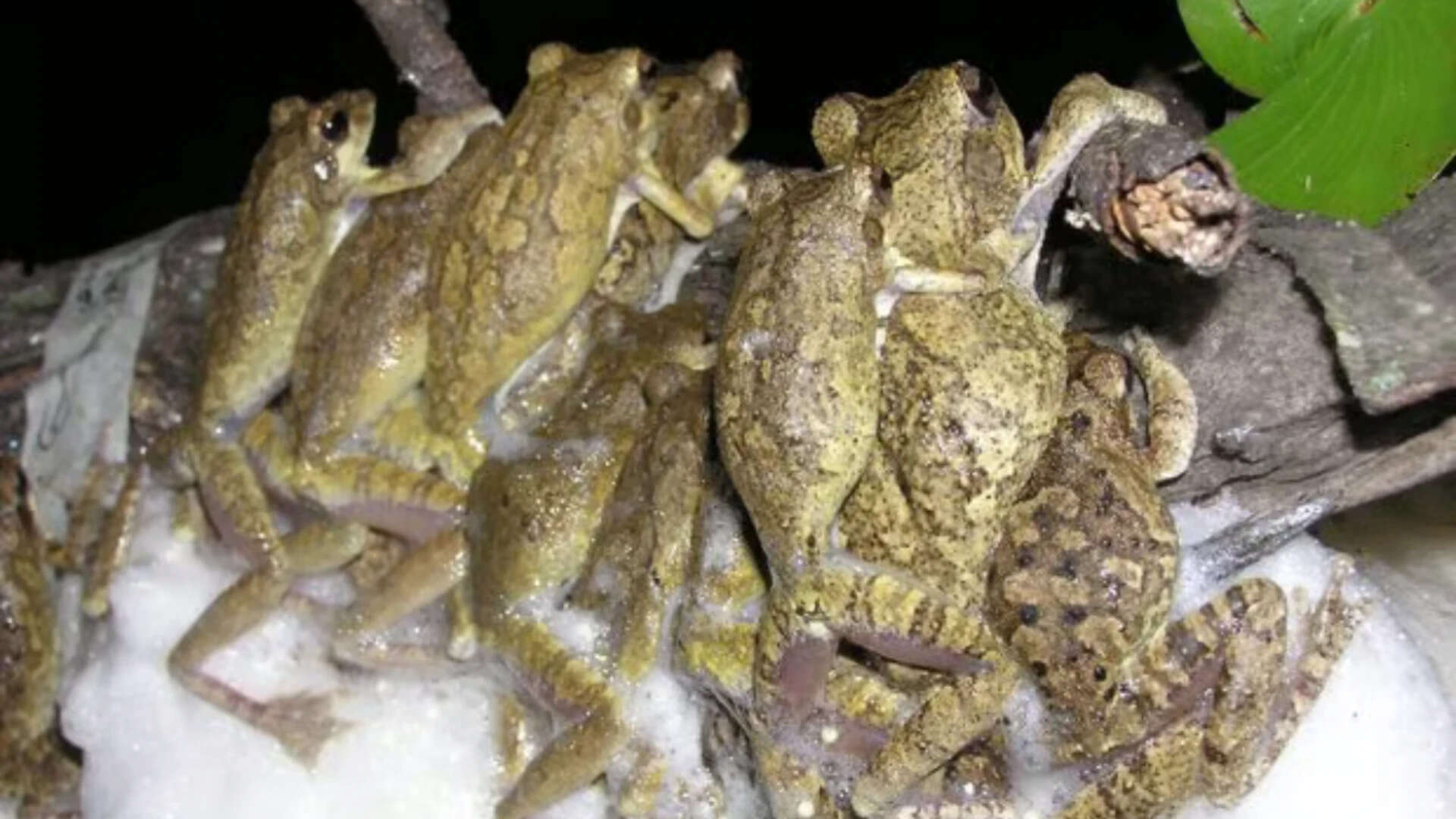
Harmonious carnival is the magic weapon for frogs to win
Larger nests prevent eggs from drying out
The completed foam nest protects the growing eggs from high temperatures for nearly a week, until the tadpoles hatch and fall into the water below. However, if the sun dries out the nest too quickly, all the eggs inside will die.The team found that nests built by just one male and one female were small and almost always dried up before the tadpoles hatched. In contrast, larger nests built with the help of multiple males can retain moisture longer, allowing the tadpoles to survive.In return for building work, participating males are allowed to produce a portion of their offspring.
Rethinking multiple mating in animals
Until the 1990s, scientists believed that it was nature’s rule for females to mate with only one partner. DNA testing later showed that females in many animal groups, from bed bugs to blue whales, regularly mate with multiple males during a breeding season.Researchers have previously shown that mating with multiple partners can ensure fertilization of eggs, provide additional food or care, or increase the genetic diversity of offspring. The nest-assist hypothesis also entails another direct benefit: help from male builders.The authors note that male nest-building assistance also occurs in other species where females reproduce with multiple fathers. Male help occurs in solitary bees and wasps, various birds, fish that lay eggs in caves or in the sand, arctic foxes, gray wolves, and small monkeys such as marmosets and marmosets. In these species, males help gather materials, dig nests, or build houses.The team believes that having the help of multiple male workers gives females of many species better homes and helps their offspring survive, providing a broader rationale for why mating with multiple partners is so common in nature.
Nest hardening, hatching and physical characteristics
Once the group has finished whipping, the physical properties of the foam nest change rapidly. The outside of the mixture dries to form a hard crust that is insulated from the soft interior. This shell acts like a small greenhouse, keeping the interior moist while reflecting sunlight to control temperature changes.Within this protective bubble, the embryo takes four to six days to develop. When the eggs hatch, the young tadpoles float in the liquid center of the nest. Once they reach a certain stage, the tadpoles will wriggle downward, melting the bottom of their foam nests until they fall directly into the water below to complete their growth.Female Chiromantis xerampelina must carefully manage her own body water during the long construction process. Since whipping the secretions into a froth consumes a lot of fluid, the female often stops midway to climb down a tree, drink water from a pool, and then return to complete the build.Adult frogs also have special physical characteristics that allow them to survive in harsh environments. They can change their skin color from dark brown to chalky white to reflect heat, and they excrete waste in the form of dry powder rather than liquid urine, which helps them conserve water during long periods of dryness.