
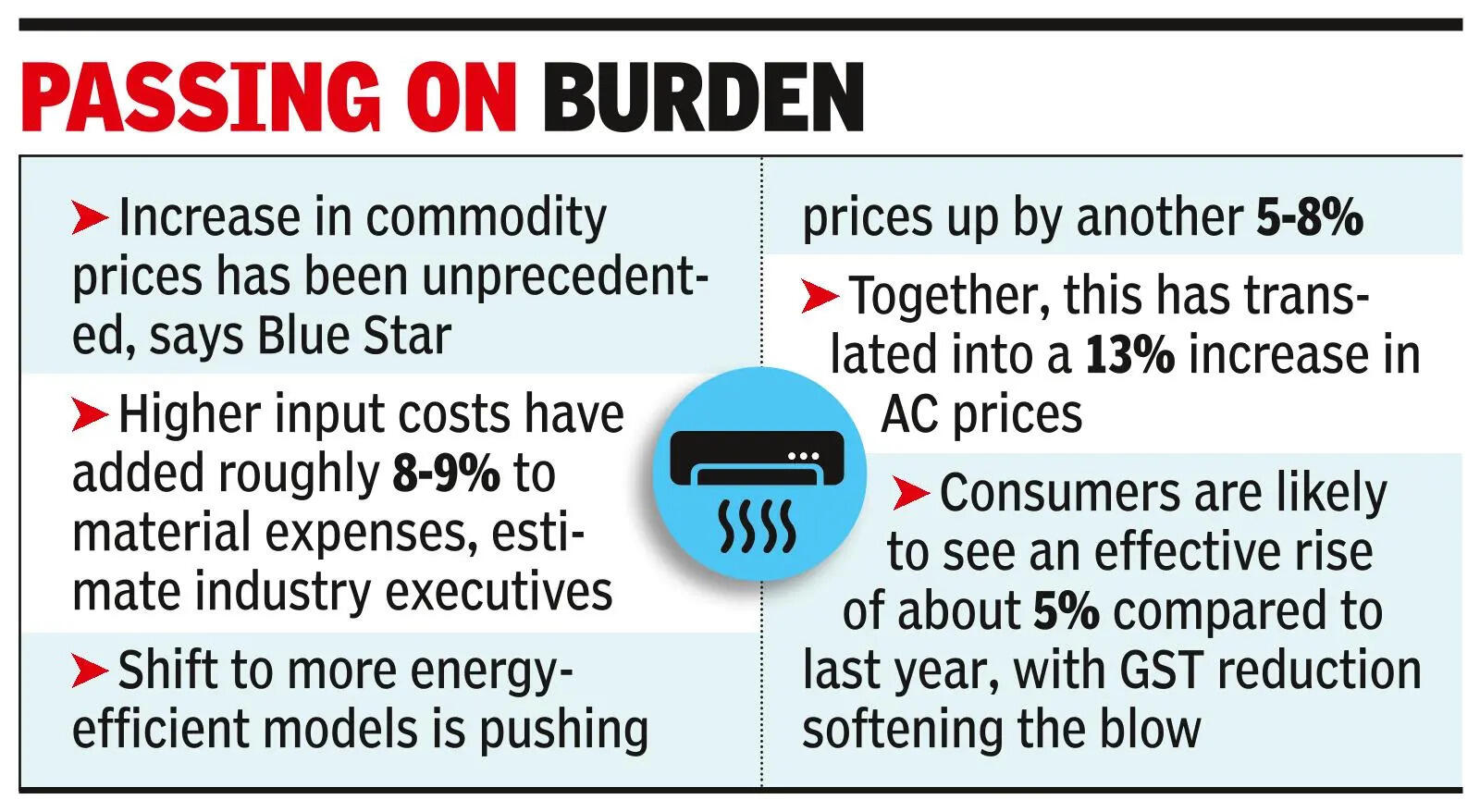
NEW DELHI: The Indian room air conditioner market is heading into summer amid clear price pressure, although companies remain optimistic about long-term growth. Manufacturers including Blue Star have indicated further price increases due to rising commodity costs, stricter energy efficiency labeling norms that come into effect in January 2026 and current global headwinds. “The rise in commodity prices is unprecedented,” said B Thiagarajan, managing director of the company.Industry executives estimate that higher input costs have increased material expenses by about 8-9%, while the shift to more energy-efficient models has pushed prices up another 5-8%. Thiagarajan said this resulted in a total increase in air conditioner prices of 13%. However, the GST cut has softened the blow and consumers are likely to see an effective rise of around 5% compared to last year.
The company has already passed on some of the salary increases and is expected to pass on more in phases. “Most of the growth has passed. As the season progresses, we will take a balancing approach,” Thiagarajan said, suggesting a staggered pricing strategy. Other players including Godrej Enterprises Group also increased prices. Kamal Nandi, business head of the company’s appliance business, said: “While the air conditioner industry has gone through a challenging year with overall sales declining, Godrej air conditioners have achieved significant growth.” Godrej has increased the prices of air conditioners by nearly 10%. Hisense India CEO Pankaj Rana said the recent price hike is a result of ongoing input cost pressure. “The recent rise in air conditioner prices is mainly due to sharp rise in input costs, including raw materials, logistics and wider supply chain disruptions,” he said. Rana noted that companies have secured adequate inventories and strong field operations to meet summer demand. “While demand remains strong, any further price adjustments will depend on changes in input costs and the competitive landscape, with potential increases in the range of 7-10%, depending on demand trends and competitive response,” he said. Manufacturers are walking a tightrope between protecting profits and maintaining demand during the peak summer season. In addition to commodity inflation, rising copper prices, depreciating rupee and rising freight and component costs continue to impact profitability. Meanwhile, demand has been inconsistent due to erratic weather and unseasonal rains, affecting sales during last year’s peak season. Thiagarajan said that the summer of 2025 will be weak and industry sales may fall by 5-7.5% compared with fiscal 2025. However, the outlook remains strong. The domestic air conditioner market, estimated at 14 million units, is expected to nearly double to approximately 30 million units by FY2030, driven by rising incomes, rising heat and deeper penetration in small towns.


