
For years, 21st-century geopolitics has been viewed as a heavyweight contest between Washington and Beijing. But what if the most important players aren’t in either corner?The world’s fastest-growing major economy and most populous country is not China. This is India.As other big countries age, India’s biggest export may just be its people. So what does this mean for global order?On the podcast “Interesting Times,” host Ross Douthat talks with international relations scholar Amitav Acharya about demographics, growth, and what Acharya calls a “diversified” world—a world shaped by multiple rising powers rather than a single superpower.Here are five takeaways from the New York Times conversation on why this could be India’s century:
third pole
The “Third Pole” sees India as an independent center of global power – distinct from the United States and China.India will not align entirely with Washington or Beijing but will act as its own gravitational pull: a top three economy, a strategic power in the Indian Ocean, a populous power and a diplomatic swing country that engages both sides without formal alliances.In Acharya’s “pluralistic world order,” power is distributed among a few major players—India being one of them.
Growing faster than China
Acharya acknowledged that China is industrializing and reducing poverty faster. But he warned against shortsightedness.In the early decades after independence, India played a major role in Asian affairs while China consolidated communist rule. India’s growth rate has recently surpassed that of China’s — albeit from a lower base — although China later took a big lead.India has also retained its democratic institutions. The main challenge now is employment. If India expands trade access—particularly with Europe and the United States—it can combine growth with greater economic resilience.
Demographic advantage
China is facing a sharp decline in its birth rate and a rapidly aging population, while India is entering a “demographic dividend” phase – a large working-age population but few elderly dependents.Unlike China, India has never implemented a one-child policy, resulting in a younger workforce.But demographics are not destiny. Without job creation, education reform and skills development, dividends can become a burden. Integration into global supply chains—merging manufacturing with services and technology—will be critical.
Multiple alignment
India’s strategy has evolved from “non-alignment” during the Cold War to what Acharya calls “multilateral alignment.”Goal: Avoid overreliance on any single authority. India maintains ties with the United States, engages with Russia, and deepens trade with the European Union—while retaining strategic autonomy.This balancing act works as long as great powers tolerate flexibility. Things will become more difficult if Washington asks countries to take sides.
this indian diaspora
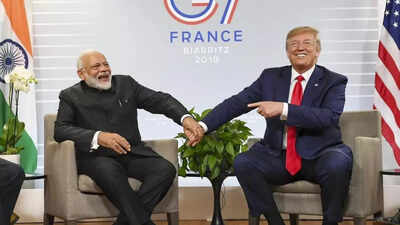
Prime Minister Narendra Modi has turned the Indian diaspora into a diplomatic asset, staging major events in U.S. cities to demonstrate global influence.However, U.S. understanding of India still lags behind attention to China. Indian Americans have made remarkable advances in tech and politics, but their success — especially in Silicon Valley and through H-1B visas — has sparked a backlash amid rising populism.Acharya believes the dissatisfaction reflects a broader anti-immigration trend rather than direct job losses. As a result of political pluralism, parts of the diaspora appear to be leaning toward conservatism—in some cases, a path toward assimilation in a polarized America.