Expanding the permanent category with veto power is crucial for real reform of the UN Security Council: India

Photo credit: PTI
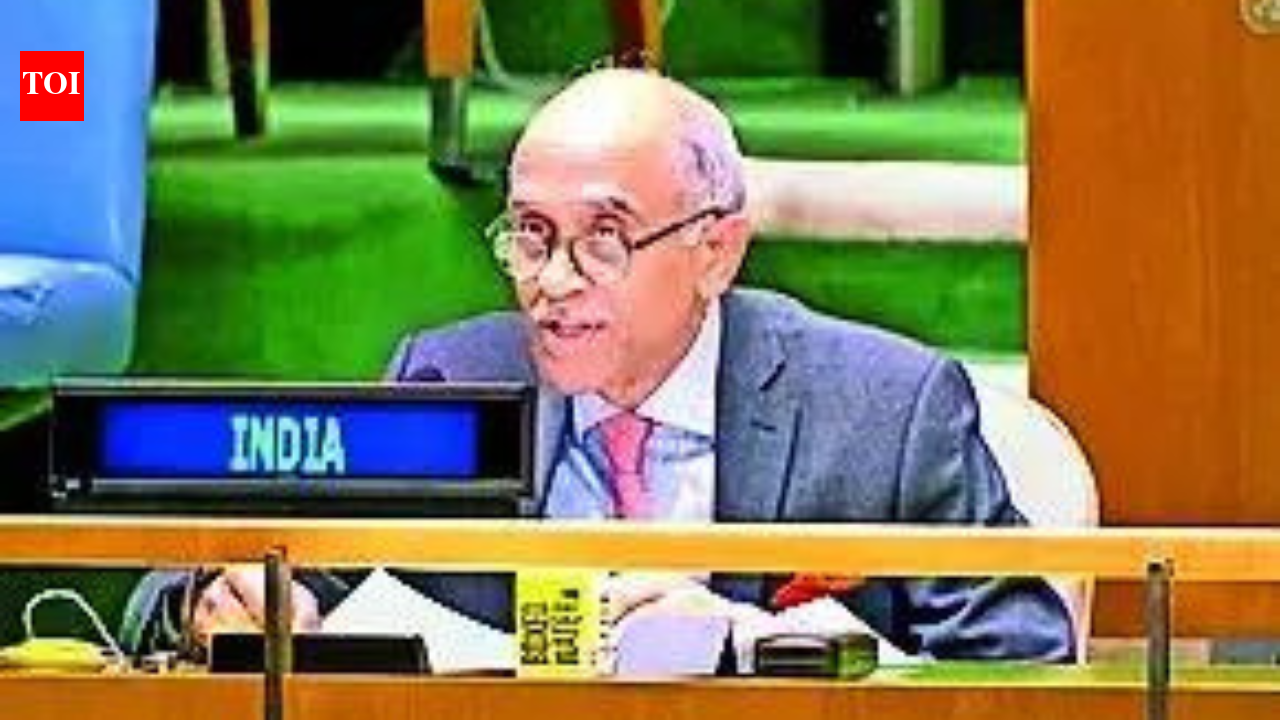
United Nations: India claims that any reform of the United Nations Security Council without expanding the veto-wielding permanent seats will perpetuate existing imbalances and inequalities in the United Nations body.Speaking at the Intergovernmental Negotiations (IGN) meeting on Security Council reform on Tuesday, India’s Permanent Representative to the United Nations Parvatanini Harish also noted that considering new categories, with or without veto power, would “complicate” existing discussions involving a wide range of views.
“There are two fundamental reasons for the structural imbalance, lack of legitimacy and non-representativeness of the United Nations Security Council: first, the composition of its members; second, the imbalance of the Security Council’s structure.” and the veto power.“There is widespread agreement that there is an urgent need to reform the UN Security Council. It is clear that the structure designed more than 80 years ago does not meet the requirements of current geopolitical realities,” Harish said.The Indian envoy recalled that the only reform of the Security Council in the 1960s only expanded the category of non-permanent members, resulting in an increase in the relative power of the veto.In comparison, the original ratio of permanent members with veto power to non-permanent members was 5:6, but was later revised to 5:10 to favor the relative advantage of countries with veto power.He said: “Any reform that does not expand the category of permanent members with veto power will further worsen this ratio and thus perpetuate existing imbalances and inequalities. Therefore, expanding the category of permanent members with veto power is crucial for real reform of the Security Council.”Harish also noted that considering new categories in the context of UN Security Council reform, with or without a veto, would “complicate” existing discussions involving a wide range of views. “It is important to limit the scope of reforms within the existing framework to simplify and speed up the reform path,” he said.India has been at the forefront for decades calling for Security Council reform, including expansion of permanent and non-permanent seats, saying the 15-nation Security Council, established in 1945, was not suitable for the goals of the 21st century and did not reflect contemporary geopolitical realities.New Delhi stressed that it deserved a permanent seat at the horseshoe table.India also highlighted the issue of “effective veto power” that every Security Council member, elected or unelected, has over products/outputs such as Council presidential statements, press statements and sanctions committees.“There have been instances in the past where elected members have created obstacles by exercising effective veto power over Council products simply to serve their narrow vested interests,” he said.Harish also pointed to calls to limit the veto power, referring to a resolution passed by the UN General Assembly in 2022 to convene a formal meeting of the 193 UN member states for debate within 10 days of the exercise of the veto by the permanent members of the UN Security Council.“However, this did not serve as an effective deterrent,” Harish said, adding that 20 draft resolutions had been rejected by 24 votes since the resolution was passed. He added that seven draft resolutions were rejected in 2024, the most since 1986.“Members of the United Nations have also witnessed the restraint of the two permanent members, who have not used their veto power for more than three decades. The permanent members have exercised their veto power many times for their own national considerations.”“No restrictions can be validly considered unless there are enabling provisions in the UN Charter, but paradoxically these would require an amendment to the Charter and are therefore again rejected!” he noted.