
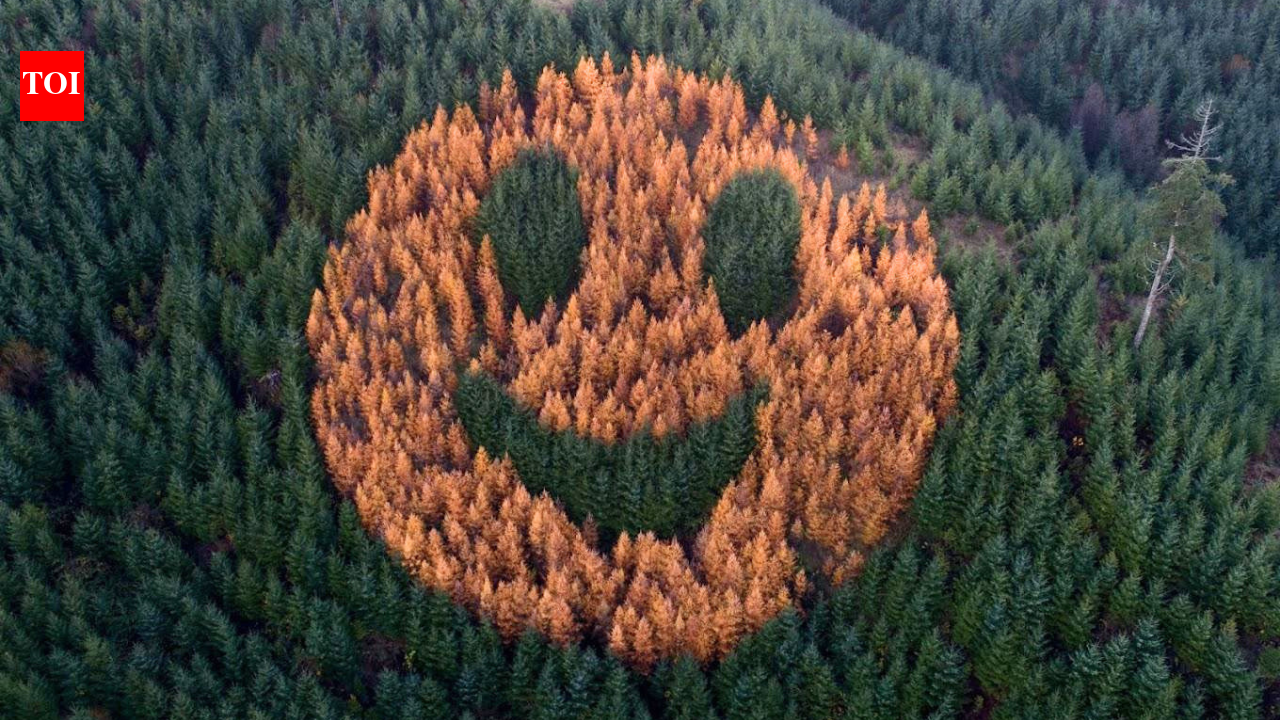
An ordinary hillside in Oregon becomes extraordinary every fall, revealing a giant smiling face that looks like nature decided to create her own work of art. This seasonal landscape is not the result of digital editing or natural phenomena, but a carefully planned reforestation project in 2011. Foresters intentionally planted western larch trees in a hidden pattern among thousands of evergreen Douglas firs, creating a design that is invisible for most of the year. Only when autumn arrives and the larches turn a brilliant golden yellow, a huge smile appears from above, delighting those who see it and proving that even a working forest can bring unexpected surprises.
How Foresters Create smiling forest in oregon
This giant smiley face is located on private forest land in Polk County, Oregon, off Highway 18 between Willamina and Grande Ronde. It was created by Hampton Lumber in 2011 as part of a routine reforestation project after timber harvesting. Rather than planting each tree in a uniform row, the team deliberately arranged Western larch trees in a circular pattern, while using Douglas fir to form the eyes and curved smile. The project was never intended as a tourist attraction, but simply as an interesting addition to a working forest.The secret behind this artwork lies in the different characteristics of the two tree species. Douglas fir stays green year-round because it is an evergreen conifer. However, the Western larch is one of the few deciduous conifers in North America. Its soft needles turn a vivid golden yellow each fall and then fall off in winter. This stark contrast allows the smiley face to appear only for a few weeks each year before blending back into the landscape.
Western larch is one of the rare deciduous conifers in North America
Unlike most conifers that retain their needles year-round, Western larch sheds its needles each winter after displaying its spectacular fall colors. This species is native to the Pacific Northwest and northern Rocky Mountains and is valued for its beauty and strong wood. Its seasonal changes make it perfect for creating artwork that changes naturally with the seasons, without the need for paint, carving, or any man-made materials.
A light-hearted idea becomes an internet favorite
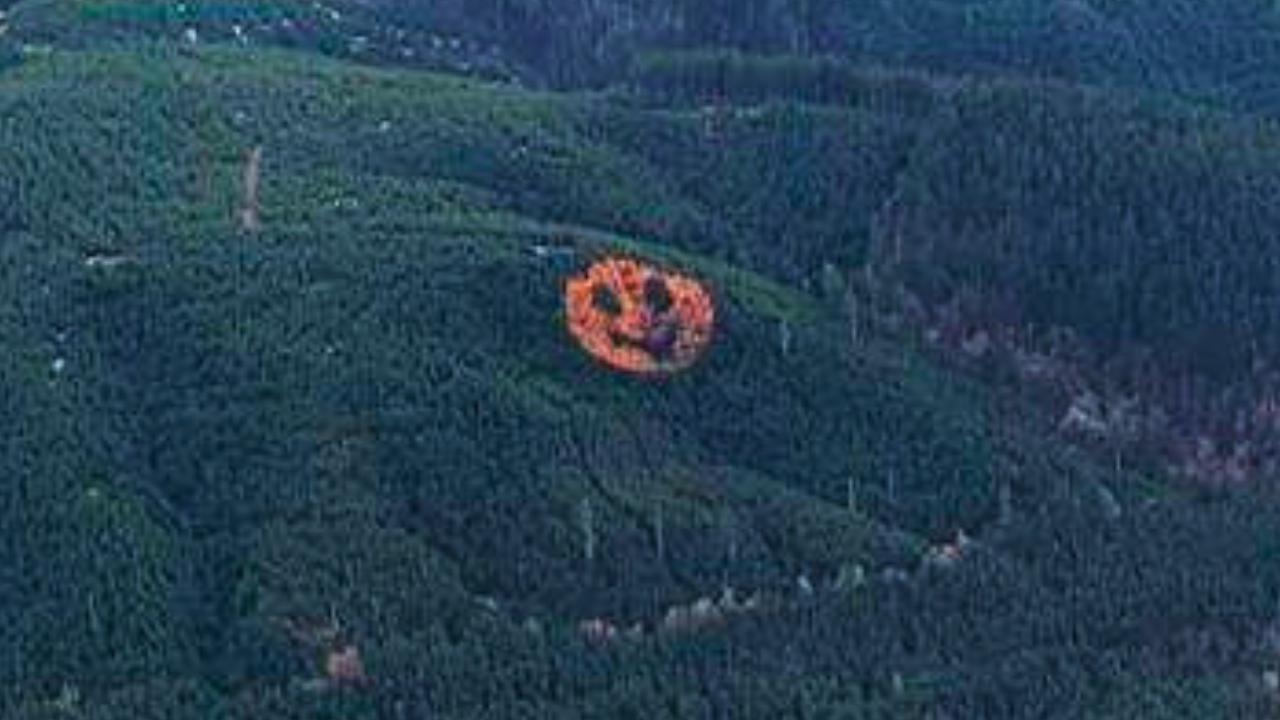
Smiling Forest was conceived by Hampton Lumber Co. co-owner David Hampton and woodland manager Dennis Creel. The pair hope to add a touch of creativity to routine reforestation efforts, proving that commercial forestry and imagination can coexist. While the design remained little-known for years, aerial photos and social media posts eventually made it a viral sensation, admired by people around the world.
The artwork is designed to be temporary
While smiley faces are growing in popularity, they’re not meant to last forever. It is located within a working timber forest, with trees felled as part of a sustainable forestry operation. As the forest matures over the next few decades, the trees will eventually be logged, meaning the smiley faces will disappear unless similar patterns are planted again during future reforestation processes. Its ephemerality only adds to its charm, making every fall appearance feel more special.
A reminder that forests not only provide inspiration;
Oregon’s Smiling Face Forest has become a symbol of how thoughtful design can transform an everyday landscape into an unforgettable one. Without destroying the forest’s primary purpose, foresters have created a seasonal surprise that brings joy to anyone lucky enough to see it from above. It reminds us that creativity can flourish in unexpected places and that sometimes the best works of art are planted patiently, one tree at a time.