
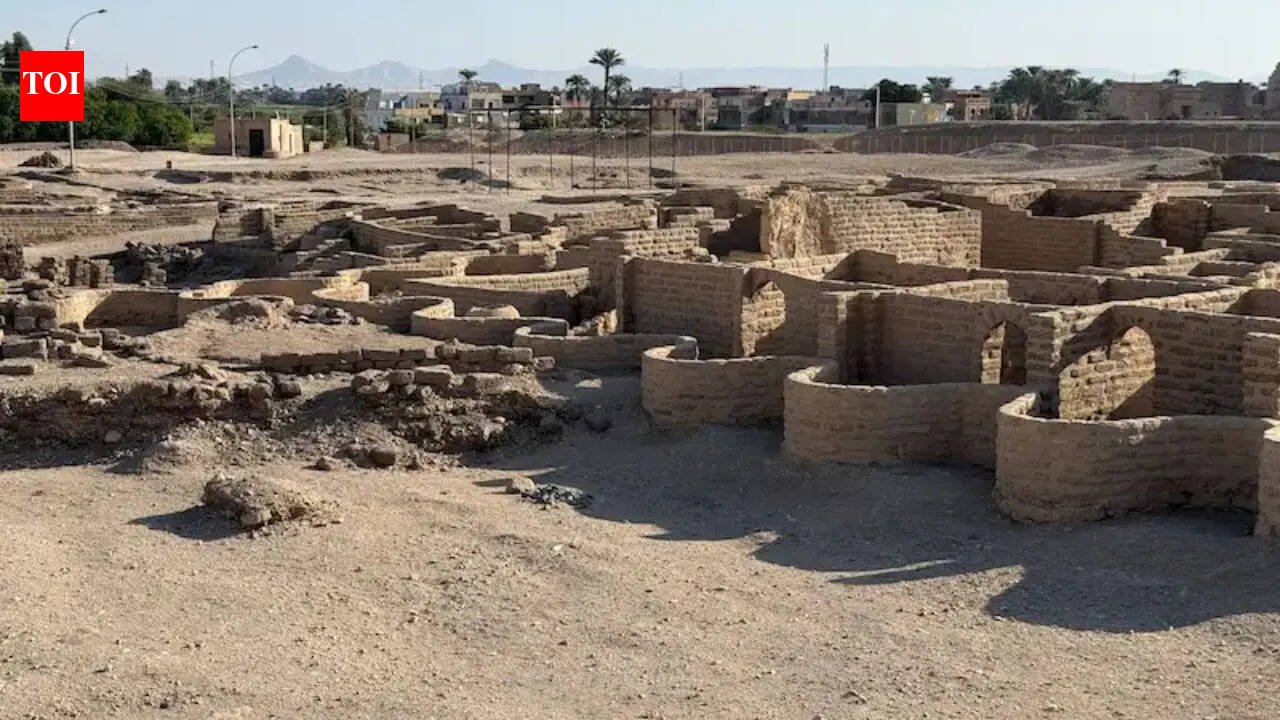
For decades, archaeologists scouring the Egyptian desert have primarily uncovered tombs, temples and royal burial chambers. The stories of kings and queens remain in stone, while the lives of ordinary people slowly disappear beneath the sand. That’s part of why the discovery of the lost golden city of Luxor has historians and archaeologists around the world so excited. Buried for more than 3,000 years near modern-day Luxor, this massive settlement appears to preserve an extraordinary snapshot of daily life in ancient Egypt. The desert streets, workshops, kitchens, and even food storage areas are all in good condition. Experts say the site could completely reshape historians’ understanding of Egypt’s golden age under pharaoh Amenhotep III. The city feels more human than the grand monuments that Egypt is famous for, which makes this discovery all the more fascinating.
Discovery of Luxor’s Lost City of Gold reveals an ancient city frozen in time
In 2020, an Egyptian archaeological team led by Zahi Hawass discovered the lost golden city of Luxor. The team initially searched for Tutankhamen’s mortuary temple near Luxor’s west bank. Initially, archaeologists hoped to find isolated remains related to royal rituals. Instead, they discovered something bigger.Excavation work continues in Astas, with mudbrick walls starting to appear in multiple directions beneath the sand, Egypt’s United Tourist Services reported. Entire streets slowly emerged, followed by rooms, courtyards and storage rooms. Archaeologists soon realized that they had discovered a massive urban settlement dating back to the reign of Amenhotep III, one of the most powerful rulers in Egyptian history.What shocked the researchers most was its level of preservation. Some walls still stand nearly three meters high, while everyday objects are still scattered around the rooms, as if the residents had only recently left. Experts have reportedly compared parts of the city to Pompeii, as daily life appears to be frozen in time.
The Rise of Aten: Egypt’s Lost City of Gold under Amenhotep III
Historians believe that the city, known as the “Rise of Aten,” was a major administrative and industrial center during Egypt’s New Kingdom. The settlement appears to have supported royal construction projects, palace activities, and a large number of workers associated with the empire’s economy.The city flourished during the reign of Amenhotep III, a pharaoh often associated with wealth, peace, and artistic achievement. During his reign, Egypt reportedly expanded its international trade network and amassed vast wealth. The rise of Aten became an important hub for officials, craftsmen, and laborers to come together to support the royal family.Archaeologists have discovered royal seals on mud bricks throughout the site. These markings strongly suggest that the settlement operated under direct state control. Experts say this level of organization reflects how carefully Egypt managed its workforce, resources and production during its golden age.The city’s connection with Aten also gives it great historical significance. Aten, the sun disk god, later became central to the religious revolution initiated by Akhenaten, the son of Amenhotep III. Historians believe the city may help explain how Egypt transitioned from traditional religious practices to Akhenaten’s controversial experiments in monotheism.
Ancient kitchens and food workshops reveal daily life in the lost golden city of Luxor
The most fascinating discoveries involve the remains of kitchens and food production areas within the lost city of gold, Luxor. Archaeologists have discovered a large bakery complete with ovens, pottery and storage jars filled with traces of ancient food. The size of the kitchen suggests that the city maintained a highly organized system of food distribution.Some clay pots also contain dried meat, grains and other food scraps. One of the vessels was reportedly engraved with a monk’s inscription indicating its contents, the year it was made and the name of the butcher responsible for the meat. Small finds like this give us a rare glimpse into the daily lives of ordinary Egyptians.
Workshops and royal industry reveal how Egypt’s grand temples were built
Moreover, this is also the industrial center of the ancient city. There are many workshops where ancient Egyptian artists made a variety of glass objects, decorative tiles and amulets (including scarabs). Various molds for making ornaments and other manufacturing tools were found in the workshop.According to archaeologists, such workshops existed in ancient Thebes and were used for temple construction work. Even the mud bricks made here bear the official seal of Amenhotep III.