
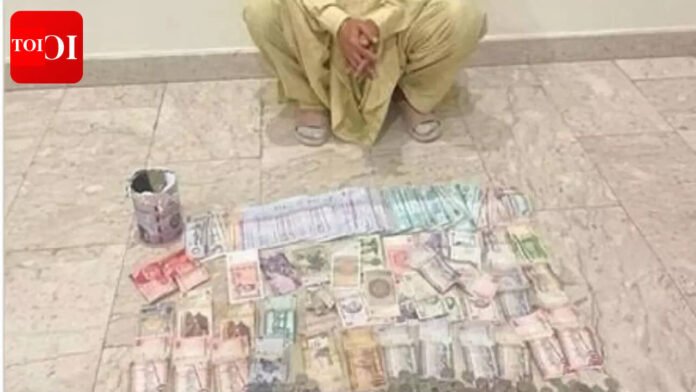
Dubai police have caught a beggar who owned three luxury cars and a huge sum of money, an official told Al Khaleej newspaper. The man admitted amassing wealth by asking people for money and was arrested during the emirate’s tough anti-begging crackdown during Ramadan. Ramadan. According to the officer, he would end his “begging shift” in broad daylight, shed his tired look, put on a different look, and drive off in his high-end limousine. Brigadier General Ali Al Shamsi, director of the Department of Suspects and Criminal Phenomena, said he relies on manipulating people’s emotions, fabricating stories and cleverly creating humanitarian details, and performs every day as much as any organized profit-oriented enterprise. A large amount of money was found on the beggar. The official noted that one of them had raised Dh25,000 but continued to beg, even though the amount was enough to cover his return home. The official said 90 per cent of the beggars arrested entered the country on visit visas and used the holy month of Ramadan to tap into the generosity of citizens and residents.
Anti-begging crackdown
Under Federal Law No. 9 of 2018, individuals begging in the UAE can be jailed for three months and fined Dh5,000. People who run organized begging gangs or recruit people from abroad to beg in the UAE could face up to six months in prison and fines of up to Dh100,000.During the first week of Ramadan, Dubai police arrested more than 26 beggars of different nationalities in an “anti-begging” operation. Under the slogan “Conscious Society, No Begging”, the campaign, carried out in collaboration with other partners such as Dubai’s General Authority for Residency and Foreigners Affairs and the Department of Islamic Affairs and Charitable Activities, aims to raise awareness about maintaining the country’s civilized image and preventing begging. The official urged residents to report beggars by calling the toll-free number 901 or using the ‘Police Eyes’ service on the Dubai Police Smart App. Additionally, Dubai Police has issued a warning to residents not to fall victim to online begging scams during Ramadan, urging them not to participate in appeals circulating on websites and social media platforms.