The template was forged by Pablo Escobar in Medellín: vast wealth, absolute violence and folk-hero charisma. But modern Mexican drug cartels don’t just follow this template, they weaponize it. What began as a few regional trafficking routes has turned into a saga of betrayal and “narco-terrorism” spanning generations. To understand today’s Mexico is to understand the rise and fall of these dynasties: the aging federation, the special forces defectors, and the new, hyper-aggressive giants fighting for the crown.Mexico’s brutal drug war claims thousands of lives each year as powerful drug cartels fight for territory and influence. These cartels control large swaths of the country and are responsible for political corruption, assassinations and kidnappings. Several major drug trafficking organizations influence global supply routes, fuel violence, and create major public health and security challenges.Many groups operate out of strongholds in specific Mexican states, which serve as bases for their activities and confrontations with rivals and law enforcement. Today, analysts generally consider the Sinaloa Cartel and the Jalisco New Generation Cartel to be the most powerful criminal organizations in Mexico, while older groups such as the Gulf Cartel and Los Zetas have been weakened. Beyond Mexico, Colombia’s Medellin cartel also set the standard for modern drug empires.The Sinaloa Cartel, also known as the Sinaloa Federation, emerged from former members of the Guadalajara Cartel in the late 1980s and became one of the largest drug trafficking organizations in the world. By 2016, it controlled about 40 to 60 percent of Mexico’s drug trade and dominated much of the northwest.For many years, the company was led by Joaquín “El Chapo” Guzmán, who at one time ranked among the world’s richest men. Under his leadership, the drug cartel gained notoriety for violence, defeated rivals and became the largest supplier of illegal drugs to the United States. Officials say the group kidnaps, tortures and kills rival gang members and maintains a vast arsenal of weapons, including rocket-propelled grenade launchers and Guzman’s gold-plated AK-47. Mexican cartels often conflict with each other, but they also form strategic alliances.In July 2019, Guzman was sentenced to life in prison in one of the most high-profile trials in recent U.S. history. Prosecutors said he trafficked cocaine, heroin and marijuana and maintained a network of drug dealers, kidnappers and assassins. His imprisonment has led to increased violence as rivals seek an advantage, but the cartel remains very powerful, still controlling northwestern Mexico and operating in cities from Buenos Aires to New York. It continues to make billions of dollars by trafficking drugs into the United States, Europe and Asia.The cartel is believed to be controlled in part by Guzman’s son, Ovidio Guzmán Lopez. When he was arrested in October 2019, Sinaloa gunmen demonstrated the group’s military prowess by engaging in street battles with troops in broad daylight, setting fire to vehicles and performing a jailbreak before his release.In a separate case, alleged drug cartel leader Pedro Inzonza Noriega was arrested in Sinaloa state. The United States accuses him of trafficking large quantities of fentanyl, cocaine and heroin as the second-in-command of the Beltran Leyva organization, which is now thought to have ceased to exist.
Jalisco New Generation Cartel
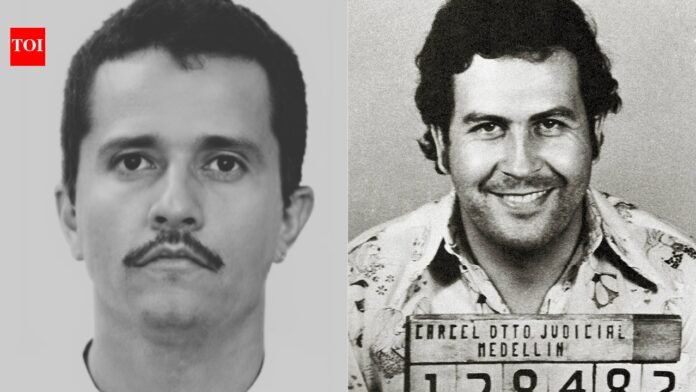
The Jalisco New Generation Cartel (CJNG), founded around 2010, is the strongest and most aggressive competitor of the Sinaloa Cartel, mainly concentrated in western regions such as Caliente Island. The organization has expanded rapidly in Mexico and is now one of the country’s leading organized crime groups, with assets believed to exceed $20 billion.Its leader Nemesio Oseguera, known as “El Mencho,” is considered Mexico’s most wanted fugitive and one of the last remaining drug lords, as flamboyant and brutal as its imprisoned leaders Joaquín “El Chapo” Guzmán and Ismael “El Mayo” Zambada. He ambushed police, attacked senior security officials and even shot down a military helicopter. The United States has offered a reward of up to $15 million for his capture.CJNG is one of the major distributors of synthetic drugs in the Americas and a major player in the illicit amphetamine market in the United States and Europe, with ties to Asia. Analysts say its extreme violence has led to continued bloodshed in cities including Tijuana, Juarez, Guanajuato and Mexico City. It has killed dozens of officials, downed a military helicopter and hung the bodies of its victims from bridges to intimidate rivals. Experts say the cartel will expand further.ALSO READ | US weapons, drones, symbolic patches: How Mexico’s most wanted drug lord ‘El Mencho’ is militarizing drug cartels
gulf cartel
The Gulf Cartel, based around the northeastern Mexican state of Tamaulipas, is one of the country’s oldest criminal groups, with roots dating back to the 1980s. The company is known for trafficking cocaine and marijuana into the United States and also works closely with Colombian drug cartels to smuggle heroin and amphetamines. By the 1990s, the company’s operations were reportedly generating billions of dollars in annual revenue due to political corruption and bribery.Leader Juan Garcia Abrego was arrested in 1996. His successor, Osier Cardenas Guillen, expanded the cartel’s military power by recruiting corrupt special forces soldiers and adopting more violent methods. After his arrest in 2003 and the death of his brother Ezequiel in 2010, the cartel splintered into rival factions, weakening and locked in turf wars with former allies.
Zetas
The former Special Forces recruits eventually broke away in 2010 to form Los Zetas. Mainly active in northeastern Mexico, they are notorious for their extreme brutality, often torturing and beheading their victims. The organization’s criminal scope is not limited to drugs, but also includes criminal activities such as cigarette smuggling and human trafficking.By 2012, Los Zetas reached the height of its power, operating in more than half of Mexico’s states and surpassing rivals to become the country’s largest drug gang. But that year a leader was killed by the Mexican Navy, and his successors Miguel Angel Trevino Morales and Omar Trevino Morales were captured, triggering the decline of the Mexican Navy. The cartel has splintered and lost territory to expanding rivals such as the CJNG, but it remains a dangerous force.
Medellin poster
Before the Mexican cartel took over global dominance, Colombia’s Medellín drug cartel dominated the global cocaine trade in the 1980s and early 1990s. Under the leadership of Pablo Escobar, it became synonymous with unprecedented wealth, power and violence, setting an example for subsequent Mexican drug cartels.The mountain town of Tapalpa in Jalisco state showed stark contrasts a day after Mexican troops killed Nemesio “El Mencho” Oceguera Cervantes, leader of the Jalisco New Generation (CJNG) drug cartel, in an operation led by the Mexican military. Schools were closed due to the violence, but children played on the cobbled streets and tourist shops reopened in the main square. At the same time, gunfire rang out and a body lay on the road outside the city, next to a car riddled with bullet holes. Heavily armed security forces continued to clash with drug cartel gunmen, who blocked roads as thick smoke rose in the suburbs. More than 70 people died in the operation to capture him and the violence that followed, authorities said, underscoring the cartel’s influence and the unrest sparked by the death of one of Mexico’s most powerful drug lords.