
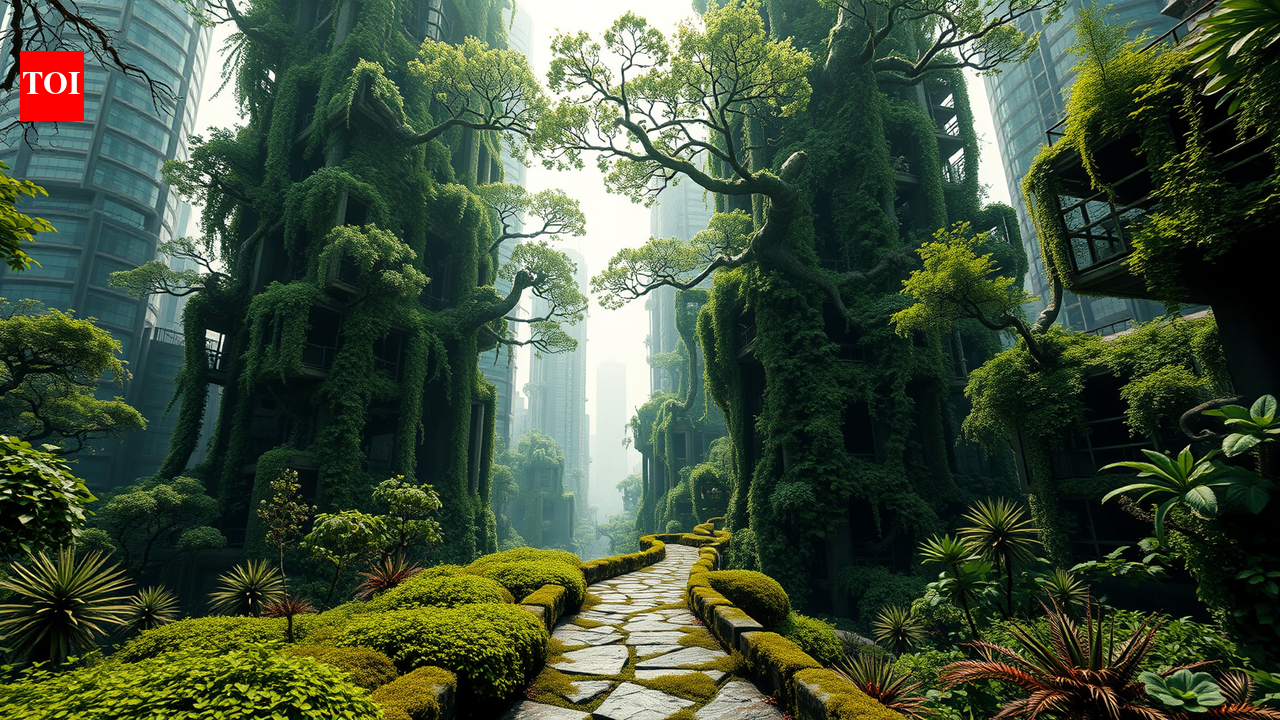
China has some of the most polluted cities on Earth, and over the years regular remediation measures, stricter emissions rules, factory closures, and better public transportation have only alleviated the problem. So Italian architect Stefano Boeri decided to try something more radical and wrap the entire building, and ultimately the city, with trees. His firm’s largest project to date is Liuzhou Forest City, a planned community in southern China where offices, residences, hotels, schools and even hospitals are almost entirely covered in greenery. It sounds more like science fiction than urban planning, but the idea comes directly from an early experiment already underway in Italy, and China has been working to scale it up ever since.
How Milan’s Vertical Forest Inspired China’s Forest City Plan
The whole concept can be traced back to Bosco Verticale, two residential towers built by Boeri in Milan and completed in 2014. Boeri Architetti’s own project pageThe two towers alone are said to be able to filter around 15 to 17.5 tons of soot from the air every year, leading Boeri to believe that the same principles could be extended to something much bigger, with entire cities built in the same way. Liuzhou Forest City takes this logic and applies it to dozens of buildings instead of just two, turning an architectural experiment into a full urban planning model.
Where is Liuzhou Forest City being built in China?
Liuzhou Forest City is planned on the northern edge of Liuzhou, a city of approximately half a million people located in the mountainous region of Guangxi in southern China. The site, which covers approximately 175 hectares along the Liujiang River, was chosen in part because Liuzhou was already battling severe smog due to rapid industrial development in the surrounding area. Commissioned by the Liuzhou Urban Planning Bureau, the masterplan is designed to connect the new community to the existing city via a dedicated rail line reserved for electric vehicles.
How many trees and plants will the building cover?
Do trees on buildings really purify the air?
According to data shared by Stefano Boeri Architetti, so many plants are expected to absorb nearly 10,000 tons of carbon dioxide and approximately 57 tons of fine particle pollutants each year, while producing approximately 900 tons of oxygen per year. In addition to simply cleaning the air, this dense layer of vegetation can help cool communities by reducing the urban heat island effect, reducing traffic noise and creating a true habitat for the birds, insects and small animals that already live in the surrounding countryside.
How the city plans to use renewable energy
Liuzhou Forest City is more than just greening, energy self-sufficiency is integrated into the design from the beginning. The plan calls for using geothermal energy to handle indoor heating and cooling, paired with rooftop solar panels to generate electricity, aiming to allow the entire community to run independently of traditional power sources. Combined with an all-electric transport network connecting it to the wider city, the aim is to create a completely self-contained green area, rather than just a cluster of plant-covered buildings being integrated into the ordinary city grid.
Will China build more forest cities outside Liuzhou?
Liuzhou is just a starting point. Boeri Architetti has proposed similar forest city concepts for other heavily polluted Chinese cities, including Shijiazhuang, which sometimes has some of the worst air quality readings in the country. The firm has also completed freestanding vertical forest towers in cities such as Nanjing, applying the same tree-covered building concept on a smaller scale even before a full Forest City master plan was developed.
Why forest cities matter to China’s pollution problem
China is adding tens of millions of new urban residents every year as people migrate from rural areas for work, putting more pressure on air quality in already struggling cities. Boeri describes projects like Liuzhou Forest City as attempts to prove that dense urban living and true biodiversity do not have to be at odds with each other, showing that even fast-growing, densely populated cities can incorporate environmental restoration directly into their skylines rather than treating it as an afterthought. Regardless of whether Liuzhou Forest City achieves its ambitious goals when completed, it is one of the clearest attempts yet to combat China’s pollution crisis through architecture rather than regulation alone.