
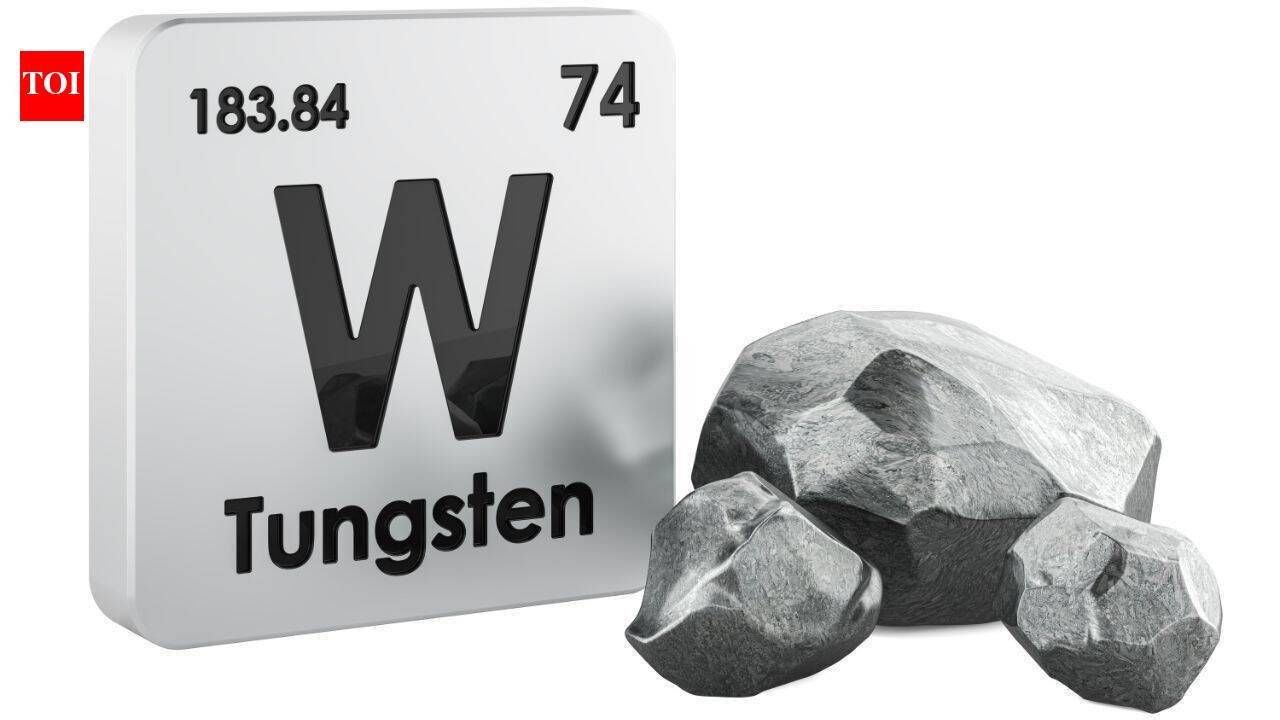
A potentially enormous tungsten resource has been identified beneath the Nevada desert, but a NASA land restriction could prevent the company behind the project from fully exploring or developing it.3 Proton Lithium, a privately held critical-minerals developer, says its Railroad Valley Minerals Project contains an inferred tungsten resource of approximately 1.78 million tonnes. If future drilling and technical studies confirm that the material can be extracted profitably, the deposit could become the largest known tungsten resource in the United States, more than five times larger than the next biggest known deposit, according to Minning.com.The company estimates the in-ground value of the tungsten at around $152 billion based on current prices. However, that figure does not include the section of the project where exploration is currently restricted at NASA’s request, as per the report.Why tungsten mattersTungsten is one of the world’s hardest and most heat-resistant metals. It is used in industrial cutting tools, aerospace components, military equipment, ammunition, high-temperature manufacturing and other applications where strength and durability are essential.Its importance has grown as global demand has increased from the defence, aerospace and industrial sectors. Tungsten is also considered a strategic or critical mineral because it is difficult to substitute in many applications and is concentrated in relatively few countries.China dominates the global tungsten market, accounting for approximately 80% of production. The United States stopped commercial tungsten mining more than a decade ago and now relies heavily on imports, making domestic discoveries strategically important for supply-chain security, according to Financial Times.Kevin Moore, chair and chief financial officer of 3 Proton Lithium, described the project as more than a conventional mining opportunity. “This is not a mining story. It is a national security story,” Moore told the Financial Times, arguing that the United States has allowed its domestic tungsten industry to disappear while China has gained significant influence over global supply.A deposit identified during a wider projectThe Railroad Valley project was originally associated with a broader mineral system that may contain lithium, boron and potash in underground salt beds. The area covers approximately 58 square miles near Ely in eastern Nevada’s Great Basin Desert.Recent drilling and resource assessment work identified the large tungsten concentration. The company’s estimate is classified as an inferred resource, meaning it is based on geological evidence and sampling but has not yet been demonstrated to be economically recoverable.That distinction matters. A mineral resource in the ground is not the same as a working mine or a proven reserve. Before production could begin, 3 Proton Lithium would need to complete additional drilling, engineering studies, environmental reviews, economic assessments and permitting.The deposit may be large, but its commercial value will depend on the quality and location of the ore, the cost of processing it, the infrastructure available in the remote region and the ability to secure access to the full claim area.NASA’s land restrictionThe biggest immediate obstacle is not the size of the resource but the land beneath which part of it lies.NASA uses a flat section of the Nevada desert to calibrate satellite instruments. The site allows the agency to compare signals received by satellites with carefully measured ground conditions. NASA says the landscape’s physical integrity is important to the accuracy of those calibration activities.At NASA’s request, the Bureau of Land Management withdrew approximately 17 square miles from new mining and exploration activity in 2023. The restriction covers part of 3 Proton Lithium’s claims and prevents the company from drilling in the area.NASA has argued that mining, excavation and changes to the land surface could interfere with its satellite calibration work. The agency’s position has not changed, according to its public statements.For 3 Proton Lithium, the restriction leaves a large part of the project untested. The company says the blocked section could contain additional mineralisation, but that potential has not been included in the current tungsten estimate.The company wants the withdrawal reversed3 Proton Lithium has raised nearly $50 million to pursue the project and is lobbying the Trump administration and Congress to reconsider the federal land withdrawal.Moore has argued that the decision was made with incomplete geological information and that NASA did not engage sufficiently with the company before the restriction was imposed. The company says it is trying to work through government channels to demonstrate that mining and satellite calibration might coexist.The dispute reflects a growing tension in the critical-minerals sector. The US government wants to develop domestic sources of metals needed for defence, advanced manufacturing and clean-energy technologies. At the same time, federal agencies are responsible for protecting scientific research sites, public lands and environmental resources.A decision to open the area for mining could unlock more exploration, but it could also threaten a location NASA considers uniquely valuable.Tungsten prices have surgedThe Nevada project is attracting attention because tungsten prices have risen sharply. Prices have increased by nearly 600% since early 2025, according to reports, as demand from aerospace, weapons and industrial tools has grown while global supply has tightened.China’s export controls have added further uncertainty. Beijing’s embassy in Washington has said applications that comply with relevant regulations will be granted licences and that China is committed to maintaining the stability of global supply chains.The supply concerns have pushed governments and companies to search for new sources outside China. Washington is reportedly considering up to $1.6 billion in support for a proposed tungsten mine in Kazakhstan as part of a broader effort to diversify supply.That international competition gives the Nevada discovery potential strategic importance. But it does not eliminate the practical difficulties of building a mine in a remote desert or resolving the conflict with NASA.Production is still years awayEven if access issues are resolved, commercial production is unlikely to begin soon. Analysts have cautioned that high prices can create excitement around new mineral discoveries, but turning an exploration project into an operating mine typically takes years.Timothy Puko, an analyst at the Eurasia Group, said development could be approximately five years away at best, with the possibility of further delays depending on permitting, financing, engineering and market conditions, as per Minning.com.The project also faces the normal risks associated with mining development. Tungsten prices could fall, processing costs could rise or further exploration could show that only part of the resource is economically viable. Environmental concerns and opposition from other stakeholders could also complicate approval.For now, the Railroad Valley Minerals Project remains a promising but unproven resource rather than a new source of American tungsten.A strategic opportunity with a difficult choiceThe Nevada deposit has arrived at a moment when the United States is trying to reduce its reliance on Chinese-controlled mineral supply chains. A successful domestic tungsten mine could support defence manufacturing, industrial production and national-security planning.But the project also sits beneath a landscape NASA uses for satellite science. The dispute is therefore about more than whether mining is profitable. It is about how the United States should balance resource independence with the protection of specialised scientific facilities.Until the land-access question is resolved, the full potential of the deposit will remain uncertain. The desert may hold one of America’s largest tungsten resources, but whether that resource can ever be mined will depend on a negotiation between geology, national security, space research and federal land policy.