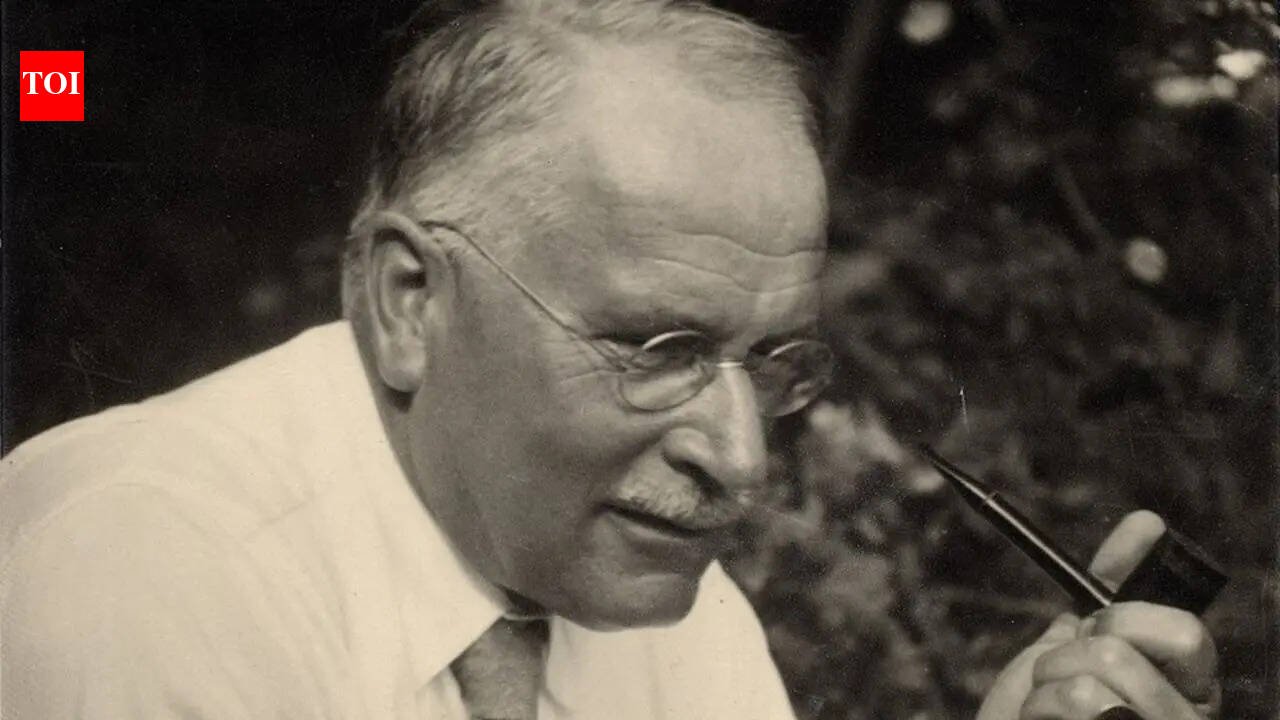
Carl Jung’s quote of the day: “Loneliness does not come from being alone, but from being unable to communicate what is important to you, or from holding certain views that others find unacceptable.” |

No matter how society changes, some quotes remain relevant. They are passed down from generation to generation because they talk about emotions that almost everyone will feel at some point in their lives. One of the quotes comes from Swiss psychiatrist and psychoanalyst Carl Jung, whose writings on the human mind, personality, emotions, and identity still influence psychology today.His famous quote, “Loneliness does not come from being alone, but from being unable to communicate about what is important to oneself, or from holding certain views that others find unacceptable,” has been widely debated for decades because it describes loneliness in a way that many people immediately recognize.On the surface, this sentence seems to describe social isolation. But Jung’s observation was much deeper. Loneliness doesn’t always mean loneliness in the physical sense, he said. In fact, true loneliness begins when people feel emotionally neglected, misunderstood, or unable to freely share their true thoughts and feelings.Even in today’s world of constant communication via phone calls, social media, and digital platforms, many people remain emotionally disconnected. Jung’s words remain powerful because they help explain why someone can feel lonely even when surrounded by others.
Carl Jung’s Quote of the Day
“Loneliness does not come from being alone, but from being unable to communicate about what is important to you, or from holding certain views that others find unacceptable.”
Carl Jung quote explains emotional loneliness, not physical isolation
Jung believed that humans have an innate tendency toward emotional understanding. Most people want more than just someone by their side. They want real communication where they feel accepted and understood.As Jung said, loneliness increases when a person is unable to speak freely about what is truly important to him. This could be personal beliefs, struggles with emotions, fears, ambitions, memories, insecurities, or opinions they think others will reject.Over time, many people learn to hide parts of themselves to avoid criticism, conflict, embarrassment, or judgment. Over time, this creates emotional distance between them and those around them.This is why someone may have family, friends, colleagues or followers online but still feel deeply alone inside.The psychological reality to which Jung’s quote refers is still very relevant today. Emotional silence is often more isolating than the physical distance itself.
Why Carl Jung’s words still resonate so strongly in modern society
Our modern lives have dramatically changed the way we communicate. People are connected almost every moment through messaging, video calls, online platforms and social networks. However, emotional loneliness is still discussed more than ever.There is a big difference between communication and emotional connection.People share information and don’t feel vulnerable. Conversations are often about daily life, work, entertainment, achievements, or superficial conversations, with deeper emotions remaining hidden.Social media has also increased pressure to launch sophisticated versions of life. Many people openly share successes, joys, travels, celebrations, and perspectives but keep fears, confusion, sadness, and insecurities private.This is where Jung’s quote explains the importance of this imbalance.Emotional isolation can slowly develop during everyday social interactions when people are unable to talk about the things that really matter to them. On the outside he may look socially active, but on the inside he feels disconnected from everyone around him.This quote also touches on another modern concern: the fear of judgment. Some people are shy about speaking out because they are afraid of being viewed negatively or being shunned by society. Jung understood that emotional loneliness often begins with people having to hide their true selves.
The psychological thinking behind Carl Jung’s philosophy
Carl Jung was born in Switzerland in 1875 and went on to become one of the most influential thinkers in modern psychology. Initially, Jung worked closely with Sigmund Freud, but later developed theories that were radically different from Freud’s approach.Freud emphasized unconscious sexuality and childhood experiences, while Jung explored larger themes such as dreams, mythology, spirituality, symbolism, identity, personality types, and the unconscious psyche.He developed ideas that still influence psychology today, including introversion and extroversion, the collective unconscious, archetypes, the shadow self, and individuation.Jung believed that we all have hidden layers of emotion that can influence behavior and relationships even if they are not expressed outwardly.This idea is directly related to his statement about loneliness. He knew that people often struggle emotionally when their inner reality differs from the version they present to the world.
Why people often have trouble communicating what really matters
Jung’s quote speaks to a very common human experience: the fear of not being understood.People often don’t talk about their innermost thoughts for fear of rejection or misunderstanding. Some people worry about sounding too emotional. Some people worry about appearing weak, weird, controversial, or different from their peers.We see this kind of emotional self-censorship in friendships, the workplace, families, classrooms, and romantic relationships.Over time, constantly filtering your thoughts can become mentally draining. People may begin to feel isolated because everyone around them cannot see parts of their personality.Psychologists today tell us that if we suppress our emotions, our stress, anxiety, depression, and isolation will increase. Jung discovered this pattern of emotions long before widespread discussions about modern mental health.His quote remains influential today because it defined loneliness as a psychological experience rather than a purely social condition.
Carl Jung’s Beliefs in Self-Discovery and Emotional Honesty
Much of Jung’s work was about self-awareness and emotional truth. He believes that true personal growth comes from people honestly understanding themselves, rather than constantly seeking external approval.One of his most famous psychological ideas is the “shadow self.” According to Jung, we all have feelings, drives, anxieties, and personality traits that we may not want to acknowledge.Jung believed that failure to consider these hidden aspects could lead to emotional imbalance.He believes that psychological growth comes from acknowledging and understanding all the parts of yourself, not from permanently hiding uncomfortable emotions.This philosophy is closely related to his comments on loneliness. When people feel like they can’t express meaningful thoughts or emotions, they may slowly begin to feel disconnected from their true identity.They still participate in external social life. But inside we can feel emotionally invisible.
How Carl Jung’s Thoughts Influenced Psychology Later in His Life
Jung died in 1961, but his ideas continue to influence psychology, literature, philosophy, education, spirituality and even popular culture.His personality type theory is very helpful to modern personality research. Many of the common discussions we hear today about introverts and extroverts owe a lot to Jung.He also influenced storytelling, filmmaking, and literature around the world through his research on dreams, symbols, myths, and archetypes.What was special about Jung was his willingness to explore science and human experience. He believes that emotion, imagination, spirituality, memory and unconscious thought are all important factors in shaping human behavior.Why do so many of his quotes still sound fresh rather than dated?
Loneliness in today’s world is different than it was in the past
In previous generations, loneliness was often primarily associated with physical isolation. Today, the psychological situation is more complex.You might be socializing with coworkers, friends, family, or online communities for days on end and still feel emotionally disconnected.A growing number of mental health researchers believe that loneliness is not just about the absence of company but also about the lack of meaningful emotional connections.Jung’s quote predicted this understanding decades ago.This quote explains that emotional isolation occurs when people feel they cannot adequately communicate what is truly important to them. This emotional wall is often invisible to others and can make loneliness more difficult to recognize.Many people continue to maintain normal lives on the outside, but privately struggle with feelings of emotional invisibility.
Other quotes by Carl Jung
- “Understanding your own dark side is the best way to deal with the dark side of others.”
- “Until you make the unconscious conscious, it guides your life and you call it destiny.”
- “He who looks outside dreams; he who looks within wakes up.”
- “I am not who happens to me, I am who I choose to be.”
- “Anything that irritates us about others can lead us to learn something about ourselves.”
- “The privilege of a lifetime is to be who you truly are.”
Why Carl Jung’s Quotes Are Still Important Today
Some quotes are memorable because they sound like poetry. Others make a living by bringing unusual clarity to deeply human things.This quote endures today because it captures an emotion that many people find difficult to express. Lonely.It reminds us that loneliness is not always about physical isolation. It sometimes grows quietly when people feel unable to openly express their true thoughts, beliefs, fears, or emotions.In a world of constant dialogue but growing emotional disconnect, Jung’s observations seem surprisingly modern.His words are a constant reminder that true human connection isn’t just about talking, it’s about being heard.