
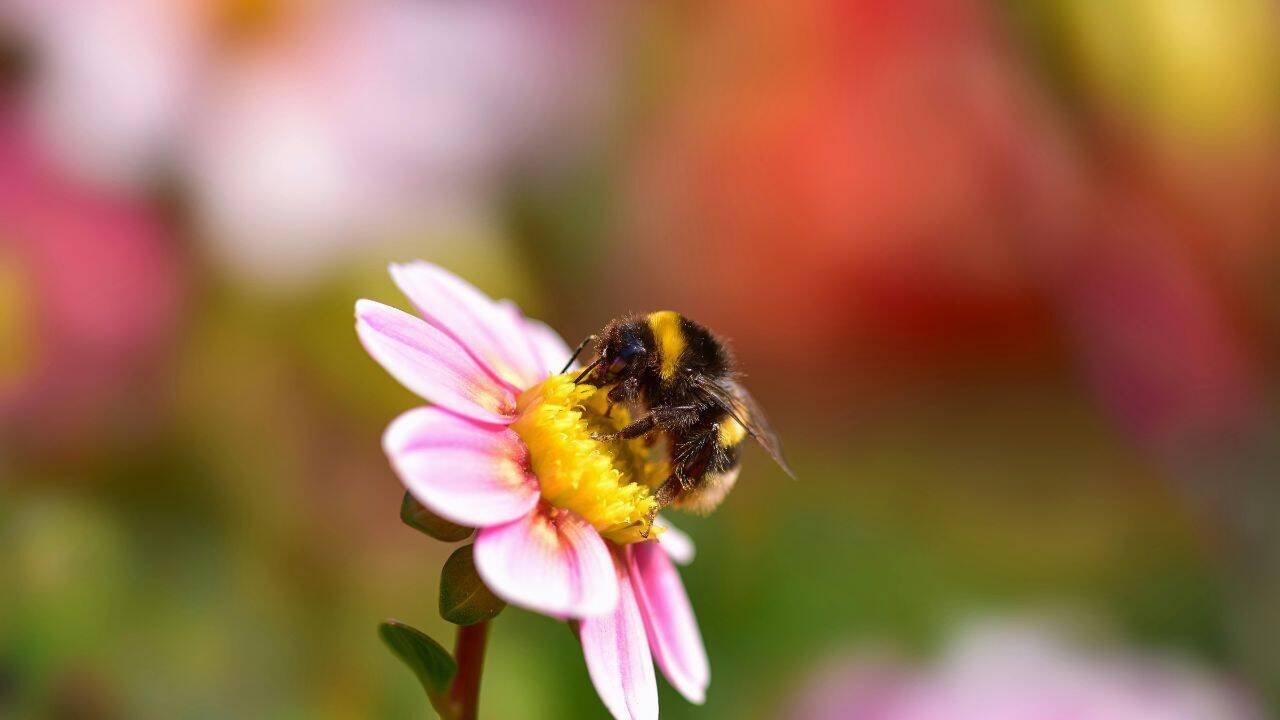

Bumblebees may carry a much heavier burden of toxic metals than honey bees, even if the two species forage in the same countryside. Research has found that pollen collected by bumblebees contains between two and seven times higher concentrations of a variety of harmful metals, including arsenic, chromium, lead and tin, compared to pollen collected by nearby bees. According to a study published in the journal Ecological Entomology, titled “Eusocial bee species are exposed to different toxic elements despite foraging in the same landscape”, despite sharing the same landscape, different bee species may experience varying levels of exposure to environmental pollutants.
Toxic metal pollution affects bumblebees more than bees
Heavy metals occur naturally in the environment, but many are also associated with agricultural, industrial, transportation emissions and historical pollution. Once present in soil, dust or water, these elements enter flowering plants and eventually reach pollinators.The study looked at colonies of yellow-tailed bumble bees (Bombus terrestris) and Western honey bees (Apis mellifera) at the same site in Cambridgeshire, UK. In many cases, colonies are less than 50 meters apart. Despite their close proximity, the two species are not exposed to the same level of contamination.Researchers say pollen collected by bumblebees contains significantly higher levels of arsenic, chromium, cobalt, lead and tin than pollen collected by bees. Adult bumble bees also have higher levels of metals in their bodies than worker bees.The results are shocking because scientists often use bees as indicators of environmental pollution. If different bee species are exposed to contaminants in different ways, bees alone may not provide a complete picture of contamination risks to wild pollinators.
The dilution effect: Why bees carry so few toxic metals
Part of the explanation may lie in how the two insects live and feed. Swarms can house tens of thousands of worker bees and regularly forage over large areas. A group can collect resources from many different flower patches spread over many kilometers. Such extensive foraging networks may dilute the contamination collected from individual hot spots.Bumblebees work differently. Their groups are much smaller, often only a few hundred individuals, and their foraging range is usually more limited. If a bumble bee colony happens to take advantage of flowers growing in a heavily polluted area, there is less opportunity for clean pollen from elsewhere to offset that exposure.According to the study, this “dilution effect” may partially explain why metal concentrations in bee pollen remain relatively stable, while those in bumble bee pollen show greater fluctuations and higher peaks.There may also be differences in floral preferences. Although both species visit many of the same plants, they use the landscape differently. Changes in tongue length, body size, foraging behavior and floral selection may lead them to different plant communities, potentially exposing them to different sources of contaminants.
How body hair makes bumblebees more vulnerable to toxic metals
Another possibility involves something as simple as body hair. Bumblebees are noticeably hairier than bees. Their dense fur helps them collect pollen efficiently and allows them to fly in cooler conditions. However, the same characteristics may also make them more likely to accumulate contaminated dust particles as they move through the environment.According to the study, air particles carrying trace amounts of metal can stick to insects during flight. Not only do bumblebees have longer, denser hairs, they also tend to carry a stronger positive charge than bees. This charge may attract negatively charged dust particles, increasing the likelihood that metal-containing particles will attach to their bodies.Once back at the nest, these particles can be transferred to stored pollen through grooming behavior, creating another contamination pathway.
Why toxic metal exposure could threaten bees’ long-term health
The concentrations measured in studies are generally below levels known to cause immediate death. This does not necessarily mean that exposure is harmless.Previous research has linked lower levels of metal exposure to changes in bees’ learning, memory, navigation, nest development and reproductive success. These effects may be subtle and harder to detect than direct mortality, but they may still affect the long-term health of the colony.The authors stress that metal pollution is not just a problem in heavily polluted industrial areas. Their work detected exposures in relatively low-pollution landscapes, suggesting that pollinators may encounter toxic elements even in seemingly ordinary rural environments.The researchers say the findings suggest “honeybees are not a reliable proxy for assessing the contaminant burden of other bee species.”