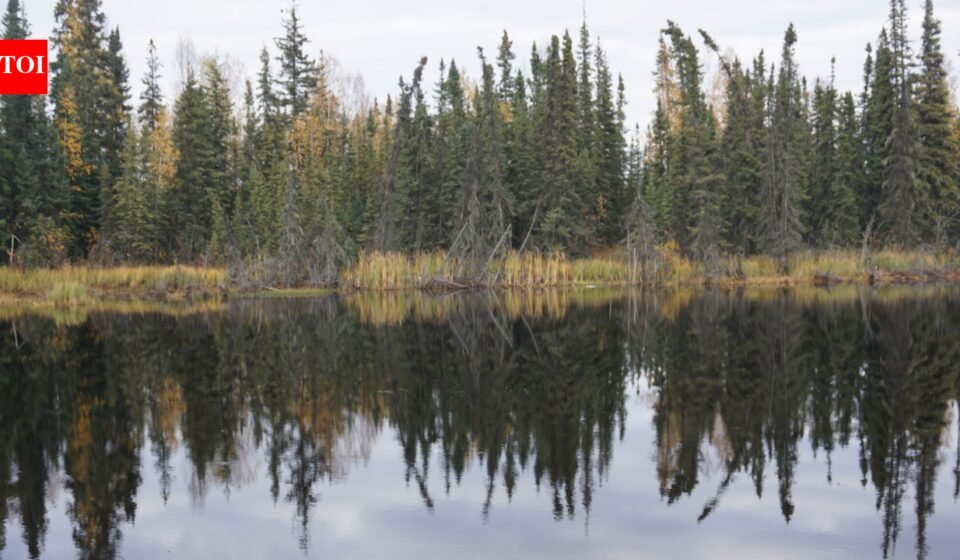
Boreal forests shade northern permafrost so effectively that summer snowmelt remains shallow, about a meter; researchers estimate their canopies freeze 59 billion tons of carbon

The dense green canopy of northern forests acts like a giant sunshade, keeping the permafrost cool enough to safely store 59 billion tons of carbon underground.This finding suggests that forest canopies reduce summer soil melt by about one meter compared to open, treeless land. By shading their surfaces, northern trees prevent large amounts of ancient organic matter from decaying and leaking greenhouse gases into the air.The international study, published in the journal Nature Climate Change, reveals an important natural service that has long been ignored by standard climate models. Researchers from Humboldt University Berlin, the Alfred Wegener Institute (AWI) Potsdam, the University of Oslo and Vrije Universiteit Amsterdam led the project.
Carbon hidden beneath the roots
For decades, environmental scientists have measured the carbon stored in northern forests primarily by counting the wood, leaves and roots of living trees. Living trees in the frozen boreal store 7 to 19 petagrams (gigatonnes) of carbon in their wood and leaves.However, the team found that shade indirectly froze 59 petagrams of carbon in the soil below. Underground storage amounts to nearly one-third of the total carbon locked in forest permafrost soils.Dr. Simone Maria Stünzi, researcher at the Department of Geography at Humboldt University Berlin and visiting researcher at AWI, said: “One of the most important climate services provided by boreal forests is located under the trees. Their canopies keep the permafrost cool and preserve carbon stocks that far exceed those stored by the trees themselves. When forests disappear, the ground also loses this protection.”
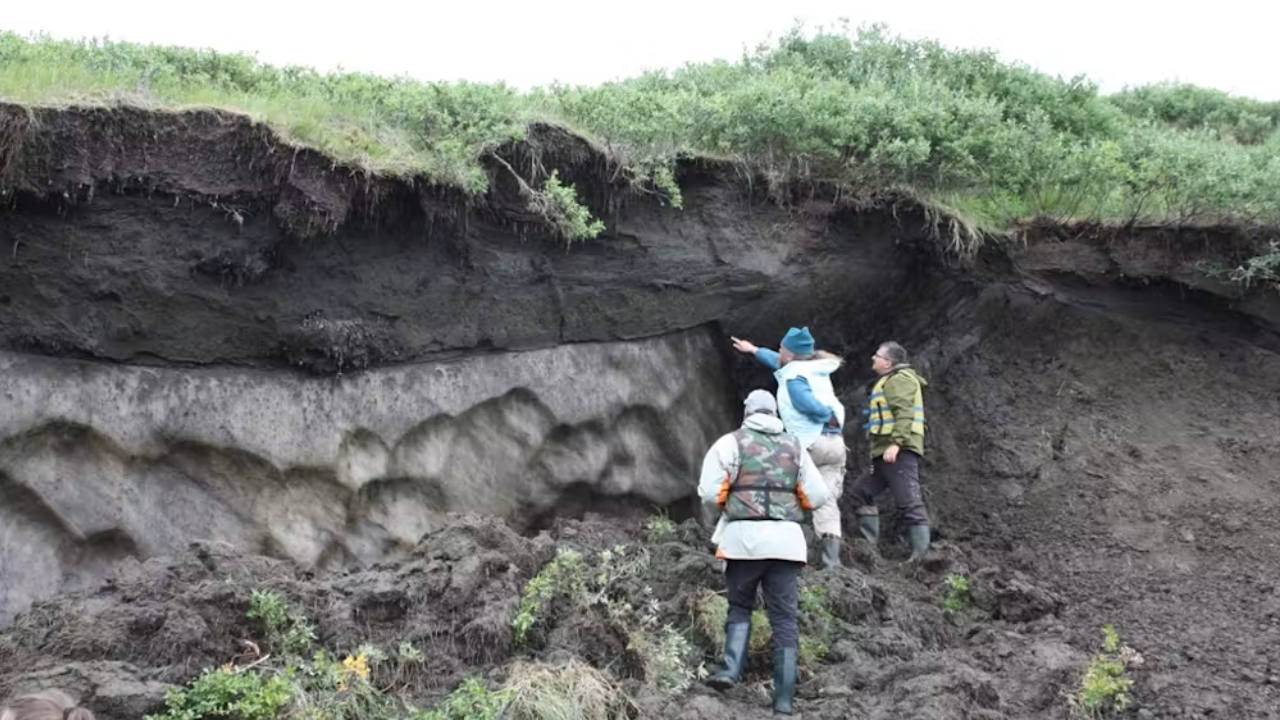
Frozen sediments in Chersky, Russia.
How shade blocks heat
To measure this cooling capacity, the team combined satellite images, map data and computer models of 16 northern regions. The models track how heat moves between the air, leaves and frozen ground.Comparisons of shaded forest floors and open land indicate that tree cover reduces summer melt depth by half or more. This difference allows about a meter of soil to remain frozen during the hottest months.Without shade, tiny soil microbes start breaking down about 40 petagrams of freshly thawed carbon. When these microorganisms digest dirt, they release carbon dioxide and methane, further warming the planet.Moritz Lange, a geoscientist at Vrije Universiteit Amsterdam who helped design the study, said the discovery fills a huge gap in global climate research.“We found significant gaps in our understanding and quantification of the role of boreal forests in the global carbon cycle,” Lange explained. “This is particularly important because these forests are facing increasing pressure as a rapidly warming climate leads to increased drought and wildfires, which could fundamentally alter their ability to store carbon.”
Prevent the ground from collapsing
In addition to slowing melting, the leaves protect soil filled with underground ice from melting and collapsing.When frozen ground melts too quickly, it creates sinkholes, landslides and muddy lakes. The study estimates that tree cover could protect an additional 19 petagrams of carbon from being washed away by these landslides.Trees can regrow within decades after fire or logging, but the carbon in permafrost took thousands of years to accumulate after the last ice age. Once it thaws and leaks into the sky, we won’t be able to replace it in our lifetime.“There are currently 59 petagrams (or 59 gigatons) of carbon stored in permafrost, entirely due to the cooling effect of the tree canopy, a climate-relevant amount on a global scale,” Stünzi said. “This makes protecting these forests a crucial climate issue.”Researchers warn that hotter weather, more severe forest fires and tree felling pose a double danger. Burning trees release carbon directly into the air and strip trees of shade, causing the deep frozen ground below to melt.
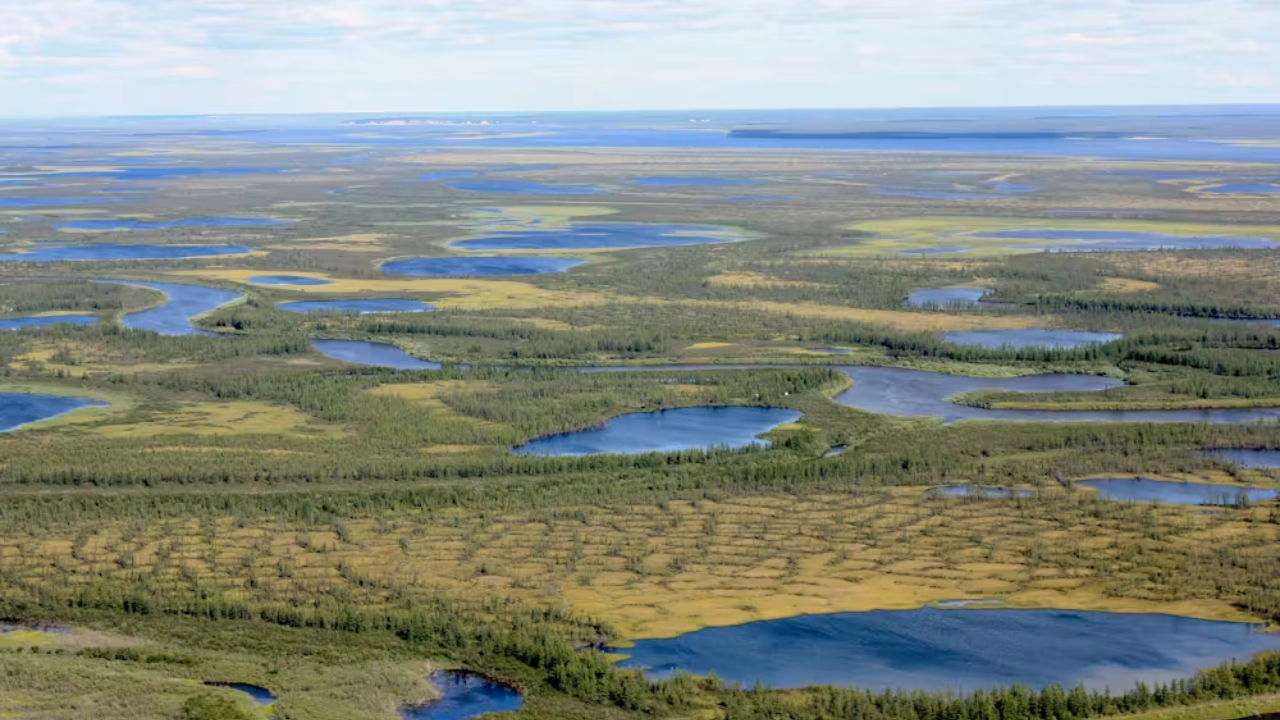
Inland waters such as wetlands, lakes, ponds, water-saturated soils and peatlands play an important role in the net greenhouse gas balance of permafrost regions.
How coniferous forests influence world weather
The northern boreal forest, also known as the taiga, spans Canada, Alaska, Scandinavia, and Russia and accounts for nearly thirty percent of all forest land on Earth. Because it circles the top of the Earth, the way this forest handles heat directly determines weather patterns across the Northern Hemisphere.When trees are cut down or destroyed by wildfire, the dark forest canopy disappears, leaving the ground exposed to direct sunlight. Initially, bare ground or snow reflects more solar radiation back into space. However, as dark soil absorbs summer heat without shade, ground temperatures rise rapidly, triggering rapid melting of the permafrost below.This melting releases old, trapped organic matter, which soil bacteria quickly digest, releasing large amounts of methane and carbon dioxide into the air. This release of gases creates a warming cycle: The warmer the temperature, the more permafrost melts, releasing more gases, leading to even warmer temperatures. Protecting the conifer canopy acts as a vital thermal brake, preventing this destructive warming cycle from getting out of control.