

School calendar has new holidays today due to online classes, pollution and bomb threats
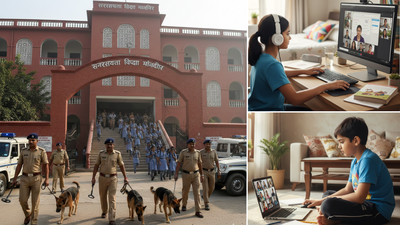
Remember when you were a kid and you woke up to pouring rain and rumbling clouds, and your first thought whispered: “Is today going to be a rainy holiday?”Suppose modern school life has a new form of rain break.Books have been replaced by tablets and blackboards by smartboards. The much-anticipated rainy day ‘chutti’ has been replaced by pollution-induced online classes and bomb threat evacuations.In a recent incident, several schools in Ahmedabad, Gujarat, received bomb threat emails.The students were dispersed and an investigation was launched, but ultimately nothing suspicious was found. However, the damage is real.Such incidents are no longer isolated. They mark a shift that few could have imagined—one that is quickly becoming the norm.So, in this changing environment, has the idea of a break also changed?Technology is no longer an add-on; This is the norm. Remote learning now runs parallel to physical classrooms. Since the outbreak of the COVID-19 pandemic, technology has become integrated into students’ daily lives. Online classes have become the default response to distractions. For today’s kids, canceled classes no longer mean freedom.But while maintaining continuity, a few other things have changed.But the bigger question remains: How will this reshape the academic landscape? More importantly, what does it do to the children growing up in it? Have recurring pollution alerts and bomb threats become commonplace? Is a generation slowly becoming desensitized to dangers that should alarm us?The face of the golden years of life—school life—has changed dramatically.For caregivers, this transition brings with it layered emotions. It’s comforting to know that education no longer collapses at the first sign of disruption. Technology provides stability.But there is also unease. Nostalgia for simple interruptions.Somewhere between nostalgia and necessity, a new school life is quietly taking shape—one that no one quite expected, but one that an entire generation is learning to call normal.
“Rainy day” login
Parents describe a stark shift in post-COVID school life, with technology and online classes moving from emergency measures to default fallbacks for almost any disruption.Tejash Tarun, a parent in Bengaluru, points out that even logistical inconveniences now trigger digital shifts, not cancellations.“Even relatively minor issues, such as the renovation of the last stretch of road leading to the school, are not canceling classes now. Instead, schools will give notice for online classes for a week,” he said.His observation underscores a broader structural shift. Continuity now trumps interruption, and the idea of pause that was once deeply ingrained in school culture is slowly disappearing.Another parent, Radhika Ashok Kumar, also pointed out that administrative and logistical demands are increasingly driving online learning.“Last year, schools were at the center of the board. Therefore, some meetings are scheduled online. “But online courses also come with their own set of challenges. Talen emphasized the material demands online education places on families.He said: “If children are being taught from home, they also need a suitable study space. Secondly, they need a suitable device. It can’t just be a phone for a few minutes. A laptop or computer is essential.”Further highlighting the disadvantages that parents may face in their careers, he said: “For working parents, the office work-from-home arrangement is essentially over, which immediately creates challenges if a child’s school suddenly switches to online classes. They may have to take time off or try to handle work from home, if that is an option. “An idea promoted as institutional flexibility may translate into logistical pressures at the household level.
Space, screens and social life
Learning spaces have expanded beyond campus.During the conversation, it was generally agreed that offline school remains irreplaceable for social, emotional and overall personality development – that there is “no alternative” to going to school for real-world interactions with peers and teachers, learning social norms, establishing discipline and daily routines.Manish Masoom, a Delhi-based parent whose children’s classes have moved online due to the GRAP measures, shares the value of real-world interaction over online classes.
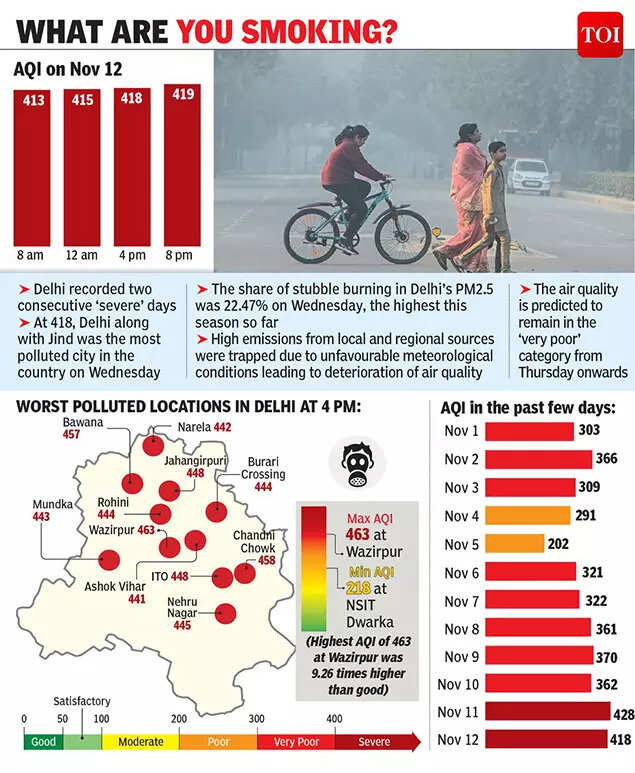
He said: “Ideally, children should go to school, sit in a classroom and learn with other people. After all, humans are social by nature. Whether the cause is pollution, strikes or any other disruption, moving to online classes will bring its own set of problems.”Tarun further elaborated on how he sees micro-lessons being integrated into daily school life.“Besides academics, school is a place where children learn about community interaction. A classmate might borrow my pencil today; I might borrow their notebook tomorrow. These small exchanges teach cooperation, sharing and understanding,” he said.When asked about the disadvantages of online classes, parents highlighted the lack of preparation offline classes provide their children.Radhika shared, “For the lower grades, I felt it was manageable, at least for my son. But in the upper grades, I noticed that the kids were struggling in subjects like math, science and chemistry.”She further added that online classes tend to lag behind in making students cope with stress more broadly, saying, “When students take online classes in Class 9, some of them are not able to build a strong foundation. As a result, when they move to Class 10, they find it difficult to cope with academic pressure because their basics are not clear yet. “
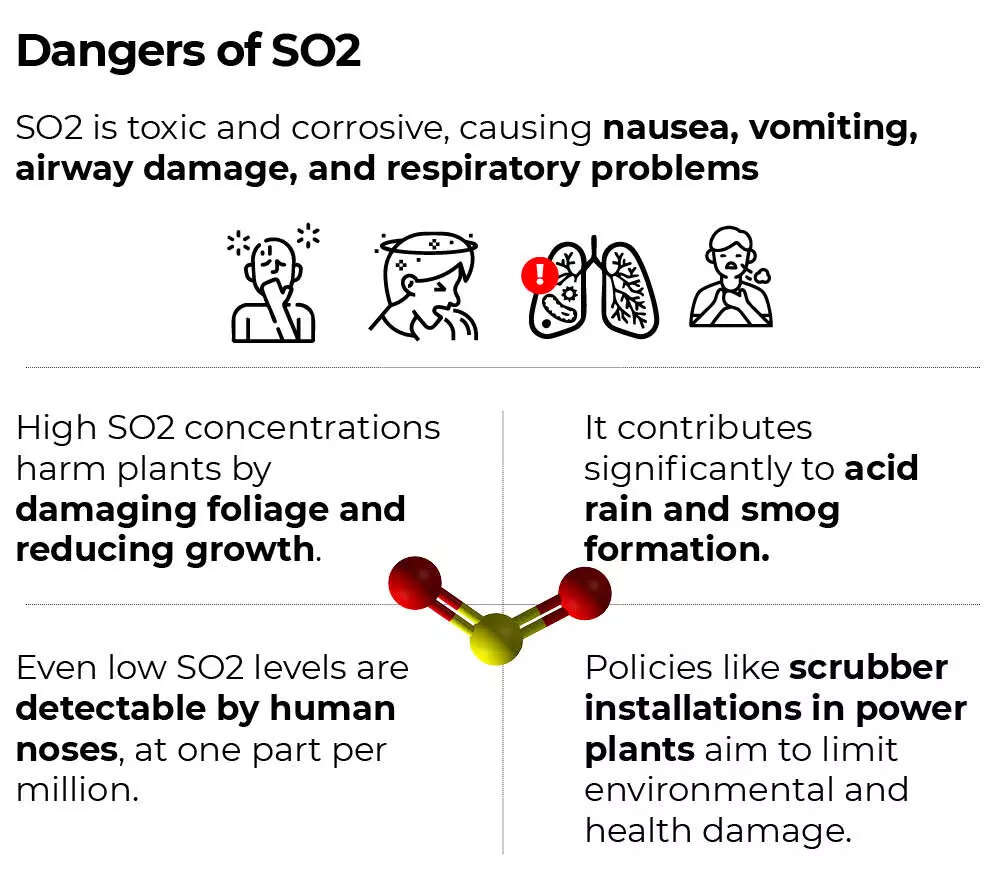
In preserving the academic calendar, schools may inadvertently widen conceptual gaps. On top of that, screen time has become another uphill battle for parents.For some, e-learning courses significantly increase the amount of time children spend in front of screens. For others, avoiding screens entirely is nearly impossible.Parents point out that online classes add a non-negotiable amount of screen time to students’ days. Beyond this, however, television, mobile, gaming and social media continue to contribute to sustained digital engagement.In an environment where education itself is mediated through devices, setting boundaries is no longer as simple as taking away a gadget. It becomes a delicate balancing act, weighing academic necessity against cognitive rest, connectivity against overexposure.
Shadows in the hallways: The new safety normal
If the digital shift represents one dimension of change, recurring bomb threats and hoax emails represent another. Not only does it become a logistical issue, but it also affects the emotional atmosphere.Parents’ memories focus on a new routine distraction when it comes to bomb threats and prank emails. But how does this new chaos affect children? Where does it drive their sensibility? How are schools and parents handling it?Parents agreed that the school did a commendable job in controlling the situation and not causing unnecessary panic among students. Depending on the intensity of the threat, there may or may not be an evacuation, but students certainly won’t panic.The evacuation process was carried out calmly without causing immediate panic among students, and clear and timely communication was provided with parents.
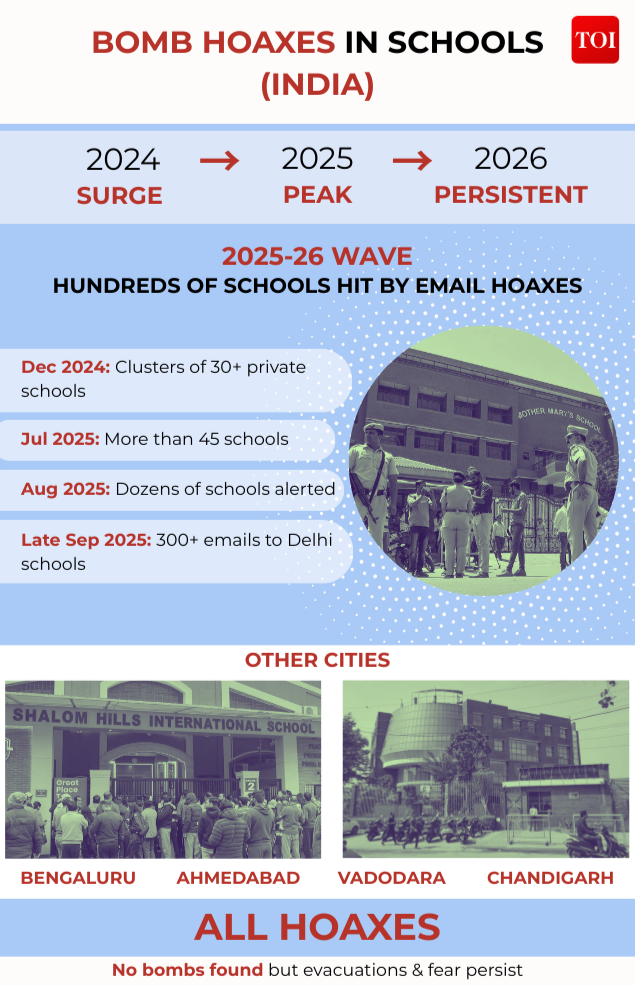
Bomb threats hit Indian schools
With younger children, parents find it best to be cautious with them.Neha Arora, a teacher and parent in Delhi, explains this approach. She said: “Given the young age of the children, the school made no effort to explain the situation to them clearly or directly. We also made a conscious effort to keep him away from such news and events as he was too young to fully understand the concepts.”Older children, however, operate in a different information ecosystem. With access enabled, they became more curious about what was going on.Aakansha Aashu shared her 15-year-old’s reaction after her school was evacuated following a bomb threat message. She described how curiosity influenced their responses.“My son was deeply involved in the discussions. Putting aside everything else, they started talking about who was involved, who was the culprit, who did what,” she said. “He didn’t like those conversations, but there was no real sense of fear between them. They didn’t seem scared either. “Masum discusses the inevitability of information flow in the digital age. He went on to add that his son was curious about the events happening around him. Although he is only 10 years old, he understands everything.He attributes this awareness to access to technology. Whether they talk about something or not, the children themselves continue to explore and understand, and as a final step, they go back to their parents for answers.He said: “In today’s situation, whether I explain it to him or not, he already knows a lot. This information is communicated directly to the children. Even if he is not watching the news, countless content creators are discussing these topics in different ways, some serious tones, some humorous or dramatic.”He further added, “When children see this content, they naturally become curious. They try to understand it at their own level and then come to us with questions. He’s only 10 years old – but they definitely know more than we think. “
normal new landscape
At first glance, the contrast seems almost apocalyptic. But history reminds us that each generation grows up in a world that is reshaped by the times.What we are seeing today is not just a change in the way schools operate, but a shift in children’s sense of “normal.”The simple excitement of an unexpected vacation, the shared pause when life briefly slows down, the innocence protected from larger anxieties—these small but meaningful parts of childhood are not disappearing but are reinventing themselves.What replaces it is a system optimized for stability, but one that requires children to adapt while fully satisfying their curiosity.The question is no longer whether education can continue amid the chaos. Apparently you can.The more important conversation lies elsewhere: As schools evolve between nostalgia and necessity, how do we preserve the human rhythms, joy, pauses, and lightness of the school day?