
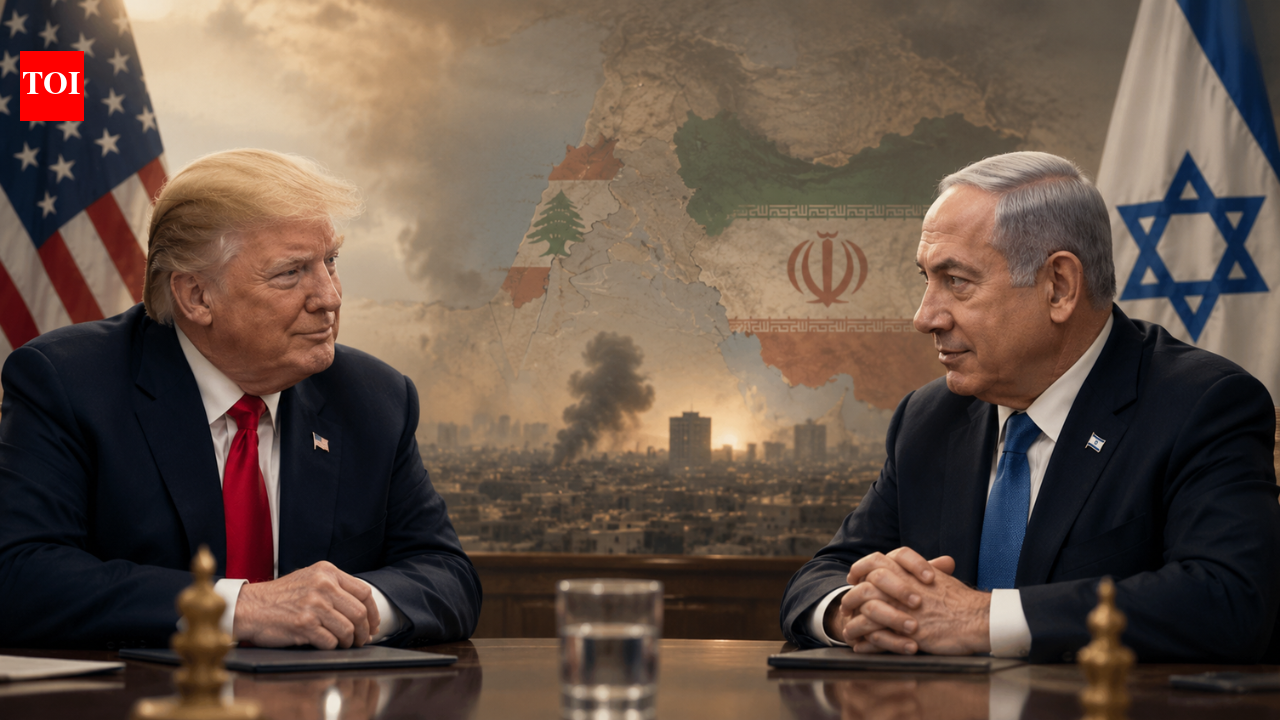
Israel is increasingly concerned that a new understanding between the United States and Iran could effectively legitimize Tehran’s influence in Lebanon. Impending agreement among MAGA top leaders Donald Trump Iranian officials may also limit Israel’s ability to take military action against Iran HezbollahThis is reported by Axios, citing Israeli sources.The diplomatic engagement comes after months of military escalation and all-out conflict in the Gulf. But even as Washington and Tehran seek to stabilize relations, officials in Jerusalem worry the talks could reshape Lebanon’s security landscape in a way that favors Iran and limits Israel’s freedom of action.The concerns stem from recent agreements reached during U.S.-Iran talks in Switzerland and a memorandum of understanding signed last week. Israeli officials believe Iran was successful in bringing Lebanon into wider talks to ensure its ally Hezbollah was protected, while Israel spent months trying to weaken the group and reduce Tehran’s influence in the country.According to Axios, Israeli officials are concerned that the new framework could lead to increased scrutiny from Washington whenever Israel attempts to launch an attack in Lebanon. They are also concerned that U.S. President Donald Trump could pressure Israel to withdraw its troops from southern Lebanon before what they see as the threat from Hezbollah is fully addressed.According to reports, the US-Iran memorandum requires the two countries and their allies to commit to ending hostilities, including in Lebanon, and safeguarding the country’s territorial integrity and sovereignty. There were several rounds of fighting after the deal was signed, but the new ceasefire has largely held since Saturday.Iran has previously threatened to close the Strait of Hormuz and boycott Swiss talks if Israel continues its attacks. Once negotiations began, Lebanon emerged as a key issue. The two sides reportedly agreed to establish a new “deconfliction team” that would include Lebanese as well as Pakistani and Qatari mediators to help maintain the ceasefire.Israeli sources told Axios that the arrangement weakens the understanding reached with the Biden administration in late 2024. Under the November 2024 ceasefire agreement, Israel retains the right to take action against imminent and emerging Hezbollah threats. Under the new conditions, Israeli officials believe their freedom of movement may be limited primarily to imminent threats.They were also troubled by the structure of the new mechanic. While an earlier ceasefire monitoring framework included Israel, Lebanon, the United States and France, the new arrangement reportedly includes Iran but not Israel as a direct participant. Furthermore, while the previous mechanism focused on dismantling Hezbollah’s military infrastructure in southern Lebanon, the new one is primarily aimed at preventing conflicts between Israeli forces and Hezbollah.Axios reports that while Prime Minister Benjamin Netanyahu While concerns remain about the nuclear aspects of the U.S.-Iran deal, Lebanon’s terms are currently causing greater anxiety within its government.One reason is domestic politics. Israel’s actions against Hezbollah remain a major issue ahead of October’s elections.“Bibi is hysterical about this,” an Israeli source told Axios, referring to Netanyahu’s nickname.According to reports, Netanyahu recently asked his close friend Ron Delmer to use his connections in Trump circles to influence discussions about Lebanon. The same source said Demer’s efforts led to a Truth Society post in which Trump threatened to take action against Iran if it failed to contain Hezbollah.A U.S. official confirmed to Axios that Demer was involved and said U.S. negotiators briefed him multiple times during talks in Switzerland.“We are being transparent with them,” the official said.For Lebanon, President Joseph Aoun is reportedly open to new mechanisms as long as the United States remains at its center. Axios Covers the Vice President JD Vance Trump’s special envoy Jared Kushner briefed Aoun on the arrangement in a phone call on Monday.U.S. officials sought to reassure Israel that its interests would not be ignored in the new framework.A senior U.S. official told Axios: “Israel is not withdrawing from the mechanism because the United States is also in the mechanism. Our relationship is so close and coordinated that a direct channel between the United States and Iran on Lebanon will only benefit Israel.”Not everyone in Washington believes this. One of Netanyahu’s closest allies in Congress, Senator Lindsey Graham, criticized the move.“The Trump administration’s envisioned deconfliction mechanism for Lebanon does not include Israel, which in my view is a major misstep,” Graham told Axios.On Monday, Netanyahu issued a joint statement with Defense Minister Israel Katz and IDF Chief of Staff Gen. Eyal Zamir, declaring that the military would continue to “take decisive action to eliminate threats to our soldiers and citizens, destroy terrorist infrastructure, and maintain safe zones in southern Lebanon.”Notably, the statement did not assert that Israel retained full freedom of movement within Lebanon.Asked about Netanyahu’s concerns, Trump responded: “I’m a problem solver and I solve problems very quickly – including Bibi.”Another round of direct talks between Israel and Lebanon is expected to take place at the U.S. State Department, with Secretary of State Marco Rubio mediating. Discussions have focused on a possible phased Israeli troop withdrawal from parts of southern Lebanon in exchange for deploying Lebanese troops to prevent Hezbollah from reestablishing its presence.Graham believes the new U.S. understanding with Iran could complicate those efforts.“It is highly unrealistic to expect an agreement between Israel and Lebanon while Iran is asking Lebanon to participate in negotiations with the United States,” he said.The senior U.S. official disagreed, telling Axios that Rubio’s team was fully aware of the new arrangement and believed it could ease tensions and create better conditions for diplomacy.“This creates a greater chance for Israeli-Lebanese negotiations to succeed. If Israel and Lebanon work together and reach an agreement, they will be in a stronger position to disarm Hezbollah,” the official said.For now, however, prospects for a comprehensive deal between Israel and Lebanon that would ultimately lead to the disarmament of Hezbollah appear remote, underscoring the challenges diplomats face even as the ceasefire largely holds.