
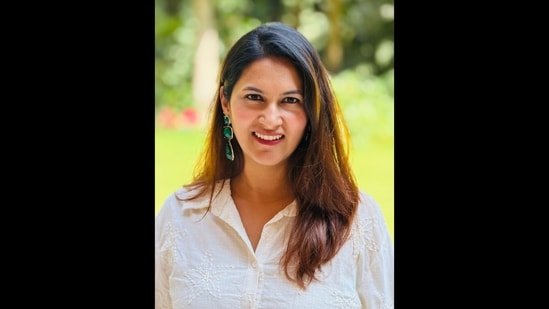
Moving abroad is often seen as the ultimate achievement, but the reality behind moving is rarely smooth sailing. Sabah Husen Qazi, a 33-year-old tech professional, spoke to HT.com about the hidden financial and emotional costs of chasing global dreams. From managing a daunting $70,000 in student loans with zero safety net, to dealing with intense homesickness and surviving corporate layoffs, the Bangalore-born techie exposes the fragility of building a life from scratch. Qazi, now a well-paid corporate employee in Toronto, Canada, shares her raw experience to remind aspiring professionals that the road to success is paved with chapters that no one talks about.

Bangalore-born NRI first moved to us Then found her “forever home” in Canada.
Her educational journey:
Long before she conquered the Ivy League and built a blossoming career, Qazi had to face the rigorous realities of the Indian education system. The expectations placed on her were enormous, making her early academic setbacks feel catastrophic.
Looking back on how these initial obstacles shaped her mindset, she told HT.com, “I tried personal income tax Neither attempt was successful. At the time, it felt like the end of the road – because in India, that’s what we’re often told. Growing up in a conservative family where education was the only measure of worth, as a girl who was expected to prove herself every step of the way, the weight of this outcome was enormous. It shook my confidence in a way that I didn’t fully understand until years later. “
She added, “But life doesn’t stop. I performed well throughout my engineering career, unconsciously carrying self-doubt—still too afraid to take on the most ambitious opportunities. But something inside me kept pushing. I applied to a handful of Ivy League schools and top graduate programs almost half-expecting to be rejected, and getting into Cornell (an Ivy League and top-five computer science school in the world) was the first real sign that I was capable of more than I believed in myself.”
Qazi holds a bachelor’s degree in computer science from MS Ramaiah Institute of Technology, Bangalore and a master’s degree in the same subject from Cornell University, Ithaca, New York.
How did America reshape her?
Recalling her experience, the techie told HT.com, “America reshaped everything I thought I knew. Grades were not a proxy for intelligence or success, results were. Relationships, conversations, and the courage to show up and ask were more important than any score. The first few months at Cornell were very difficult because I was a homesick girl, but my mother and husband supported me throughout. At Cornell, I secured positions as a grader and teaching assistant, which helped offset my loans.”
Sudden setback:
She faced a huge obstacle when she was suddenly fired. “I had to rebuild again. Each time, I became more grounded, more resourceful, more human.”
However, Qazi said the career setback wasn’t “the hardest part.” She explained: “It was in a place far away from my mother – a woman who raised me on her own and whose strength was woven into everything I was. My mother, no matter what was going on in her personal life, tried her best not to affect me. Every time I doubted myself, she, my aunt and my husband, almost every day For my backbone. My mother always told me, and still tells me, that I am her ‘son’ – that I must be strong for her, as she sees it.” That responsibility, that love, has been the most powerful force in my life in terms of how I defended her and women’s rights in times of difficulty. “
What was it like moving abroad?
She recalls, “Moving abroad, overcoming failure, and forging an unconventional path not only built a career but perspective. It taught me the true value of people, resilience, and the value of staying humble through the toughest chapters. It showed me that paths that don’t lead to the way you planned often lead you to where you need to go.”
The techie added, “Now I lead product development for people, mentor people especially girls, and I’ve been able to help my mother travel the world to new countries she’s always wanted to visit.”
Today, the 33-year-old lives in Canada with her husband and children and is among the “top percentile” of foreign earners.
Struggle in a foreign country:
When asked, “What obstacles have you faced in your current position?” Qazi replied, “A lot. And they all came at the same time – that’s the part no one really talks about. The biggest one is my mindset. I grew up thinking that good grades equal a good life. That’s the way we grow up in India. When I reached U.S. The whole belief system fell apart. No one was giving you anything based on your score. You had to look for opportunities, talk to strangers, ask for things, put yourself out there—all of which I had never been taught to do. “Rewiring my brain to think this way was really the hardest thing I’ve ever done. “
“And my self-confidence,” she says. “Not getting into IIT had a huge impact on me. I always felt like I wasn’t good enough—even when I wasn’t. Getting a C+ at Cornell felt like confirmation of my worst fears. It took me several years to stop seeing every setback as evidence that I didn’t belong here.”
She shared how her family’s circumstances increased her worries. “It added another layer to my family situation. My mom raised me on her own. She sacrificed a lot for me. And then I left. I moved across the world and she came home alone. It’s not an easy thing to live with. The guilt, the worry — it stays with you.”
Qazi spoke of being “homesick,” adding that it hit her harder than she expected. Sometimes she feels completely alone. “You just sit in your apartment wondering what you’re doing. Those nights are really tough.”
Financial Panic:
Qazi revealed to HT.com, “Financially, it was scary. My tuition loans totaled $70,000. I had used up every rupee I had saved – $10,000 – just for the advance before I even got on the plane. I came to a new country with a huge loan, no job and zero safety net. This kind of weight doesn’t let you go.”
She continued, “After two years of marriage, my husband and I started traveling long distance. It was very difficult for both of us. Whenever there was vacation or course time, we would travel and see each other. You try to build a marriage through phone calls and visits while surviving in a foreign country. It took a toll on both of you.” However, she shared that every obstacle she faced made her stronger.
Also read: ‘I feel like I belong’: NRI Justin Bhandari rediscovers Delhi with Canadian partner
Summarizing her story, Qazi told HT.com, “Life abroad is hard. Really hard. No one is going to sugarcoat the lonely nights, the financial pressure, the feeling of starting from scratch in a place where no one knows your name. But it also does something to you that nothing else can. It brings out a version of you that you didn’t even know existed. You become braver, more resourceful, more open. You no longer wait for permission to pursue things. When everything familiar is stripped away, you figure out who you really are.
Her advice to the younger generation:
“If I could tell young people one thing — especially women who feel trapped and feel like the road in front of them is the only way — it’s this: Go to an unknown place. Build your life in a place where no one knows your story. Fight a little. It will be the hardest thing you ever do and it will show you what you are really made of. You don’t find your potential in your comfort zone. You’ll find it on the other side of the hardest chapter you’ve ever experienced.”