
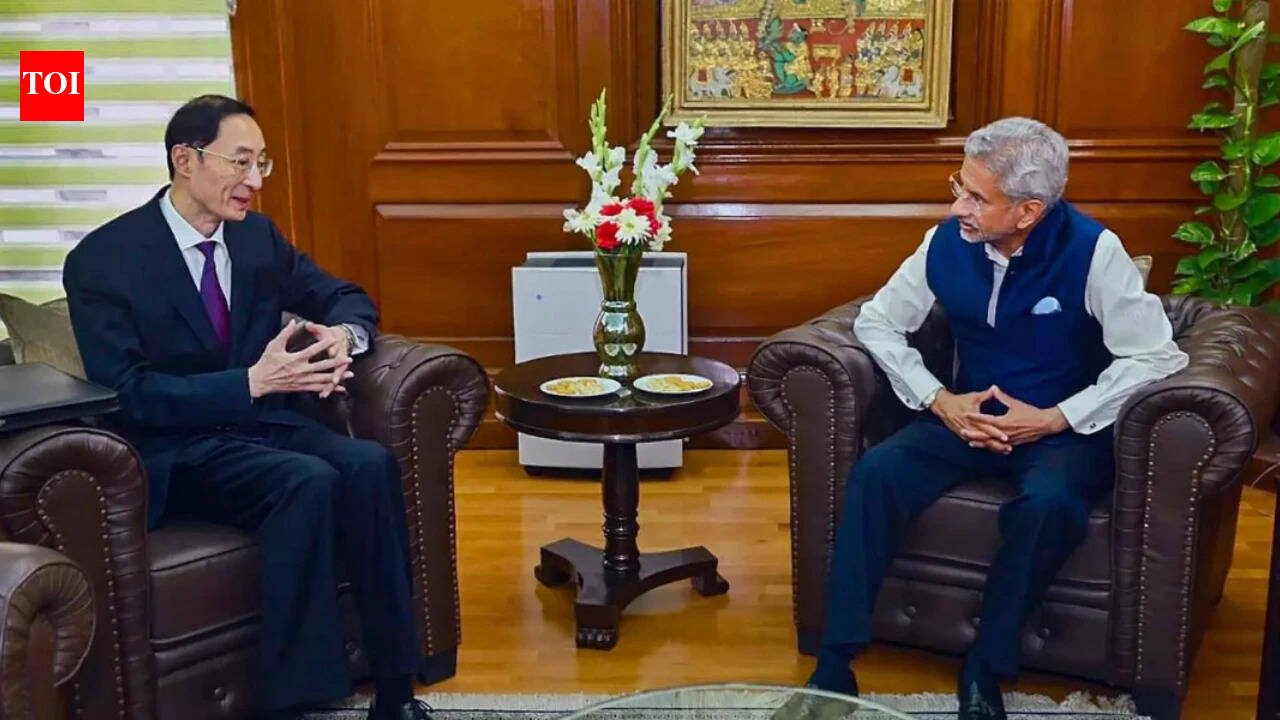
China has removed Vice Foreign Minister Sun Weidong from his post, according to an official announcement from the Ministry of Human Resources on Tuesday. The decision was made by the State Council, China’s top administrative body. However, no reason or timetable was provided for the removal of the top diplomat.According to records on the Chinese Ministry of Foreign Affairs website, Sun Weidong’s last public contact was on March 13 when he met with the ambassadors of Brunei and Malaysia to China. According to posts on Hashmi’s X account, he held talks with Pakistan’s ambassador to China Khalil Hashmi two days ago to discuss bilateral cooperation.A brief statement from the Ministry of Railways also stated that An Lushan, another senior official, had been removed from his position as deputy director of the National Railway Administration. Both departures come amid ongoing scrutiny of top Chinese officials, which often heralds disciplinary measures or a shakeup within the government.While authorities did not specify whether Sun faces an investigation or reassignment, the lack of details has fueled speculation about possible disciplinary action. The removals are part of Xi Jinping’s decade-long anti-corruption campaign.
Who is Sun Weidong?
Sun Weidong is a senior Chinese diplomat who served as China’s ambassador to India from 2019 to 2022. During this period, bilateral relations deteriorated sharply. It is worth noting that Weidong also served as China’s ambassador to India during the border conflict in the Galwan Valley in 2020, after which India banned 59 Chinese mobile applications and stepped up scrutiny of Chinese investments.Sun’s comments during the crisis have drawn attention, in which he accused India of fomenting conflict and said the responsibility for easing tensions did not lie with China, further straining relations between the two countries.He continues to serve as ambassador until October 2022. In his farewell speech, Sun cautioned against viewing India-China relations through a Western geopolitical lens, warning that such an approach would prompt the two neighbors to see each other as rivals and threats.
Xi Jinping’s anti-corruption campaign
The campaign, launched in late 2012, has been described as one of the largest in the party’s history. The “Eight Regulations” implemented in December 2012 provide strong support for curbing luxury and waste. It targets “tigers and flies,” senior and junior officials, if they are accused of wrongdoing.According to data from the Central Commission for Discipline Inspection and the National Supervisory Commission, in 2025 alone, China investigated and dealt with more than 1 million corruption cases and punished more than 938,000 individuals. The year-end report of the Central Commission for Discipline Inspection stated that those punished included 69 provincial and ministerial-level officials, 4,155 bureau-level officials, 35,000 county-level officials, and 125,000 township-level officials.Senior military officers have also been affected by Xi Jinping’s sweeping campaign, which continues to reshape the ranks of China’s government and armed forces.