
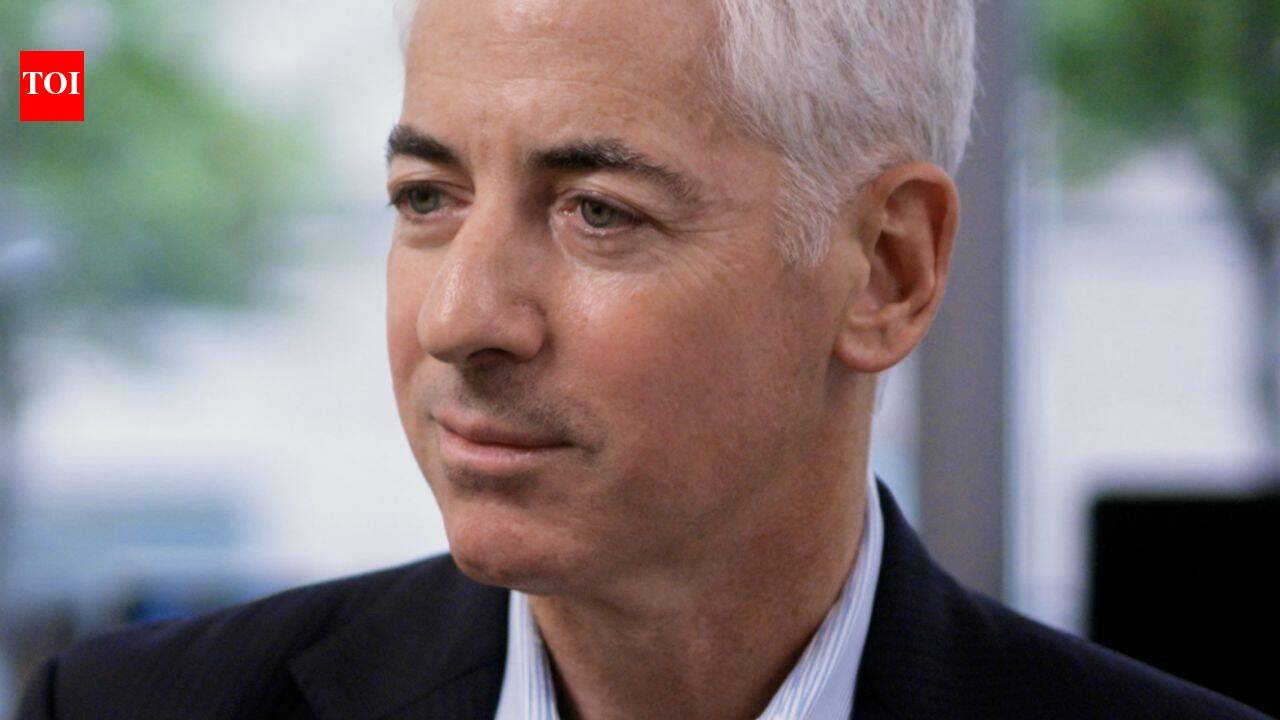
Bill Ackman’s investment career can be traced back to a surprisingly modest beginning: a college sales job that earned him $14,000. While studying at Harvard, Ackman sold advertising for the student-produced Let’s Go travel guides on commission, discovering that he had a knack for turning sales into serious money. The experience offered an early glimpse of the commercial world, but his direction changed after graduation, when he joined his father’s New York real estate business. Ackman found the entrepreneurs and developers involved in deals more interesting than the property work itself.As reported by Fortune, through his father, he was introduced to Leonard Marks, who recommended Benjamin Graham’s The Intelligent Investor. Graham’s ideas had already shaped Warren Buffett’s thinking, and the book helped Ackman see investing as the career he wanted. Years later, those early influences would sit behind the creation of Pershing Square Capital Management.
Bill Ackman’s $14,000 Harvard sales job shaped his investing career
Ackman’s first meaningful taste of earning money from his own efforts came while he was a Harvard student.“One early formative experience was at Harvard, where I took a job at Harvard Student Agencies selling advertising for the Let’s Go travel guides—a series of books where Harvard students wrote reviews of hotels around the world,” as reported in the Fortune podcast Titans and Disruptors of Industry.By the time he finished the job, he had made about $14,000. For a student, it was a sizable amount, and it gave him an early experience of what could happen when commercial ability translated directly into income. Ackman had already been telling his father that he intended to become a millionaire by 30, reach $100 million by 40 and become a billionaire by 50. The numbers were ambitious, but the trajectory he eventually followed had its roots in these early experiences with business and money.
Bill Ackman’s father’s real estate business steered him towards investing
After Harvard, Ackman went to work for his father, who had cofounded and run the New York commercial real estate firm Ackman-Ziff Real Estate Group. It was a logical place for him to begin. His father had built a successful business and could offer him a direct introduction to the world of deals, property and entrepreneurs. Ackman has said he was not particularly enthusiastic about the job itself.The entrepreneurs and developers he encountered seemed more interesting to him than the work he was doing inside the real estate company. That distinction mattered. Rather than deciding to build a career in commercial property, Ackman began thinking about investing as the field in which he could put his interest in businesses to use.His father also helped with the next step. Through him, Ackman met Leonard Marks, who recommended a book that had already had a considerable impact on another young investor.
The book that connected Ackman to Buffett
The recommendation was Benjamin Graham’s The Intelligent Investor, a landmark work on value investing.Graham’s basic approach placed emphasis on buying securities with a margin of safety and thinking about shares as ownership interests in businesses rather than simply as prices moving across a screen. Warren Buffett studied under Graham and became one of the best-known practitioners of that style of investing. What began with a book recommendation from a person introduced through his father eventually became part of a much broader investment philosophy.Ackman was trying to work out what he actually wanted to do. Real estate had brought him into contact with investors and entrepreneurs, but Graham gave him a framework for thinking about companies and capital.
Harvard Business School became part of the plan
Ackman entered Harvard Business School with a fairly specific purpose. He has said he went there to learn how to become an investor. In 1992, after completing his MBA, he cofounded Gotham Partners with fellow Harvard graduate David Berkowitz. It was his first investment firm and the beginning of a career that would eventually lead to one of the most recognisable activist investment businesses in the US.The firm did not become the final destination. After Gotham Partners was wound down, Ackman established Pershing Square Capital Management in New York in 2004.By then, the early pieces of his career had begun to fit together: the sales experience from college, exposure to entrepreneurs through his father’s business, Graham’s ideas about investing and the admiration for Buffett that followed.
How Bill Ackman turned Pershing Square into an investment powerhouse
Pershing Square grew substantially under Ackman. The firm has become a major shareholder in public companies and has pursued activist campaigns in which it takes sizable positions and pushes for changes it believes can improve a business.Some of its best-known investments have included Chipotle and Canadian Pacific Railway. Ackman’s campaign involving Canadian Pacific became particularly closely watched as the railway underwent a major turnaround. Pershing Square’s investment in Chipotle also produced substantial gains before the firm eventually exited the position.Then there was the extraordinary trade made during the market turmoil surrounding the COVID-19 crisis in 2020. Ackman’s position in corporate credit reportedly turned about $27 million into roughly $2.6 billion within weeks.
How Buffett’s Berkshire model inspired Bill Ackman’s next move
Ackman’s admiration for Buffett is not simply a matter of having read Graham early in his career. He has continued to look to Buffett’s Berkshire Hathaway as an example of how an investment organisation can be structured.That became particularly relevant when Pershing Square pursued a public listing in 2026. Ackman wanted to create a structure with access to what Buffett would describe as “permanent capital” — money that does not have to be returned simply because an investor wants to leave.The distinction is important for an investment business. In a conventional fund, investors can redeem their holdings, potentially forcing the manager to sell investments and return cash. Berkshire works differently because shareholders trade shares with one another while the capital remains within the company.Ackman has sought to move Pershing Square closer to that model.In March, the firm moved towards a public structure designed to provide this longer-term pool of capital. Pershing Square also offered an incentive to investors: for every 100 shares purchased in the closed-end fund, they would receive 20 additional shares.
Bill Ackman’s journey from a $14,000 side hustle to billions
Pershing Square now manages tens of billions, a huge leap from the $14,000 Ackman earned selling ads at Harvard.That early job, his father’s real estate business and Benjamin Graham’s The Intelligent Investor exposed him to different sides of business and investing. Selling taught him about earning through performance, while his father’s work introduced him to entrepreneurs and deals. Graham gave him a framework for assessing businesses as investments.Ackman would later make far bigger bets, some worth billions, but his career began with a gradual shift towards investing rather than one defining moment.