
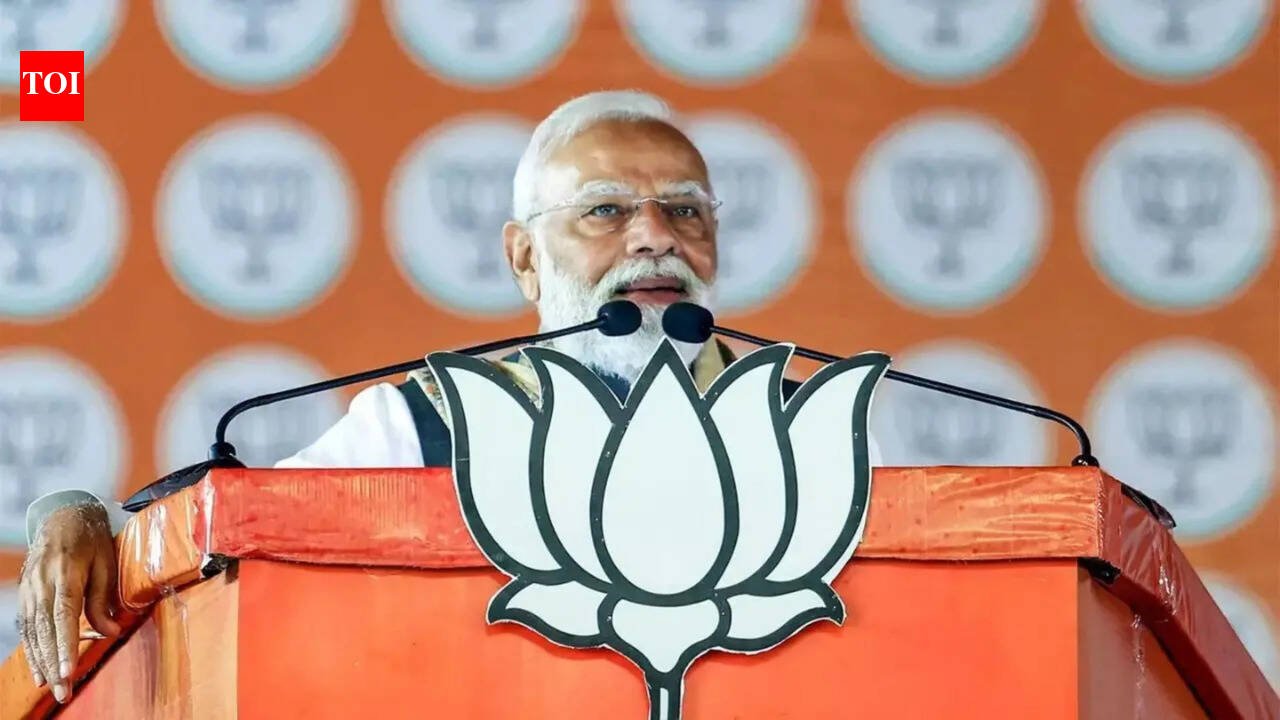
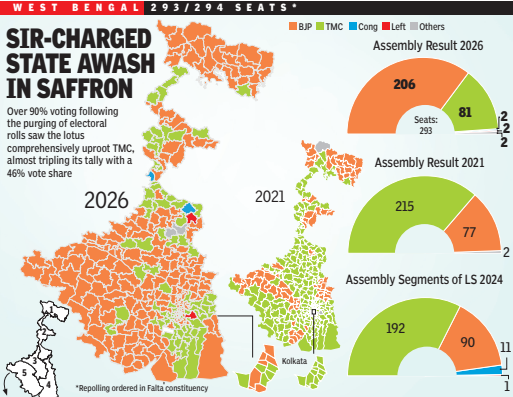
 Among the six heavyweight states, the Lok Sabha has 278 seats, accounting for more than half of the 543 seats in the Parliament. The ruling alliance is currently in power in 5 states, and the total strength of the Lok Sabha is 239.Since Prime Minister Narendra Modi led the party to its first majority in 2014, the BJP’s position in these states has never been more commanding, with three of them having their chief ministers and Bengal soon to be the shiny new addition to the list.
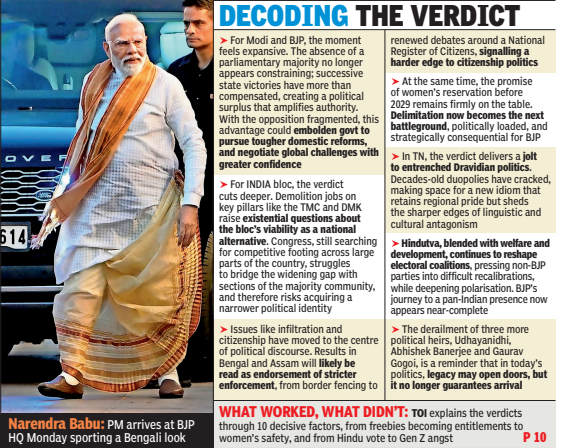
By contrast, the Indian bloc, now defeated in Tamil Nadu and West Bengal, has never been weaker in the battleground states that hold the key to a parliamentary majority.After the four largest states – Uttar Pradesh (80), Maharashtra (48), West Bengal (42) and Bihar (40) – all governed by the BJP-led NDA – comes Tamil Nadu (39), where actor Vijay leads TVK to a near majority in the 2026 assembly elections. He has been an outspoken opponent of the BJP and DMK, a powerful member of the Hindu bloc. The sixth state is Madhya Pradesh, the stronghold of the BJP, with 29 seats.
.
To be sure, the Lok Sabha elections are a different battle entirely and ruling parties in states tend to do poorly in assembly elections. In 2024, the BJP was pushed to second place in Uttar Pradesh by the Samajwadi Party-Congress alliance, while the BJP ranked first in Congress-ruled Karnataka. But unseating a sitting president without governing any large states does become a difficult task for the opposition.Uttar Pradesh will hold elections early next year and Madhya Pradesh in 2028, and the results could still change if the opposition manages to defeat the BJP in the Hindi-speaking heartland state.If the list is expanded to include all 18 states with double-digit Lok Sabha votes, their combined strength jumps to 502 out of 543 members. On this list, the opposition does make its presence felt, but only just. The party serves in five states: Karnataka, Kerala, Telangana, Jharkhand and Punjab, with a total of 92 seats.