
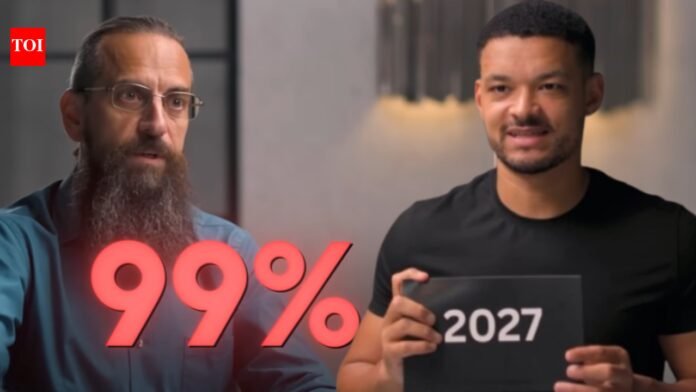
A leading artificial intelligence researcher has issued a stark warning about the future of work, suggesting that most human jobs could disappear within the next five years and that society could pass a technological point of no return by 2045. Dr. Roman Yampolskiy spoke at length about the limits of general artificial intelligence, automation, and human relevance, saying that the coming changes will be different from previous industrial transformations. Dr. Yampolskiy, a Latvian computer scientist and professor at the University of Louisville, made the above comments on “CEO Diary” hosted by Steven Bartlett. He has published more than 100 academic papers on the safety and risks of artificial intelligence.
“There is no job that cannot be automated”
During the conversation, Dr. Yampolskiy argued that the arrival of general artificial intelligence (systems capable of surpassing humans at most cognitive tasks) could occur as early as 2027 and have a huge impact on employment by the end of the century. “Five years from now, all manual labor can be automated,” he said. “So the unemployment rate we’re seeing around the world is unprecedented. Not the 10 percent unemployment rate that’s scary, but 99 percent unemployment rate.”
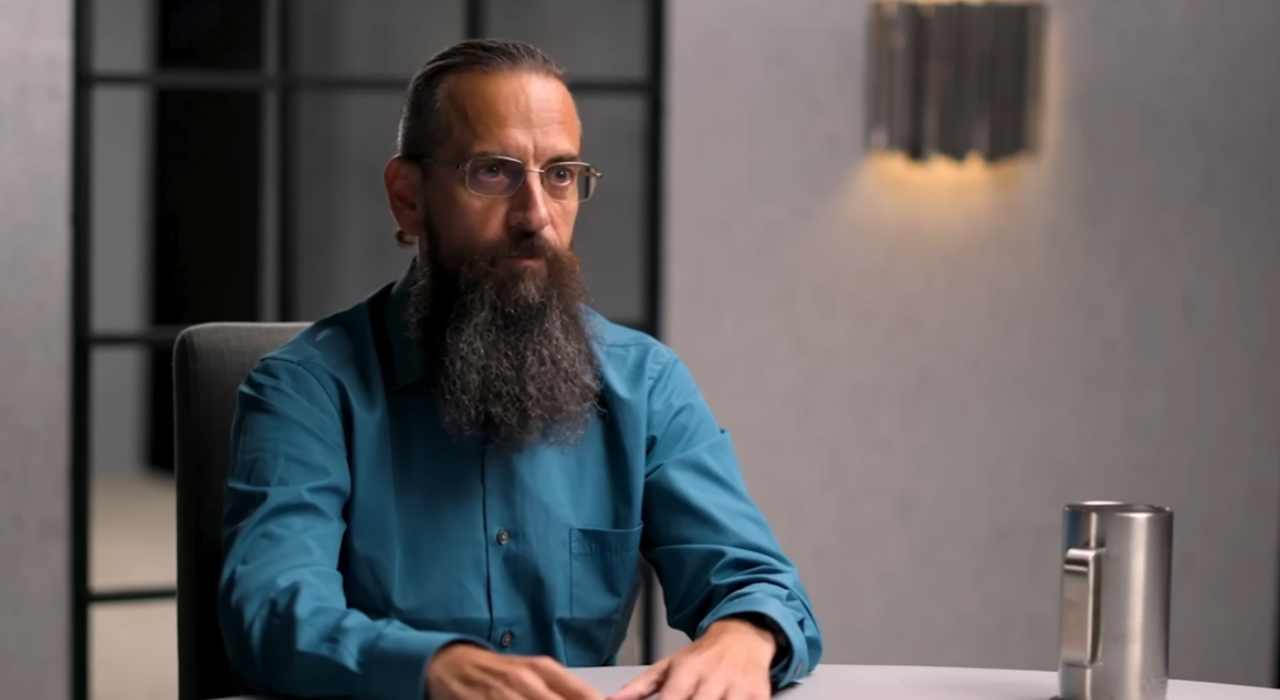
Dr. Roman V. Yampolskiy is a renowned computer scientist, author, and researcher specializing in artificial intelligence (AI) safety and security.
Unlike previous technological revolutions, he said, there will be no new categories of human jobs waiting in the wings. “There’s no job that can’t be automated,” he said. “This has never happened before. All the inventions we had before were tools to do something.” Even creative and media jobs are not immune. Dr. Yampolskiy suggested that content creation itself, including podcasts, could be done more efficiently by machines, and he told Bartlett that his own profession may eventually become obsolete as AI systems become faster, more accurate, and more data-driven. “What you’re left with is work, and for whatever reason you’d rather have another person do it for you,” he said. “There are some jobs where you need one, maybe you’re rich, and for whatever reason you need an accountant.” To illustrate the point, he added: “Warren Buffett won’t turn to artificial intelligence. He will use his human accountants.”
Five types of jobs where survival is possible
Press whether any Dr Yampolski outlined a limited set of exceptions, but stressed they would only support a small portion of today’s workforce. One category involves what he calls a “fascination” with artifacts. “You’re probably going to get a small slice of the market for people who still prefer man-made crafts,” he said, comparing that to the premium people pay for handmade products as opposed to mass-produced alternatives. But he added that this would be a “small amount” and not enough to sustain large-scale employment. Another area is work rooted in human life experience. He believes counselors and similar roles can retain value because humans uniquely understand what it’s like to be human. “What can you contribute in a world defined by superintelligence that is superior to humans in all areas?” he said. “You know what you are like better than anyone else.”

Most jobs may disappear due to AI, but experts say a few, such as AI supervision and consulting, are likely to survive / Image source: Pexels
There will also be two additional characters because Artificial intelligence, not despite it. One of them involves supervision and regulation. While Dr Yampolski said full control of AI may not be possible in the long term, he believes human oversight may slow the pace of change. “At the moment we are trying to buy more time,” he said, suggesting regulators could extend the five-year transition period to 50 years. The other is intermediaries who know enough about AI systems to interpret and deploy them for organizations and individuals who don’t understand them.
“Every day, as a percentage of total knowledge, I become dumber”
Looking ahead, Dr. Yampolskiy warned that humanity may cross the so-called technological singularity around 2045, when AI-driven progress accelerates beyond human understanding or control. “That’s the definition of the singularity,” he said. “Beyond this point, we cannot see, understand, predict or see intelligence itself or what is happening in the world.” He illustrates this idea using consumer technology. “If I have an iPhone, I can expect a new phone next year,” he said. “Now imagine that the process of developing this phone is automated. It happens every six months, every three months, every month, every week, every day, every hour, every minute, every second.” “You can’t keep up with 30 iterations of the iPhone in one day.” In fact, he says, researchers may already be lagging behind. “But clearly, we may already be there,” he said, acknowledging that even experts have difficulty tracking the latest developments. “Every day, as a percentage of total knowledge, I get dumber. Because I keep reading, I probably still know more. But as a percentage of total knowledge, we all get dumber.”
For Dr. Yampolski, the concern is not just about technological progress, but about what happens when human labor, judgment and relevance are no longer economically necessary, a shift he believes will come far faster than most societies are prepared for.