
Arctic sea ice is on track to post one of its smallest winter peaks since satellite monitoring began four decades ago, data reviewed by AFP shows, raising new concerns about climate change and its geopolitical implications.Data from the National Snow and Ice Data Center show that on March 10, the Arctic sea ice area reached nearly 14.22 million square kilometers. If current trends continue into the winter peak later this month, the level could rank among the five lowest on record.Sea ice forms when ocean water freezes in the winter and melts in the summer. However, the total amount of ice returned each winter has been steadily declining due to the impact of human activities. global warming.
Risks at record lows winter peak
Seamus McAfee said conditions could still change slightly, but current data suggests the Arctic is approaching record-low winter ranges.“But so far it looks like it could be a very significant level, one of the lowest, if not the lowest, ever recorded,” McAfee was quoted as saying by AFP.According to NSIDC data, Arctic sea ice reached its lowest winter maximum on March 22 last year, covering an area of 14.31 million square kilometers. Previous lows were set in 2016, 2017 and 2018.Samantha Burgess said levels in 2026 could be the lowest on record within five years.Meanwhile, polar oceanographer Gilles Garric said the current winter was already one of the “top three” lowest so far.
Arctic warming Much faster than the global average
Scientists say the shrinking ice cap reflects broader warming trends in the Arctic.As greenhouse gas emissions continue to rise, the past three years have been the warmest on record globally. The Arctic is warming significantly faster than the rest of the planet.“Given that the Arctic is warming at a rate three to four times the global average, we are likely to continue to observe continued warming and the loss of multi-year ice in the Arctic,” Burgess told AFP.Experts also warn that the return of El Niño later this year could further push up global temperatures.Lower winter sea ice levels may also accelerate melting in the summer.
Threats to ecosystems and wildlife
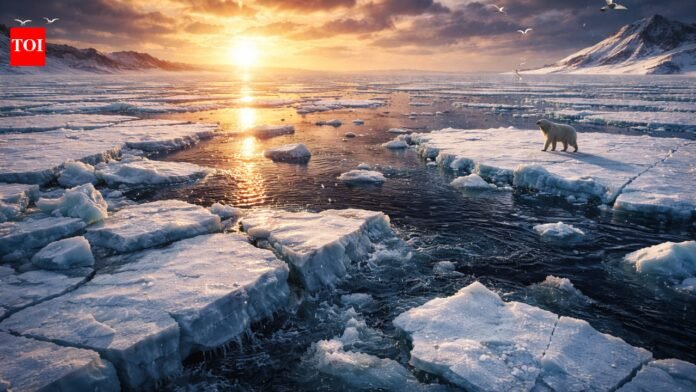
Although melting sea ice does not directly raise sea levels, unlike melting glaciers or ice caps, scientists warn that the loss of frozen ocean cover threatens fragile polar ecosystems.Species such as polar bears and emperor penguins rely on sea ice for breeding, hunting and survival.Shaye Wolf warns that shrinking ice sheets could be a harbinger of deeper climate dangers.“Alarms are sounding, we are heading towards a greenhouse planet and there will be massive destruction all over the world,” Wolf told AFP.“But fossil fuel-driven Arctic warming puts us all at risk. We are closer than ever to an irreversible tipping point that will forever change the world as we know it.”Despite record lows in the Arctic, Antarctica’s sea ice extent has improved after four years of significant lows, approaching summer averages, according to a report from the NSIDC.
Melting ice and snow are reshaping geopolitics
In addition to environmental risks, the loss of Arctic ice is also reshaping global geopolitics.As the ice recedes, new shipping lanes and untapped mineral and energy resources could emerge throughout the region.Elisabeth Chalecki says Arctic melt could turn the region into a contested sea.“From a geopolitical perspective, melting sea ice caused by climate change is turning the Arctic into a new Mediterranean: a shared ocean resource surrounded by competing countries,” she told AFP.Russia is already expanding its economic and military presence along the Northern Sea Route, while the United States and Canada may need to increase their activities in the region.Meanwhile, U.S. President Donald Trump has previously expressed interest in acquiring Greenland, viewing the Arctic territory as strategically important amid growing competition with Russia and China.Scientists warn that while melting snow and ice may bring new economic opportunities, the environmental consequences could be more severe if global emissions are not reduced quickly.