
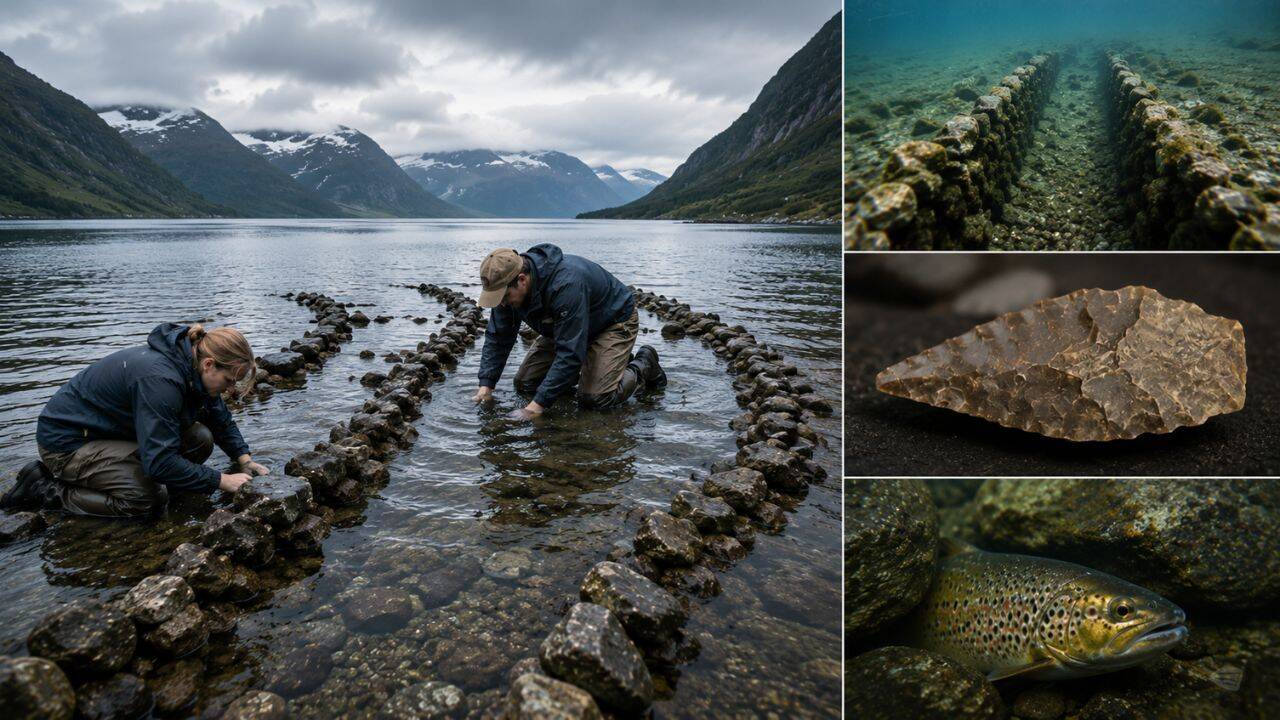
Long before growing crops or raising livestock, people living in what is now southern Norway were making lasting changes to the natural world around them. High in the mountains, where lakes are beyond the range of natural migratory fish, communities appear to have brought brown trout to isolated waters and created places where they can be reliably caught. New archaeological evidence suggests this practice was taking place some 7,000 years ago. The discovery provides a glimpse into a time when hunting, fishing and gathering were still the basis of daily life, but people were already deliberately altering the landscape, which would continue to shape local ecosystems for thousands of years.
7,000-year-old fishing net found in Norwegian mountains
Archaeologists have discovered a series of well-preserved wooden fishing structures at Lake Teis in southern Norway, the University of Cambridge reports. The waterlogged environment helped protect the wood, allowing some ancient traps to survive long after similar features elsewhere have disappeared.Radiocarbon dating indicates that the traps were constructed and used around 5000 BC. Their age makes them one of the earliest direct evidence of organized freshwater fishing in the Norwegian mountains.Location itself is important. Lake Tays is located in a highland area where natural barriers prevented fish from reaching many lakes after glaciers retreated at the end of the last ice age.
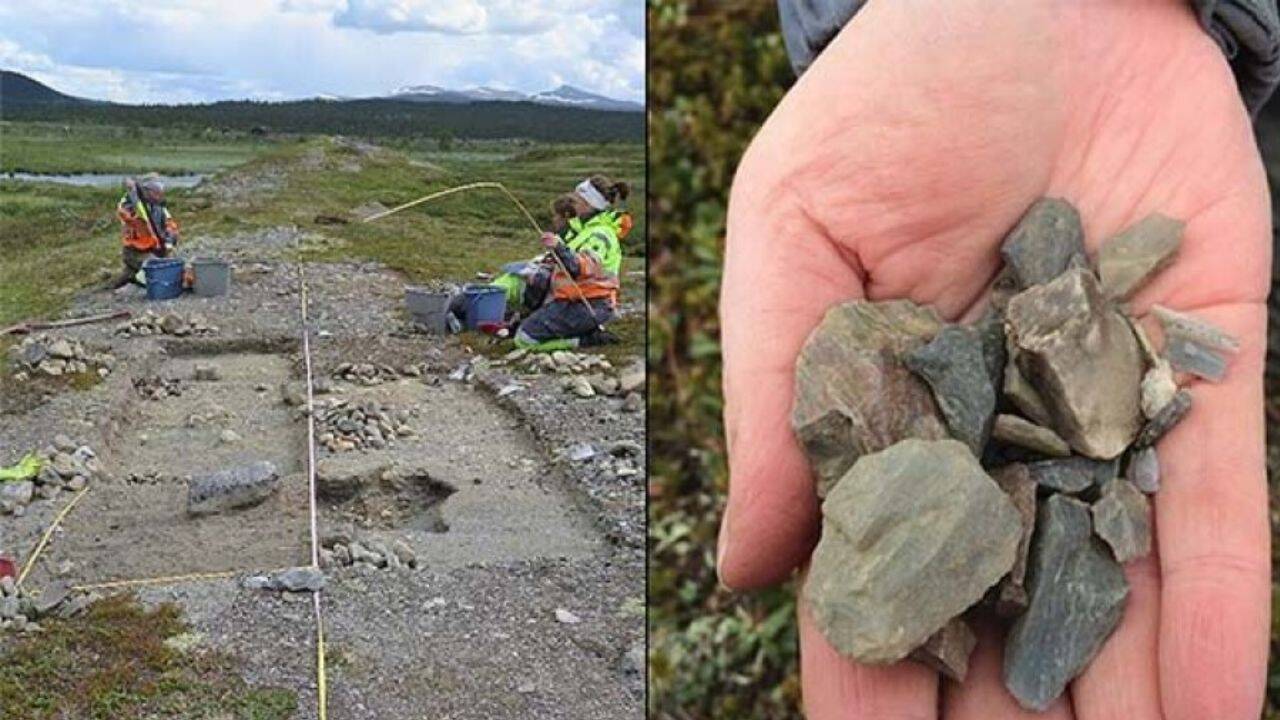
PC: Norwegian Science
How brown trout reach remote mountain lakes
About 10,000 years ago, as the ice caps receded, rivers and lakes gradually formed in the interior of Norway. People quickly moved into these newly entered landscapes, taking advantage of hunting grounds and seasonal resources.Fish face different challenges. Falls and steep river sections create impassable obstacles for brown trout, leaving many alpine lakes naturally empty.There is only one realistic explanation left for the thriving trout populations in these remote waters. At some point, people brought live fish upriver and released them into the lake, where they could establish new populations.
There is evidence that the introduction of fish predates the agricultural era
For decades, archaeologists have known that many of the fish found in Norway’s mountain waters were originally introduced by humans. The open question is when this process will begin.Dating of the Lake Tes trap now places this activity in the Scandinavian Mesolithic, centuries before the establishment of agriculture in the region.This is important because it changes the timeline for intentional environmental management. The responsible communities remained hunters, fishers, and gatherers, relying on wild resources rather than cultivated land. Even so, they made practical decisions to change the food offerings for future visits.
Why brown trout makes sense
Brown trout are a valuable resource for people living in mountainous areas. This fish can grow to very large sizes, provides a lot of nutrients, and is well suited to cold freshwater environments.Introducing trout into previously empty lakes also creates predictable fishing spots. Communities can return to places where reliable food sources have been established, rather than relying solely on the seasonal movements of wildlife.The discovery of wooden traps in Loch Tays suggests that the fishing itself was carefully organized rather than opportunistic. Building and maintaining these structures requires planning and a detailed understanding of fish behavior.
lasting changes to the landscape
The influence of these early introductions did not disappear with the Mesolithic Age. Once established, trout populations continued to reproduce naturally, surviving from late prehistory into modern times.Many anglers visiting Norway’s mountain lakes today may be catching descendants of fish first released thousands of years ago, whose names and settlements have long since disappeared.This continuity brings an unusual perspective to the discovery. The archaeological remains are ancient, but their ecological consequences are still visible in living populations.
A different look at early communities
The findings add to evidence that societies without agriculture were able to reshape their surroundings in deliberate ways. These communities sometimes alter ecosystems to make resources more reliable, rather than simply adapting to the existing environment.Moving fish to isolated lakes is neither a random event nor a temporary solution. It represents a long-term investment in a place that people expect to use again, reflecting careful observation of the landscape and an understanding of how to transform these environments to support future generations.Wooden traps at Loch Tays now provide one of the clearest pieces of evidence that the practice was taking place in northern Europe around 7,000 years ago, long before agriculture transformed the region.