
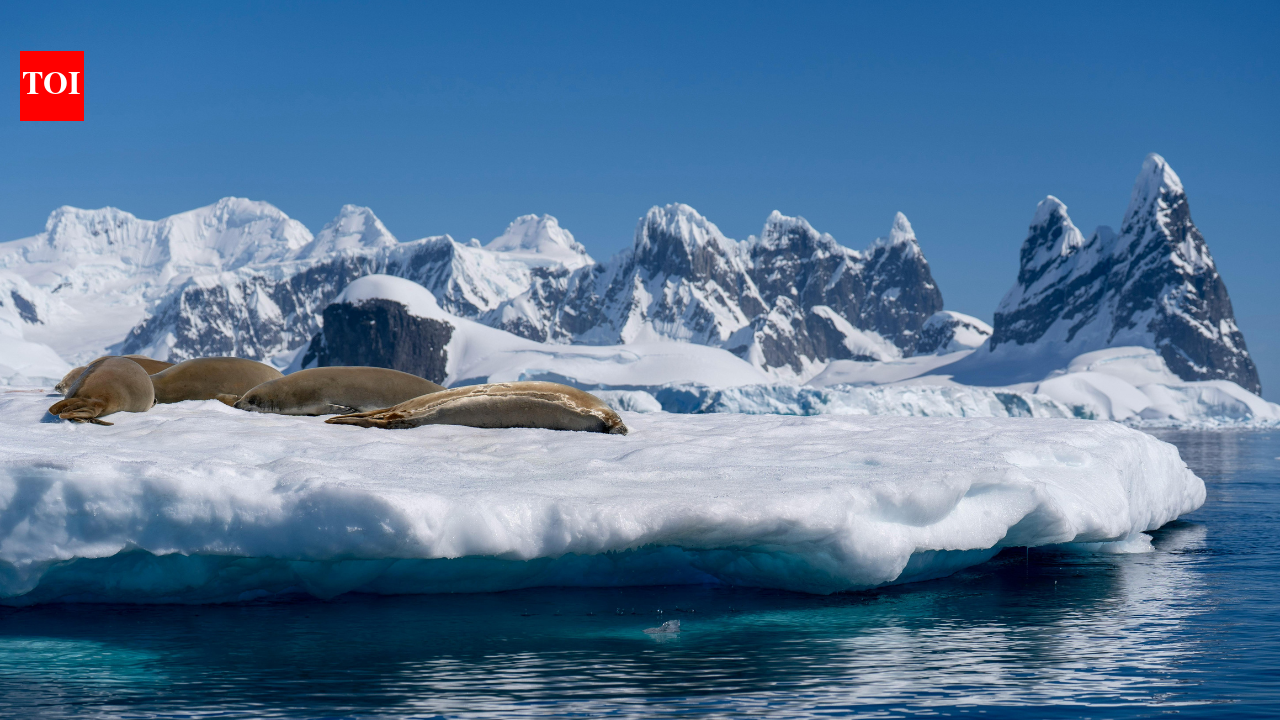
Antarctica has long been viewed as Earth’s frozen barrier, vast, remote and seemingly impenetrable. Yet scientists are now warning that some of the most vulnerable areas may have already crossed a dangerous threshold. What was once a slow, measurable ice retreat is increasingly being described as something far more serious: a tipping point. This so-called “nightmare scenario” suggests that parts of Antarctica are likely to continue melting regardless of future climate action. While this process lasts for centuries, its consequences, especially rising sea levels, may reshape coastlines and communities around the world.
Antarctic ice sheet tipping point explained
At the heart of the problem is the West Antarctic Ice Sheet, considered one of the most unstable regions on the entire continent. Experts believe this is an “example of tipping point” in the Earth’s climate system, meaning that when a certain tipping point is reached, changes become irreversible.New research suggests that some areas of Antarctica may have already reached such a tipping point. According to an item provided by an agency (e.g. Potsdam Institute for Climate Impact Research Research shows that the temperature threshold for important ice basins is 1-2°C above pre-industrial levels, and our planet has almost reached this target. Additionally, there is the concept of hysteresis, whereby the melting process does not stop despite a stable temperature. The researchers noted: “Even if global warming is controlled, ice caps cannot stop melting.” That’s why it’s called the “point of no return.”
why west Antarctica melting irreversibly
The reason for such rapid melting is not only rising atmospheric temperatures but also rising ocean temperatures. For example, water in the Amundsen Sea is very warm and flows beneath the ice shelves, causing them to melt faster. This left them unable to hold back the inland glaciers. Once it melts, the glacier begins moving toward the ocean faster, causing more ice to melt.It can be considered part of what is known as ocean ice sheet instability. Another important factor here is the nature of the ice sheet: most of West Antarctica’s ice sheet lies below sea level. Therefore, once it begins to retreat, the glacier will move closer to warmer waters and continue to melt.According to Nature Communications, “irreversible loss” of the ice sheet is inevitable once temperatures rise above 1.8°C.
The global impact of Antarctica’s melting crisis
The impacts of the above are not limited to Antarctica. Complete melting of WAIS would cause sea levels to rise several meters over an extended period of time. It is predicted that this melting will eventually cause sea levels to rise by about 4 meters, completely redefining the Earth’s coastlines.What makes this problem so worrisome is that there is little that can be done to prevent it from happening. It seems to be a matter of time, and scientists believe that once started, the process will take centuries or even thousands of years to complete because, as one scientist said:“It takes tens of thousands of years for an ice sheet to form, but it takes decades for it to become unstable.”Scientists point out that although some damage has been done, we can still work to prevent further escalation. In other words, the fate of Antarctica means the fate of the planet’s coastlines and climate, and also the fate of humanity as a whole.