
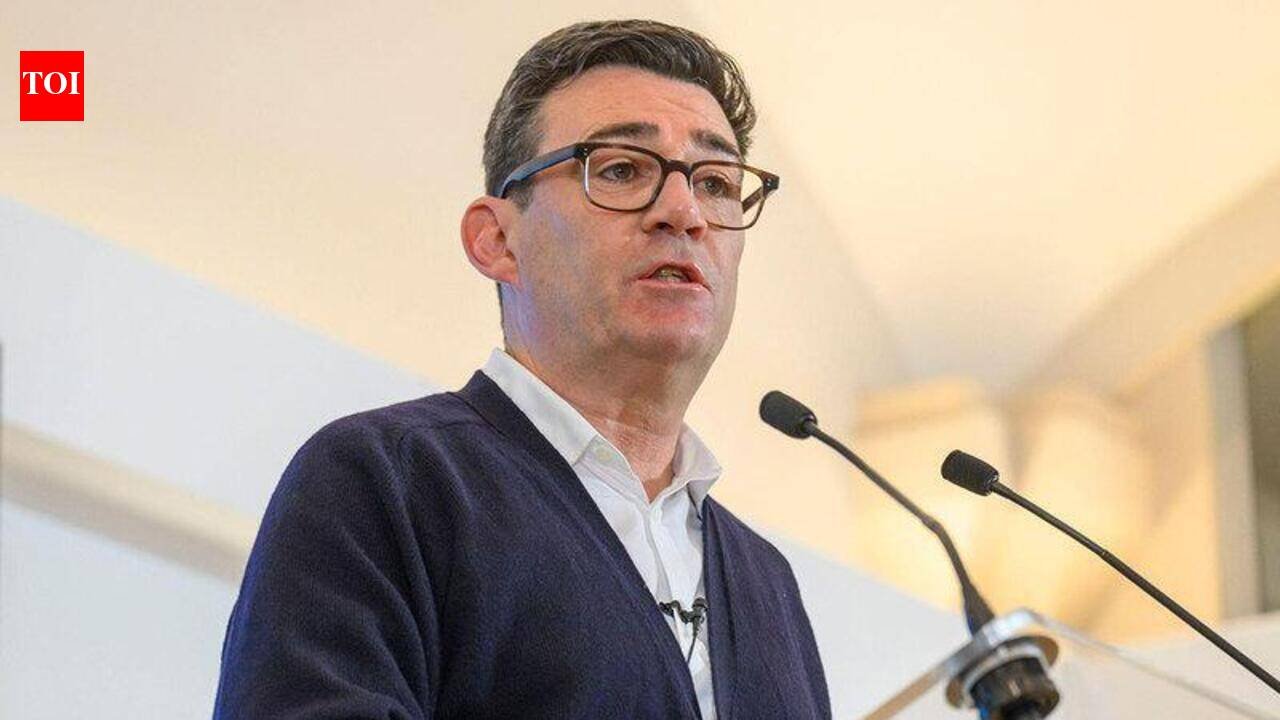
Unveiling what he calls a 10-year mission to rebuild the UK economy, Andy Burnham believes the country’s biggest challenge is not just who governs at Westminster, but how the UK is governed. In his first major policy speech since becoming the front-runner for the Labor leadership following the resignation of Sir Keir Starmer, Burnham set out an ambitious blueprint centered on devolving power from Whitehall, boosting regional investment and delivering what he called “good growth for every postcode”.In his speech, Burnham, who served as Manchester’s mayor for nine years, said Britain needed “the circuit breaker it needs” after years of sluggish economic growth, widening regional inequality and declining political trust. He promised what his team described as “the biggest power shift in modern Whitehall” and insisted local leaders should have greater control over decisions affecting their communities.Rather than a series of short-term spending announcements, Burnham’s proposal is centered around a decade-long economic reform program covering housing, transport, education, welfare, infrastructure and industrial policy. His argument is that England’s economy has become too dependent on London’s decisions, leaving many towns outside the capital struggling to attract investment and create well-paid jobs.
Giving England’s mayors more powers
Central to Burnham’s blueprint is a dramatic expansion of devolution.He wants metro mayors and local authorities to take greater responsibility for social housing, transport, post-16 education, adult skills, employment support and welfare policy elements, allowing regional leaders to shape economic policy around local needs rather than relying on Whitehall departments.Burnham believes England’s current system remains one of the most centralized among advanced economies and says local leaders are often forced to return to Westminster multiple times to seek permission and funding for projects that could be managed more effectively at a regional level. “We need to change how Britain is governed, not just who governs it,” Burnham said in his speech.His proposals also include a multi-year funding solution that would give councils and metropolitan mayors greater financial certainty to plan major transport, housing and regeneration projects, rather than relying on annual government spending. Several reports also suggest Burnham wants regions to have greater influence over business rates and locally generated revenue as part of wider fiscal devolution plans.
What is the economic plan?
As well as constitutional reform, Burnham’s blueprint sets out a wider strategy aimed at improving living standards over the next decade.His plan focuses on reindustrialisation, expanding housing construction, investing in transport and infrastructure, improving utilities and encouraging private investment in areas that have historically received less economic support than London and the South East.Burnham reiterated the phrase “good growth for every postcode”, arguing that economic success should no longer be measured solely by how well London performs, but by whether prosperity reaches every community in England.Another key proposal involves reforming public procurement so that government contracts deliver greater benefits to British industry. Under Burnham’s vision, procurement will increasingly prioritize British businesses, apprenticeships, skilled jobs and wider social value, helping public spending support domestic manufacturing and jobs, rather than simply selecting the lowest-cost supplier.He also wants technical education to have the same status as university education and believes that vocational qualifications and apprenticeships should be at the heart of the UK’s long-term industrial strategy.
Solve the problem of youth unemployment
One of Burnham’s most high-profile proposals was the creation of “No.10 North” in Manchester.The idea would see some of the Prime Minister’s operations permanently based outside London, creating a symbolic and practical shift in how national decisions are made. Burnham argued that relocating government departments would demonstrate that economic regeneration could not be achieved while political power remained overwhelmingly concentrated in Westminster.Another key pillar of the plan focuses on tackling youth unemployment.Burnham wants mayors to take the lead in helping the nearly one million young people aged 16 to 24 who are not in education, employment or training (NEET). He argued that investing in skills, education and employment support could prevent long-term economic inactivity while boosting productivity, rather than reducing benefit costs by cutting benefits.The proposals closely follow those of former Labor minister Alan Milburn, whose review into youth inactivity concluded that local authorities should take greater responsibility for supporting young people into employment because fragmented national programs were failing too many communities.
Can Burnham realize his vision?
Burnham insists his plan can deliver stronger economic growth while staying within Labour’s existing fiscal rules.His office said the blueprint aimed to “boost the UK” by changing the way the country is governed, rather than relying on huge increases in public spending. Supporters, including housing secretary Steve Reid, said Burnham remained committed to Labour’s fiscal discipline while pursuing more ambitious regional growth policies.However, critics argue that devolution alone will not solve the UK’s deeper economic challenges. Conservative leader Kemi Badenock has questioned whether Burnham’s proposals provide sufficient detail on funding and called for greater parliamentary scrutiny of his plans, while the political opposition has questioned whether such sweeping reforms can be implemented at a time of tight public finances.If implemented, Burnham’s plan would be one of England’s most ambitious devolution agendas in recent years, shifting greater responsibility for housing, transport, education, skills and economic investment from Westminster to regional leaders. Whether the blueprint eventually becomes government policy will depend on political support in the coming weeks, but it already puts devolution, regional growth and local decision-making at the heart of the UK economic debate.