
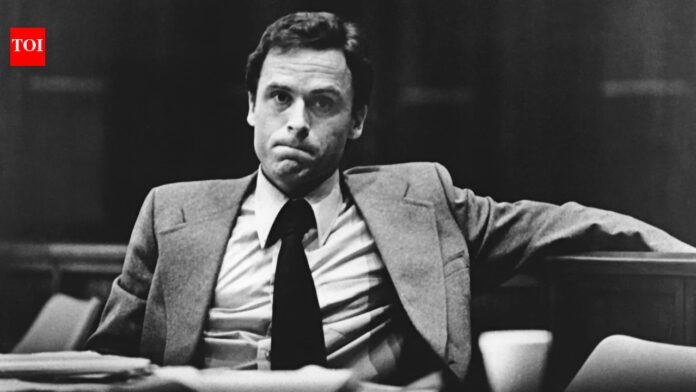
More than three decades after Ted Bundy was executed, his criminal history still casts a deep shadow. Recently, a decades-old mystery was finally solved when new DNA evidence confirmed his role in the 1974 murder of Laura Ann Aime, which had long been suspected but never proven. The announcement by the Utah Sheriff’s Office closes a painful chapter for the victim’s family, but also reignites global interest in Bundy himself, whose crimes continue to unfold even decades after his death.This confirmation is more than a forensic breakthrough. It expanded the scale and scope of Bundy’s crimes, many of which spanned multiple U.S. states in the 1970s. With at least 30 admitted victims and probably many more, Bundy’s story remains one of the most studied and disturbing stories in criminal psychology. Understanding how he operated, and how he was able to evade detection for so long, requires a closer look at the man behind the headlines, his beginnings, his methods, and the troubling contradictions that defined his life.
Ted Bundy’s normal life hid a darker truth
Bundy was born in Vermont in 1946 and later grew up in Washington, D.C., growing up in seemingly ordinary circumstances. He is smart, articulate and socially competent. He studied psychology in college, went to law school, and even worked on political campaigns. In the eyes of those around him, he presented an image of a disciplined, ambitious young man with a bright future.It’s this contrast that makes Bundy’s story particularly disturbing. There was no clear indication that he would become one of the most notorious serial killers in American history. Friends and acquaintances often describe him as polite, charming and able to blend easily into social situations. This ability to appear normal was not an accident but a key part of how he committed his crimes. The disparity between his appearance and behavior continues to challenge assumptions about how to identify dangerous people.
The beginning of violence
By the early 1970s, Bundy’s behavior had escalated into violence. Under similar and increasingly alarming circumstances, young women across the Pacific Northwest are beginning to disappear. These are not random behaviors but part of a developmental pattern. Bundy often targeted women with similar physical characteristics, whom he would approach in public places so he could appear non-threatening.He often uses deception as his primary tool. He pretended to be injured, sometimes wearing a cast or using a cane, and relied on his social instincts of sympathy and trust to seek help. Once the victim agreed, he subdued her and took her to a second location. This calculated approach allowed him to move repeatedly without immediate suspicion, shuttling between states such as Washington, Utah and Colorado while leaving a trail of confusion for investigators.As his crimes continued, the pattern became more elaborate and dangerous. A combination of planning, mobility and manipulation meant he was able to commit multiple murders before law enforcement connected the case. At the time, there was limited coordination between jurisdictions, giving him a key advantage.
Utah connections and growing suspicion
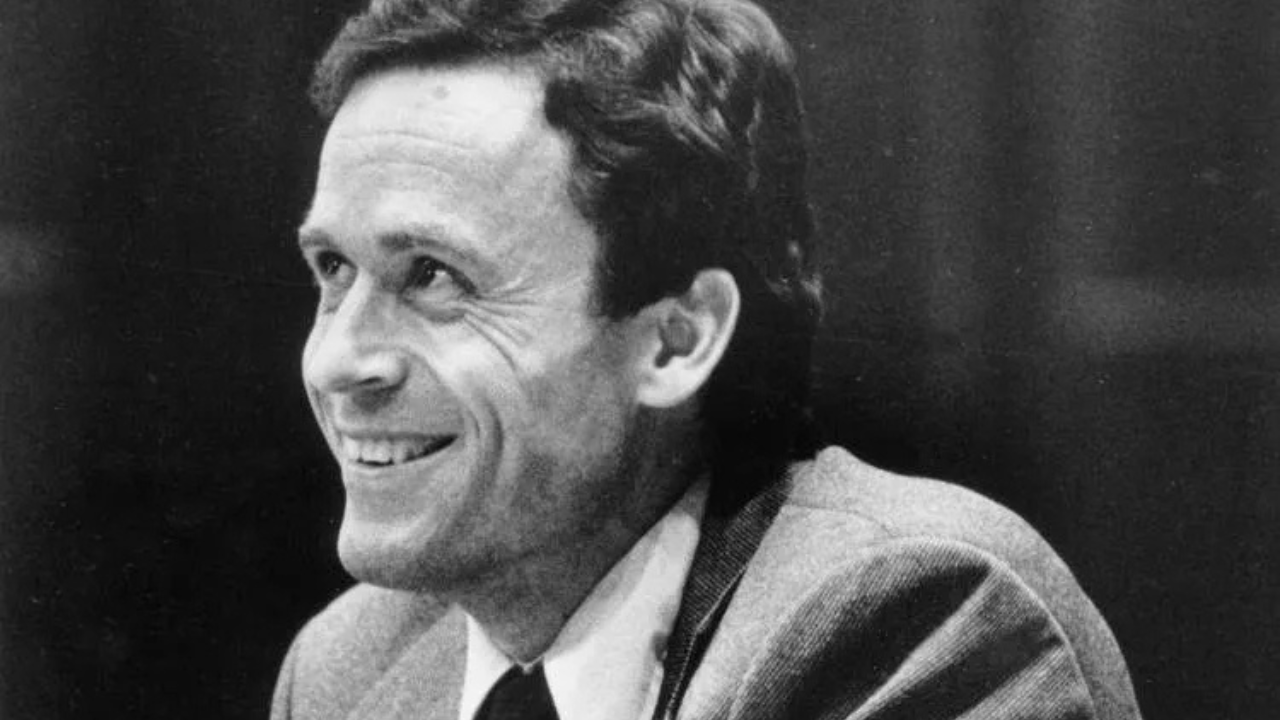
Bundy’s move to Utah in 1974 marked an important phase in his killing spree. While attending law school, several young women disappeared in the area, including Laura Ann Aime. At the time, authorities suspected a connection between the cases, but the evidence was insufficient to definitively link the cases to a single perpetrator.Over time, Bundy himself admitted to committing several murders in Utah, but many details remain unclear. Recent DNA identification has provided concrete evidence in at least one of the cases, demonstrating how modern forensic technology continues to reshape the understanding of crimes committed decades ago. The Utah period highlighted the scale of Bundy’s activities and the limitations investigators faced when tracking traveling criminals from state to state.

Laura Ann Aimee
arrest escape, upgrade
Bundy was first arrested in 1975 after arousing suspicion at a traffic checkpoint. Items found in his vehicle, including tools that could have been used for restraints, linked him to previous incidents. However, his story did not end with his arrest. In a series of events that alarmed authorities, Bundy twice managed to escape custody while facing murder charges in Colorado.These escapes were not just acts of desperation but reflected his confidence and ability to manipulate situations. After his second escape, he fled to Florida, where his behavior became more erratic and violent. In 1978, he carried out a brutal attack on a college fraternity house, killing two women and injuring many others. This marks a shift in his paradigm, relying less on deception and embracing more direct violence, signaling an escalation in urgency and stakes.
Trial, Media Attention and Enforcement
Bundy was eventually arrested in Florida, sparking one of the most widely watched trials in U.S. history. Unlike most defendants, he chose to represent himself in court, using his legal knowledge to question witnesses and address the jury. His calmness and confidence during the proceedings attracted widespread media attention, thrusting the trial into the public spotlight.Despite his attempts to defend himself, the evidence against him was overwhelming. He was convicted and sentenced to death. Bundy was executed in the electric chair in Florida in 1989, ending his life but not erasing the impact of his crimes. In the days before his execution, he confessed to multiple murders, providing some insight into his actions but leaving many questions unanswered.
Inside the mind of Ted Bundy
Understanding the reasons for Ted Bundy’s crimes remains one of the most controversial questions in criminal psychology. Unlike many criminals who are driven by financial gain or personal revenge, Bundy’s motives were far more complex, rooted in a combination of control, fantasy and psychological disorder.Investigators who have followed the case closely point to power and dominance as central elements. Robert Keppel, a detective who conducted extensive interviews with Bundy before his execution, described him as a man driven by “possessiveness” rather than impulse. According to Keppel, Bundy’s crimes were motivated by an attempt to gain complete physical and psychological control over his victims, rather than any traditional motive.This view was reinforced by the work of John E. Douglas, one of the pioneers of FBI criminal profiling. Douglas classified Bundy as a “power control” offender, a category applied to criminals who derive gratification from dominance rather than material gain. In his analysis, Bundy’s physical charisma was not an accident but a carefully crafted tool that allowed him to manipulate trust and lower defenses.

women killed by ted bundy
Over time, Bundy himself offered changing explanations. In his final interviews, including with psychologist James C. Dobson, he claimed that exposure to violent pornography played a role in shaping his behavior. He described an escalation from curiosity to obsession that ultimately led to violence. However, many experts remain skeptical of this explanation, arguing that it is only partially true or biased rather than a complete account of its motivations.Criminologists also studied Bundy’s early life for clues. His upbringing left him confused about his origins, which some researchers believe may have contributed to underlying emotional instability. Yet most experts agree that no single factor can explain his behavior. Rather, his behavior is likely a combination of personality traits, including a lack of empathy, manipulation, and the ability to compartmentalize his life.Detectives who interacted with Bundy often noted his detachment and calmness when discussing his crimes. In one report, he avoided eye contact and withdrew when asked directly about some of his victims, suggesting that even he struggled to confront his actions. These glimpses are few and far between, however, and Bundy largely maintains control during the interactions.Ultimately, there is no easy answer to why Bundy killed. On a broader level, his story forces a rethinking of how we think about danger. Bundy did not fit the traditional image of a criminal. He is well educated, articulate, and superficially trustworthy. This disconnect between appearance and reality remains one of the most disturbing aspects of his case, and is still being studied in psychology and criminology.The latest confirmations in Laura Ann Aimee’s case highlight a larger truth. Even decades after his death, the full extent of Bundy’s actions is still being revealed.