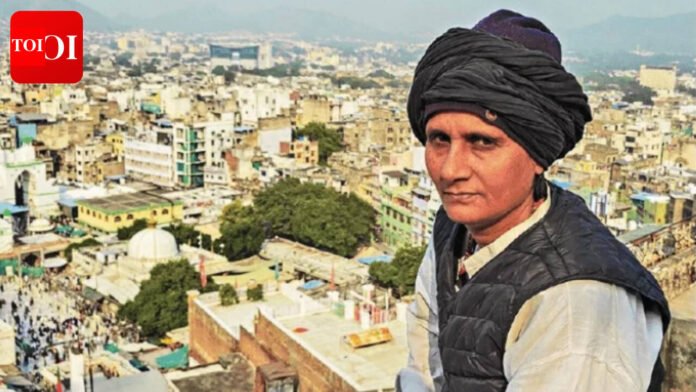
In the heart of Ajmer, the constant hustle and bustle of devotees at the Ajmer Sharif Dargah is punctuated by an unusual sound. It may come as a surprise to visitors, but regular visitors to the shrine and people across the city know the roar of Fozia Khan’s cannon, which she has been firing to mark the beginning of important occasions. With the arrival of Ramzan, she will once again strive to complete a labor of love diligently, which has earned her the nickname “Topchi”.Every year during the Urs of Khawaja Garib Nawaz, every Friday before Jumma prayers and through Ramzan, 37-year-old Fauzia fires ceremonial cannons from the Dargah complex. Explosions announce the time of Eid al-Fitr and Eid al-Fitr and mark prayer times, continuing a tradition that predates modern clocks and loudspeakers. “It’s an act of worship, it’s a responsibility, it’s an honor,” Fauzia said.Fauzia, wearing a long kurta and her face covered with a dupatta to protect herself from the smoke and sparks, prepared the cannon with precision. This tradition dates back to the Mughal era. Emperor Akbar is believed to have introduced it to manage prayer times during large religious events, especially the festival of Urs and Ramzan. Fauzia learned the job early. When she was eight years old, she began assisting her father, Mohammad Hafeez Khan. “Abba believed in me. He taught me science, respect and the dedication behind it,” she said.After her father died in 2008, many believed the responsibility would shift to male relatives. Instead, Fauzia stepped forward. The dargah officials accepted her story and Ajmer met its first woman artillery administrator. “Someone said it wasn’t a woman’s job,” she recalled. “But that’s how I grew up.”During Ramadan, her day starts around 2 a.m. She cleaned the cannon, prepared the powder, and stood on the terrace. The first explosion marks Sehri, followed by a second explosion that marks the end of feeding time. At sunset, iftar cannons were fired again.The cannon used by Fauzia today weighs about 35 kilograms, is hand-held, and is a safer version of the 53 kilogram wheeled cannon used before independence. Fauzia’s family follows a rotating system. She performed this duty for two consecutive years, and for the following year her cousin was in charge. During Ramadan, she received 1,500 rupees – barely enough money, she said, to pay for the gunpowder. Typically, she pays for it out of pocket. To make a living, she runs a small tea and snack stall. “People think I probably got a lot of respect and money. I did get respect, but not money,” she said with a smile.She has no formal recognition from government or religious institutions. Her only wish, she said, was to perform Umrah (visit Mecca) and gain recognition for her services.The strongest opposition she faced came from her extended family. Yet, she never left—even on the day her father died. “His body is at home,” she said. “But the cannon has to fire. Responsibility comes first. I know he would want that.”She also said she didn’t believe in the characters or symbols. “The roles don’t belong to men or women. They belong to those who play them sincerely. I’m not doing this for feminism. I’m fighting for tradition. Tradition is stronger when it includes everyone.”