A legal gamble by a small Illinois toy maker has culminated in a ruling that could reshape President Donald Trump’s tariff policy and potentially lead to billions of dollars in refunds for U.S. importers.

A court on Friday struck down sweeping tariffs imposed by President Donald Trump under the International Emergency Economic Powers Act, dealing a major blow to the Trump administration’s trade policy. The decision follows a wave of lawsuits from importers, U.S. state governments and other stakeholders challenging the legality of the move.
track Trump tariffs live updates
One of the earliest challengers was toymaker Learning Resources, a relatively small but determined player that helped kick off the legal battle.
Toy industry responds to Trump tariffs
Learning Resources, which imports most of its educational toys from China, filed the lawsuit shortly after the tariffs were announced last April. The company argued that the tariffs would severely harm small businesses that rely on imports.
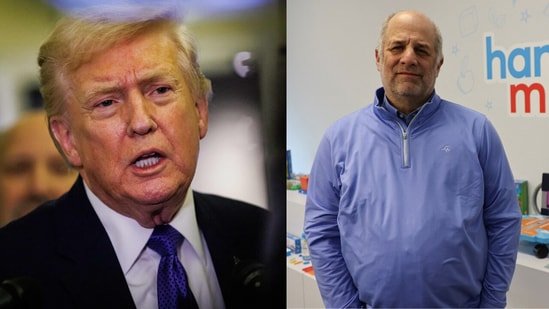
Learning Resources CEO Rick Woldenberg celebrated the ruling, saying it provided a moment to pause and reassess. “I hope this ruling is an opportunity for everyone to take a breath and think about what is important and what needs to be done,” he told Reuters on Friday.
If the decision ultimately results in refunds, learning resources and other importers may be entitled to a share of the billions of dollars collected through tariffs. However, the Supreme Court did not clarify how or when such repayments would occur.
“Give me the money back”
“They have a record of what they took from me, guys, just reverse the gears and give me the money back,” Bloomberg quoted the toy company’s CEO as saying.
“The U.S. government hands out millions of dollars in tax refunds every year, and when they open the check, no one says, ‘Oh my gosh, how did they do that? It’s a miracle.’ They know what to do. They can do it. It’s our money. Give it back to me.”
For Waldenberg, the case has less to do with politics and more to do with taxes. He told Reuters in a separate interview on Thursday local time that he felt the need to take action.
“I think not taking action is going to be more difficult than taking action,” he said, emphasizing that he did not view the lawsuit as political. “It’s about taxes. They owe us money…Every American agrees that we pay too much in taxes and no one wants to pay taxes that they don’t have to pay.”
He added that if the state needs more revenue, lawmakers should openly debate it. “If the country needs revenue, then debate it in Congress,” he said. He called the ruling a positive development, “I’m excited. Hopefully everyone feels like they won. It’s a win for everyone.”
‘We scaled back last year’
Learning Resources and its sister company hand2mind are part of a larger ecosystem. Waldenberg said his company is feeling the impact directly. “We shrank last year,” he noted.
According to a 2025 report by the U.S. Chamber of Commerce, small businesses account for approximately 97% of U.S. importers and collectively import approximately $868 billion worth of goods annually. The report described the tariffs as an existential threat.
The Learning Resources CEO said the Trump administration’s key argument that companies can move manufacturing back to the United States ignores the reality of the situation.
“Emergencyly moving supply chains out of a country is like a bomb falling on your head, and it’s a project that no one is prepared for,” he said.
The toymaker is feeling the blow as it operates more than 30 heavy-duty injection molding machines from China, each weighing several tons, used to pump molten plastic into steel shells to make toys.
Relocating such equipment would require dozens of flatbed trucks and cranes, making it costly and logistically difficult, the CEO said.
The company’s long-term partner factories in China have a skilled workforce familiar with strict toy safety standards. Waldenberg said it could take months or even years to replicate that capability in the United States.
Now, he remains optimistic that the tariffs already paid will eventually be refunded. “Once they do that, we’ll start spending money,” he said. “We want to run our company again,” he added, according to Reuters.
Since April, the U.S. Court of International Trade has received more than 1,800 tariff-related lawsuits, a significant increase from less than two dozen in all of 2024.
(Information provided by Reuters)