
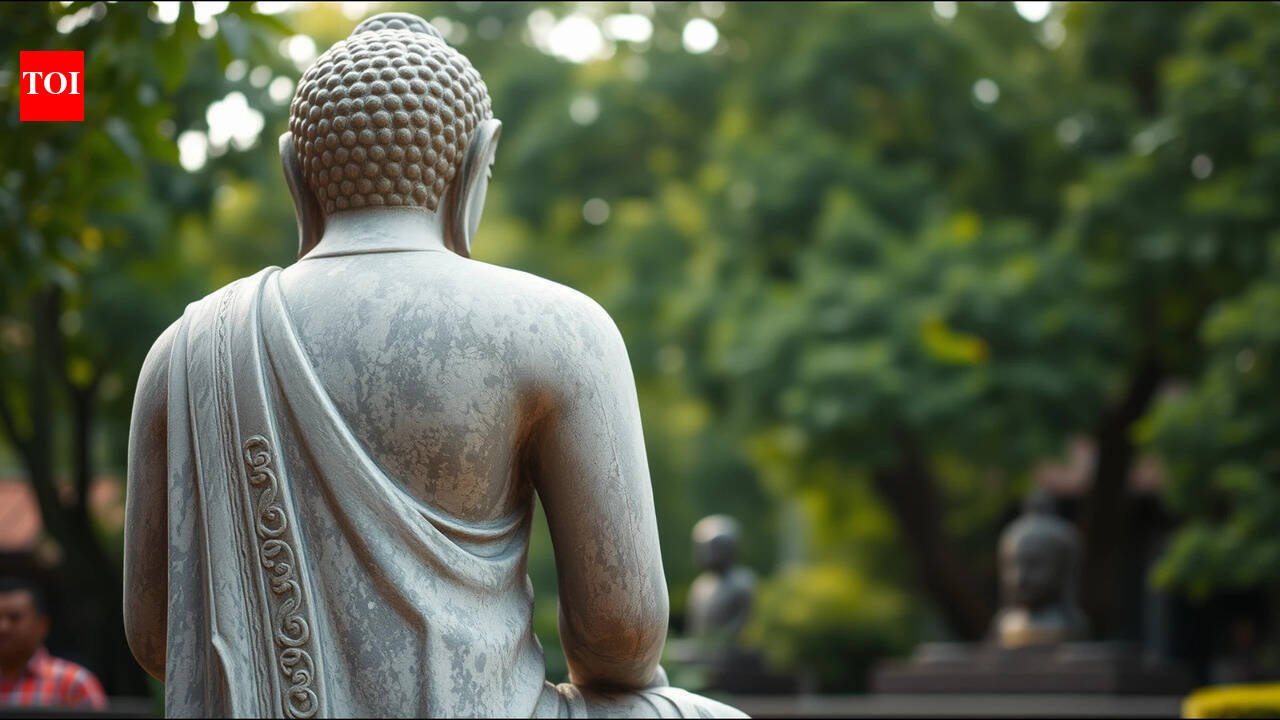
The ultimate good deed is doing something noble while no one is watching. This kind of good deed done in the dark does not need attention or reward. This timeless Thai proverb references religious imagery as it refers to the act of affixing gold leaf to the back of a Buddha statue. The literal meaning of this proverb is actually a custom in Thai culture where people offer gold foil to the Buddha, but instead of placing it in front of the Buddha, they stick it behind it – indicating that there is no expectation of what is being done.The image is simple, but the lesson is profound. It’s about doing good without asking for praise, doing good without ever earning applause, and measuring virtue by intention rather than popularity.
Origin or Proverb: A custom rooted in Thai Buddhism
This proverb cannot be understood without understanding the custom from which it arose. In Thai Buddhist temples, devotees often purchase small squares of gold leaf and carefully press them onto Buddha statues. The purpose of this act was not just to decorate the statue for aesthetic reasons. It is an expression of faith, gratitude and respect. Many believe it produces merit, a core concept in Theravada Buddhism that refers to healthy behaviors believed to lead to positive spiritual outcomes.Older Buddha statues are often coated with thick, uneven layers of gold due to countless worshipers attending them over the years. Over generations of dedication, their surfaces become textured.However, the choice to place gold leaf on the back of the statue changed the meaning of the act. The offering is still genuine, but no visitor is likely to notice it. Donors are not admired by others. Only the act itself—and perhaps one’s own conscience—remains.
Kindness doesn’t need an audience
Essentially, this proverb encourages people to do good deeds even when no one is around.Humans often enjoy the feeling of recognition. Whether through praise, awards, promotions, or public appreciation, recognition satisfies the natural desire to have our efforts noticed. This proverb gently questions this impulse. If a good deed loses value once no one sees it, is it really a good deed?Placing gold leaf on the hidden side of the Buddha symbolizes an act without expecting anything in return. Donors know that strangers will never point to the back of the statue to appreciate their contribution. Still, they gave because they believed it was worth it.The difference between visible generosity and true generosity is at the heart of this proverb.
Humility is better than recognition
Thai culture has always valued modesty and restraint. Public displays of self-promotion are often viewed with suspicion, especially when associated with charitable acts. This proverb reflects this cultural preference. It goes to show that the most meaningful contributions are sometimes the least noticeable.While this proverb encourages us to do good and stay in the shadows, it reminds us of those who always remain behind the scenes and keep the world going.
leadership lessons
This statement also contains wisdom for leaders. Some leaders seek ongoing recognition. They announce every decision, publicize every charitable donation, and put their name to every achievement. Others lead more quietly. They create opportunities for others, solve problems before they become crises, and earn praise for their teams. The second style resembles proverbial imagery. Like gold placed on the invisible side of a Buddha statue, their impact may be overlooked by the public, but their value is undeniable.This type of leadership tends to build deeper trust because it is motivated more by responsibility than reputation.
Relevance in the age of social media
This proverb is even more relevant today, as social media encourages people to document almost everything. Acts of charity are often accompanied by photos, videos, and well-written captions. Donations become announcements. Volunteer work becomes fulfilling.Sharing positive actions can certainly inspire others, and public events often raise awareness for important causes. However, this proverb raises a deeper question: Would you do the same kind deed if there was no one to photograph it with?Its answers show that even in complete anonymity, the purest generosity can still exist. Hidden gold leaf is just as important as visible gold leaf.
The message of this proverb goes beyond charity
Although this proverb is often associated with generosity, it also applies to many areas of life. Scientists who spend years conducting meticulous research may receive little public attention, but future discoveries depend on meticulous work. Archivists who preserve historical documents rarely appear in history books, even though generations of historians have relied on these preserved records. Software engineers who fix security vulnerabilities before anyone notices them can prevent countless problems in the future.Their work is like the gold leaf on the back of a statue: essential, but mostly invisible.
Connection with Buddhist thought
This proverb also echoes important Buddhist principles.Buddhism emphasizes both intention and action. An act of generosity motivated purely by pride is spiritually different from an act motivated by compassion. Attachment to praise is often seen as just another form of craving—one that distracts an individual from their true inner development. Hidden devotion becomes a practical exercise in letting go of the desire to seek approval.Instead of asking, “Will people notice what I do?” practitioners ask, “Is this the right thing to do?” This subtle shift turns generosity into a personal discipline.
There are similar proverbs around the world
Many cultures express similar values: English speakers sometimes quote the phrase, “Do a good deed and throw it into the sea,” meaning that kindness should not depend on gratitude.Another familiar saying is “Character is what you do when no one is watching.”In religious traditions around the world, anonymous giving is often considered particularly virtuous because it minimizes pride while maximizing sincerity.Thai proverbs are distinctive for their vivid temple imagery. Rather than presenting an abstract moral lesson, it invites the listener to imagine an admirer quietly placing a fragile cube of gold where few will see it. That image is still unforgettable.This proverb does not prevent acts of public generosity. Visible kindness can encourage others to help and can draw attention to a worthy cause. Rather, it reminds us that recognition should never be the primary purpose. Its enduring message is that integrity emerges most clearly when external rewards disappear.Whether caring for an aging parent, mentoring a struggling colleague, restoring an old manuscript, planting trees whose shade we may never enjoy, or helping a stranger without revealing our name, we are, in a sense, putting gold leaf on the back of the Buddha.This contribution may remain invisible. Its value does not.In a world increasingly focused on visibility, metrics and public recognition, this old Thai proverb offers a refreshing measure of character. The greatest deeds are not always remembered by history or applauded by the masses. Sometimes they are quiet acts that make the world a little better but leave no trace of the performers.Like the nugget of gold hidden behind a statue, true kindness shines brightly even when no one is looking.