
A painter paid $192,000 for a 1902 lighthouse three miles offshore; now he wants to turn the abandoned structure into a destination

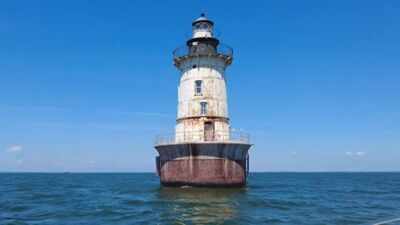
For more than a century, the 1902 Hooper Island Lighthouse has stood three miles offshore in Maryland’s Chesapeake Bay. Years of exposure have left the historic structure badly in need of repair, but its latest owner sees an opportunity to give it a new purpose. Pennsylvania painter Rich Cucé paid $192,000 for the abandoned lighthouse after competing against several other bidders. The building has no running water, heat or electricity and faces major restoration challenges. Cucé hopes to repair the landmark and eventually create a destination focused on the Chesapeake Bay and its wildlife.
How the $192,000 lighthouse entered the life of a painter
The Hooper Island Lighthouse was built as a navigation aid at a time when ships depended on lighthouses to travel safely through the Chesapeake Bay. According to SpinSheet, the lighthouse was completed in 1902, when keepers had to work around the clock, lighting the lamp with oil and watching for ice, fog and other vessels. As navigation technology improved and many lighthouse duties became automated, structures that were difficult to reach were increasingly left without the care.This 4-storey white tower is listed on the National Register of Historic Places and has a watch room and lantern at the top. The Associated Press(AP) reported that the light still operates using solar power, meaning the lighthouse continues to serve its original navigational purpose even though the building around it has deteriorated.The federal government eventually put the property up for auction. AP reported that the bidding started at $15,000 before rising through $38,000 and $189,000. Five anonymous bidders were interested, and the final price reached $192,000. The buyer was later identified as Cucé, an industrial painter from Bucks County, Pennsylvania.
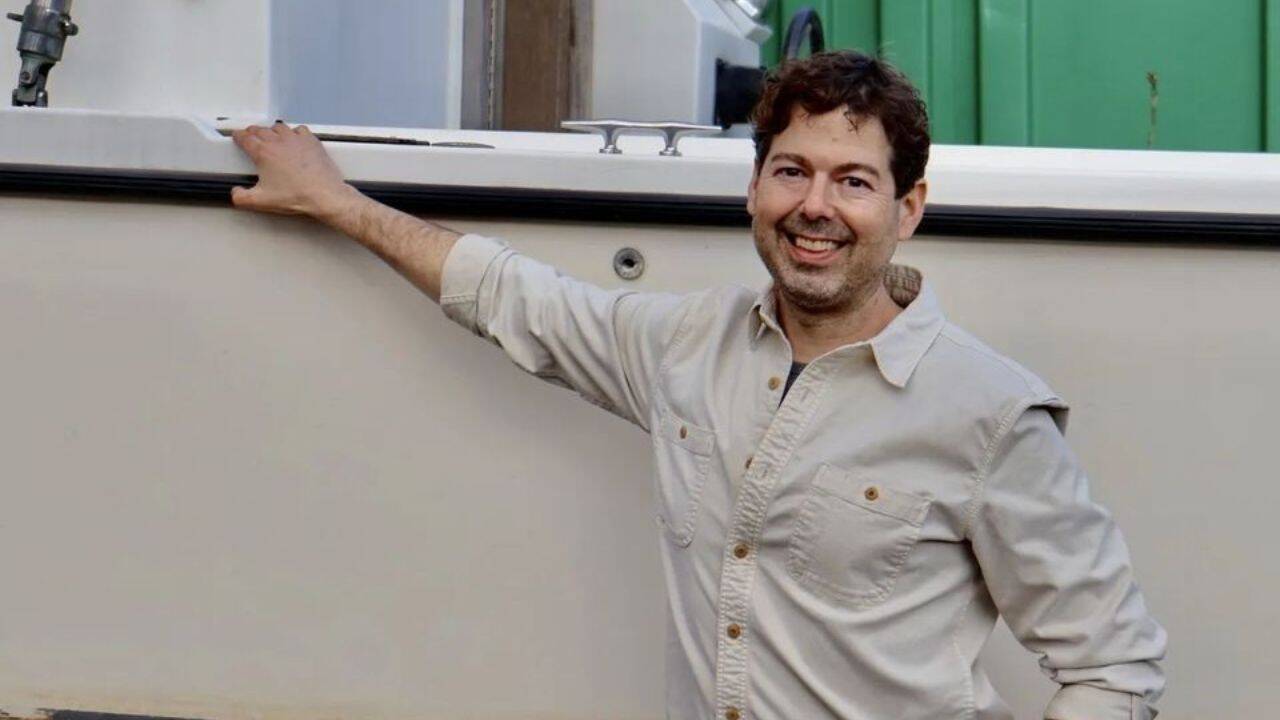
Rich Cucé. Image Credit: Project Lighthouse/Facebook
The abandoned lighthouse presented major challenges for its new owner
The price of the lighthouse was only the beginning. AP News reported the structure without running water, heating or electricity, while lead paint, asbestos and benzene added to the problems facing its new owner. Vandals had damaged the entrance, birds had occupied parts of the building and rust had affected the tower and its cast-iron foundation. A 2019 Coast Guard inspection found the lighthouse in fair condition but approaching poor condition.Its location makes almost every repair more complicated. The tower rises from water about three miles from land, and the surrounding area is also a U.S. Navy testing site. Cucé had to agree to stay away during weapons testing. According to SpinSheet, he expected travelling to and from the lighthouse, particularly in rough weather, to be among the hardest parts of the work.Access was one of the first practical issues to address. As reported by SpinSheet, Cucé said an inspection would come first, followed by plans for a dock that could make it easier to reach the lighthouse and provide a place to bring equipment and materials ashore.
Rich Cucé brought his painting experience to the lighthouse restoration
Cucé’s professional background gives him a direct connection to the work. AP News reported that he had operated an industrial painting and sandblasting business since the mid-1990s, working on structures including train cars and roller coasters. He had experience restoring and rebuilding old houses. For him, the lighthouse presented a challenge that matched skills he had developed over decades.The exterior was expected to be one of the more familiar parts of the job. His plan was to restore the structure while keeping the work environmentally responsible.The restoration also had to follow conditions attached to the purchase. WBOC reported that Cucé must maintain the lighthouse as a Coast Guard navigation aid, follow historic preservation standards and comply with an agreement with the U.S. Navy governing when he can be at the site.
The restored lighthouse could become an environmental destination
WBOC reported that Cucé wanted the lighthouse to become a place where members of the community could study about the Chesapeake Bay while gaining a better understanding of the need to protect it.He also wanted environmental groups to use the restored lighthouse to monitor water quality and marine life. AP News noted that the structure sits near an area of oxygen-depleted water known as a dead zone, giving the proposed centre an especially relevant setting for environmental work.AP News reported that he wanted to hire watermen from the three Hoopers Islands to help with the restoration. He considered a range of future possibilities, including tours, special events, sunset cruises, weddings and yoga retreats.The tower itself is relatively compact, with about 65 feet between the waterline and the light, and small rooms inside. The plans give the abandoned structure a possible second life, not only as a preserved piece of Chesapeake history, but as a destination centred on the Bay itself.