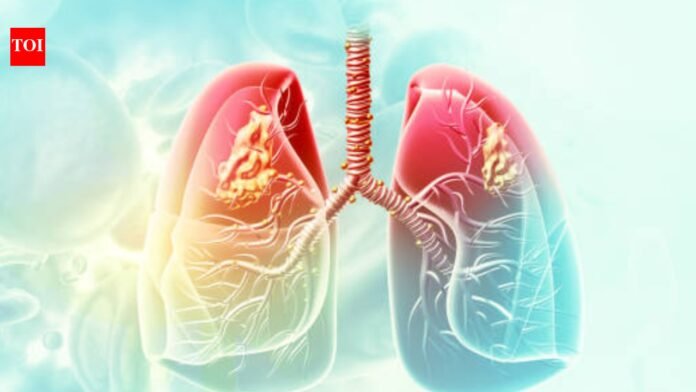
AIIMS-Delhi is studying the link between exposure to air pollution, especially fine particulate matter 2.5, and the risk of lung cancer. The institute claims that the AIRCARE study is the first of its kind and is led by Dr Abhishek Shankar, Assistant Professor, Radiation Oncology, AIIMS. Dr Shankar said that as air pollution remains an increasingly important public health issue, research is needed to inform policy and disease management. He said India was home to some of the most polluted cities in the world and there was an urgent need to scientifically study the impact of pollution on people’s health. “Lung cancer is one of the most common cancers among men in India, and the incidence of lung cancer among non-smokers is also high among women and young adults,” said Dr. Shankar. Air pollution has emerged as a contributing factor to lung cancer, but India needs more evidence on the issue, he said. Dr Shankar said: “It is deeply concerning that lung cancer, once thought to be a disease primarily associated with smokers, is now rapidly increasing in incidence among non-smokers.” The AIRCARE study will study 1,615 lung cancer cases and 1,615 controls from family members in the National Capital Region of Delhi. Dr Shankar said the study was a complex undertaking, involving both clinical and non-clinical components. One aspect of the study will use a cohort and case-control design to track the impact of long-term exposure to PM 2.5 on lung cancer in different demographic and socioeconomic groups, he said. Another aspect of the research is looking for unique genetic signatures among Indian populations exposed to air pollution. In short, the study will try to isolate genetic signatures unique to the Indian population to see whether specific early genetic events resulting from exposure to air pollution contribute to the development of lung cancer later in life, Dr. Shankar said. Using these data, researchers will develop risk-based screening models based on clinical and molecular components and exposure levels unique to the Indian population. It will also identify susceptible people in the cohort who are more likely to develop lung cancer, he said. “Lung cancer remains the second most common cancer in men and the fourth most common cancer in both sexes in India. There is an urgent need to implement policy and management strategies to tackle this disease and reduce further loss of life,” Dr Shankar said.
AIIMS-Delhi to study link between lung cancer and air pollution

WEB DESK TEAMhttps://articles.thelocalreport.in
Our team of more than 15 experienced writers brings diverse perspectives, deep research, and on-the-ground insights to deliver accurate, timely, and engaging stories. From breaking news to in-depth analysis, they are committed to credibility, clarity, and responsible journalism across every category we cover.
Related articles
Recent articles