Inside the Riyadh meeting: Who attended; what Saudi Arabia, UAE, Qatar, Türkiye and other Arab and Muslim ministers agreed on in Iran-U.S.-Israel war

As Iran’s war with the United States and Israel intensifies and missile attacks ripple across the Gulf, a high-stakes diplomatic gathering in Riyadh has become a defining moment in the region’s response. Foreign ministers from more than a dozen Arab and Muslim countries convened emergency talks in the Saudi capital not only to address the crisis but also to forge a collective position on Iran’s actions, regional security and the future of diplomacy in West Asia.The result is a carefully calibrated message that condemns escalation, defends sovereignty but avoids wider war.
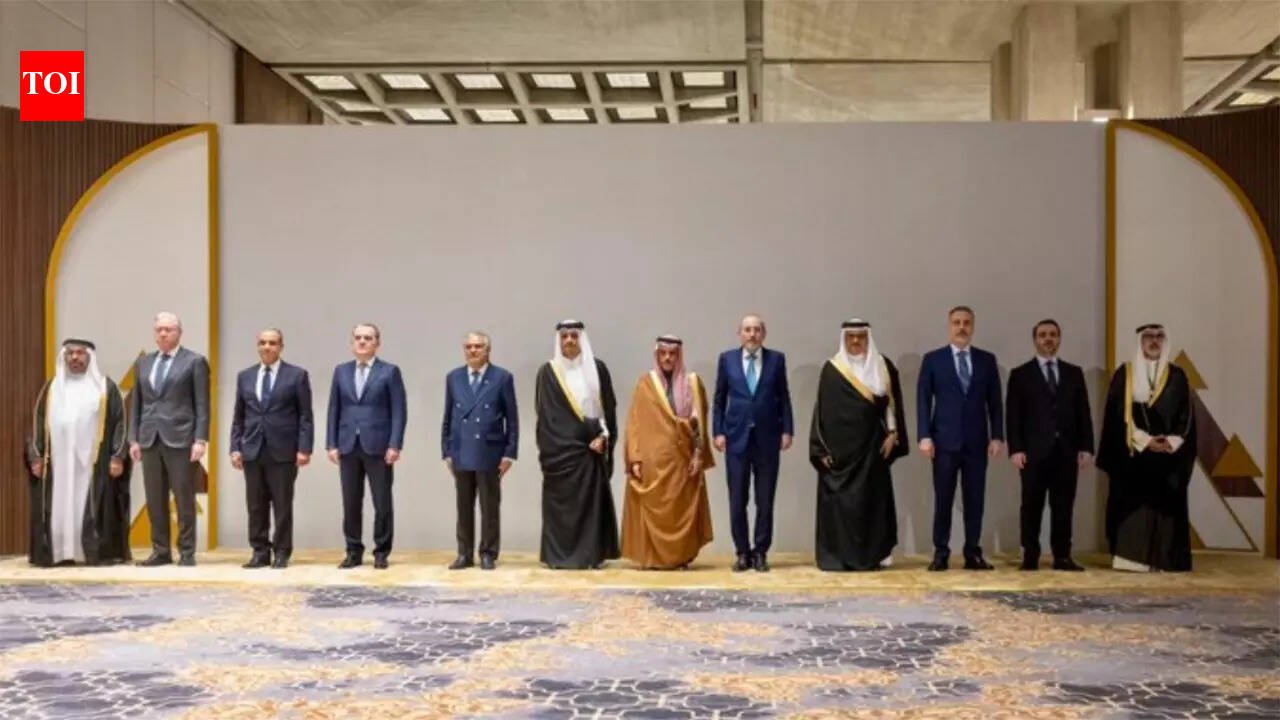
Who attended the Riyadh meeting? Saudi Arabia , United Arab Emirates , Qatar Egypt, Türkiye, Pakistan, others
Foreign ministers from a wide range of regional countries and allies gathered in Riyadh for the high-stakes meeting, reflecting the level of concern about the ongoing conflict. The meeting was attended by representatives from Qatar, Azerbaijan, Bahrain, Egypt, Jordan, Kuwait, Lebanon, Pakistan, Saudi Arabia, Syria, Turkey and the United Arab Emirates, according to a joint statement released on Thursday. The diversity of attendees highlighted the breadth of the impact of the war being felt, from direct military threats and missile debris risks to energy supply disruptions and fears of mass displacement if tensions continue to escalate.The meeting brought together ministers from these countries in one of the most important diplomatic alliances since the conflict began. At the heart of the discussion was a shared concern that wars are no longer contained, civilian and energy infrastructure are being targeted and the risk of full-scale regional conflict is rising. Participating countries unanimously condemned Iran’s recent attacks in the region, especially attacks on critical infrastructure such as energy facilities and airports. The language is strong, but measured. Rather than calling for retaliation, ministers focused on de-escalation and stability, demonstrating a collective desire to prevent further escalation of the crisis.
Iran in focus, a delicate balance Israel : Condemnation without complete breakdown
One of the most striking aspects of the Riyadh meeting was the clear but controlled criticism of Iran. Ministers called the attacks unacceptable and stressed that the sovereignty of countries must be respected and civilian infrastructure must not be targeted, escalating threats to regional and global stability. At the same time, the statement did not completely isolate Iran diplomatically. This reflects the broader regional reality that many countries are reluctant to completely sever ties with Tehran even as tensions rise, recognizing that dialogue remains vital to avert a wider war.Interestingly, the meeting also touched on Israel’s role in the conflict, but in a much more restrained manner. Despite some criticism of Israel’s actions in the region, ministers largely avoided directly discussing Israeli attacks on Iran, choosing instead to focus on current regional stability. The selective emphasis underscores the complex diplomatic balancing act of condemning Iran’s attacks, avoiding escalating tensions with Israel and leaving room for broader negotiations. Essentially, the meeting was not about seeking accountability but about preventing further escalation.
Energy security and right to self-defense take center stage at Riyadh conference
One of the most pressing issues discussed was threats to global energy infrastructure. Recent attacks on natural gas facilities, refineries and shipping lines have caused far more alarm than expected middle East. Ministers have warned that continued targeting of energy sites could disrupt global supply chains, send oil and gas prices soaring and trigger wider economic instability. Given that the Gulf supplies a large portion of the world’s energy, the message is that this is no longer just a regional conflict; This is a global risk.The joint discussions also reaffirmed a key principle that states have the right to defend themselves in accordance with international law. This is not just a legal statement, but a strategic signal. By emphasizing self-defence, ministers justified potential defensive actions, issued warnings against further attacks and strengthened collective security. At the same time, they did not support offensive retaliation, again emphasizing containment rather than confrontation.
Riyadh meeting leads to wider call for de-escalation
Beyond the immediate response, the Riyadh meeting sent a broader diplomatic message that the region cannot afford a protracted war, that dialogue must remain open and that escalation benefits no one. This is consistent with continued international efforts to bring the parties back to the negotiating table, even as fighting continues. Previous diplomatic engagements in the region have similarly emphasized the need to avoid conflict and prioritize dialogue, highlighting a consistent theme in recent geopolitical efforts.The Riyadh meeting comes at the most tense moment, with missile attacks, emergency warnings and energy outages dominating the headlines. Bringing together several Arab and Muslim countries signals a coordinated regional response rather than an isolated one. The outcome reflects a nuanced stance as it is firm on sovereignty, wary of escalation and open to diplomacy as what happens in the Gulf affects oil prices, global markets and international security.The Riyadh meeting also reflected a deeper reality that the Middle East is entering a new phase of instability. Recent developments indicate that conflicts are crossing national borders, economic targets are becoming military targets, and civilian infrastructure is increasingly vulnerable. In this environment, diplomacy is not only important but essential.Perhaps the most important takeaway from the meeting was the collective sense of urgency. Despite political differences, historical rivalries and divergent alliances, Arab and Muslim countries have come together to send a unified message that escalation must stop. However, this unity is fragile. Balancing relations with Iran, managing relations with global powers, and resolving internal security issues will continue to test regional cohesion.