
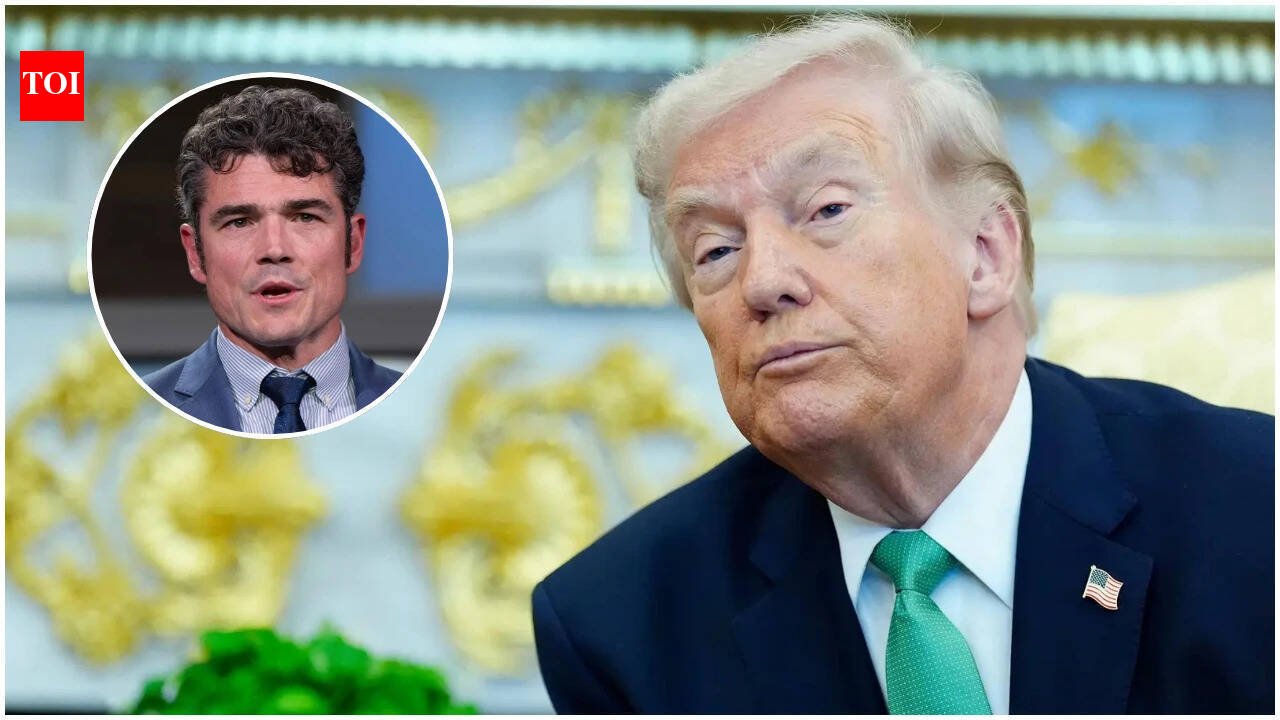
Trump calls Joe Kent ‘weak on security’ after counterterrorism chief resigns over Iran war
US President Donald Trump on Tuesday welcomed the resignation of National Counterterrorism Center (NCTC) director Joe Kent, saying the top counterterrorism official was “very weak on security” and that his resignation after protests over the ongoing war with Iran was “a good thing.”
Trump fires Kent after Oval Office speech
Trump reacted violently to reporters at a news conference in the Oval Office after Kent resigned over the administration’s military action against Iran.“I’ve always thought he was weak on security, very weak on security,” Trump said, referring to Kent, who served as director of the National Counterterrorism Center.He added that after reading Kent’s resignation statement, “I realized it was a good thing that he was leaving.”Trump also told reporters, “I’ve always thought he was a good guy, but I also believed he was weak – very weak – on security… When I read his statement, I realized it was a good thing he was withdrawing because he said Iran is not a threat. Iran is a threat – and every country realizes that…”Trump further said that if there are people in his administration who don’t believe Iran poses a threat, “we don’t need those people.”Trump said: “They are not smart people, or they are not savvy people.” “Iran is a huge threat”…
Joe Kent resigns, says he can’t support Iran war
Kent announced his resignation on Tuesday, saying he could no longer support the Trump administration’s military action against Iran.Kent said he “cannot in good conscience support Iran’s ongoing war.”Kent further said in a statement posted on social media that “Iran poses no imminent threat to our country and it is clear that we are waging this war due to pressure from Israel and its powerful American lobby.”The claim directly challenges the White House’s rationale for launching the attack and underscores growing unease among some in Trump’s political base about the conflict.
Resignation puts White House’s Iran case into focus
Kent’s departure is significant because he heads one of the U.S. government’s main counterterrorism agencies at a time of heightened domestic security concerns.The Senate confirmed Kent to the position last July in a 52-44 vote, according to the Associated Press. As NCTC director, he oversees an agency responsible for analyzing and detecting terrorist threats.His resignation reflects broader uneasiness about the war among parts of Trump’s support base and suggests that questions about the rationale for striking Iran have now surfaced from within the administration.According to the Associated Press, Kent’s letter of resignation stemmed from what he saw as a lack of evidence that Iran posed an imminent threat, something the Trump administration had repeatedly disputed.
Republicans defend strike, Democrats back Kent on this point
Trump’s allies were quick to push back on Kent’s claims.House Speaker Mike Johnson said Iran “clearly faces an imminent threat” and believed Tehran was close to nuclear enrichment capabilities and rapidly building missiles.Johnson added that if Trump waited, “we would have mass casualties of Americans, service members and others, and severe damage to our facilities.”Yet Democrats found rare common ground with Kent on the core issue of the war’s legitimacy.“I strongly disagree with many of the positions he has espoused over the years, especially those that have the potential to politicize our intelligence community,” said Senator Mark Warner, the top Democrat on the Senate Intelligence Committee. “But on this, he is right: There is no credible evidence of an imminent threat from Iran that would justify the United States’ rush to engage in an alternative war in the Middle East.”“
Withdrawal comes as domestic terror fears grow
Kent’s resignation also comes at a sensitive time for U.S. national security.His exit from the administration follows a series of violent incidents in recent days, including attacks in New York City, Michigan and Virginia, that have heightened concerns about threats within the United States.The changes at the top of NCTC thus come as intelligence and law enforcement agencies face a re-examination of their homeland threat landscape.Director of National Intelligence Tulsi Gabbard, CIA Director John Ratcliffe and FBI Director Kash Patel will testify before lawmakers later this week on threats to the United States, with hearings now likely to focus on the issue of the Iran war and the intelligence used to justify it.
Divisive figures inside and outside government
Kent has long been a prominent and controversial figure in Trump-aligned national security circles.He ran two unsuccessful congressional campaigns in Washington state before joining the administration and built a profile among Trump supporters through his military and intelligence background, the Associated Press reported.According to the Associated Press, Kent was a Green Beret who served in 11 combat tours before retiring from the Special Forces and joining the CIA. His wife, Navy cryptologist Shannon Kent, was killed in an Islamic State suicide bombing in Syria in 2019.Democrats, meanwhile, have fiercely opposed confirmation of his past ties to far-right figures and conspiracy theories, even as Republicans have defended his counterterrorism credentials.Now, his resignation has created another internal flashpoint for Trump on the Iran war, with the president using Kent’s withdrawal not as a sign of dissent but as an opportunity to double down on his claim that the attack was necessary.