
For nearly three decades, the art world has been engaging in a strange cultural ritual. People stood in front of the wall, staring at it with unusual seriousness, trying to decipher the joke someone had left in the night. A rat with a placard. A police officer hugs another police officer. A child reaches for a red balloon that has slipped away. The name below the template is always the same: Banksy.No biography, no interviews, no public appearances. Only one pseudonym grew into one of the most recognizable signatures in modern art.Banksy’s anonymity is not just a curiosity but part of the work itself. Street art has always had a tense relationship with the law, and characters whose spray paint mocks government and corporations can’t easily step into the light without losing some of their rebellious energy. Over time, the mystery became inseparable from the art. The world isn’t just paying attention to Banksy’s murals; It’s also looking for people to draw them.
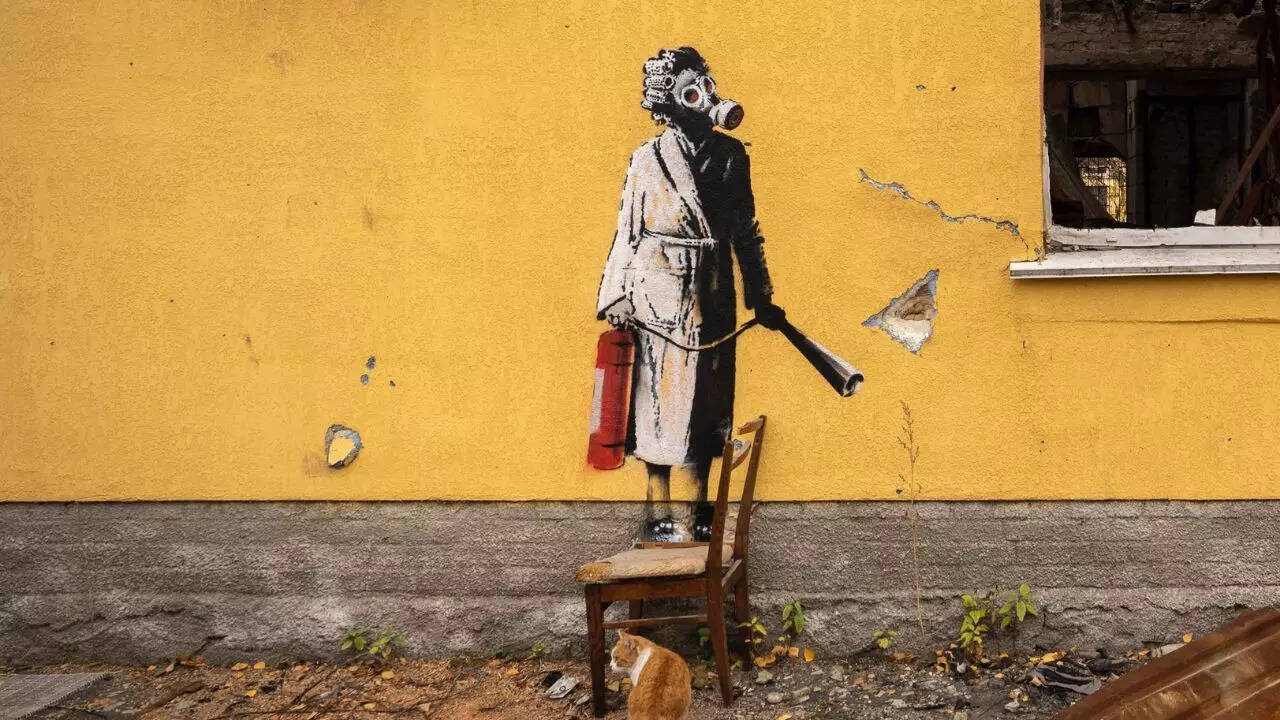
When the answer finally begins to emerge, it’s not revealed in a dramatic reveal or triumphant way. Instead, it emerged slowly through patient reports. A Reuters investigation followed clues spanning continents and decades. The trail leads from Bristol’s graffiti culture to bombed-out buildings in Ukraine and finally to New York’s forgotten police archives. What the reporters uncovered was less a dramatic expose than the gradual dismantling of a myth carefully maintained for years.The story begins in Bristol, a port city in southwest England that developed a thriving underground culture at the end of the twentieth century, with musicians, graffiti artists, and political activists arriving. Bristol in the 1990s was fertile ground for experimentation. Spray paint is cheap, public walls are plentiful, and authority provides a stable target for satire. In that environment, a young graffiti artist began to develop the style that would come to define Banksy’s work.One technology choice proved decisive. Instead of drawing freehand, artists began using stencils. Templates allow images to be applied quickly and repeatedly. They also allow artists to work quickly, which is crucial when police patrols may appear at any time. This approach produced the clean silhouettes and crisp silhouettes that would later become synonymous with Banksy’s visual language.The theme emerged equally quickly. War, policing, capitalism and consumer culture all appear in early works, often filtered through a playful sense of humour. Banks’s characters often appear simple but possess sharp political undertones. Children confront soldiers, animals mock authority, and everyday objects become silent acts of rebellion. One image in particular captured the public’s imagination: a little girl reaching for a heart-shaped balloon floating into the sky. The piece is emotionally simple, instantly recognizable yet quietly devastating.
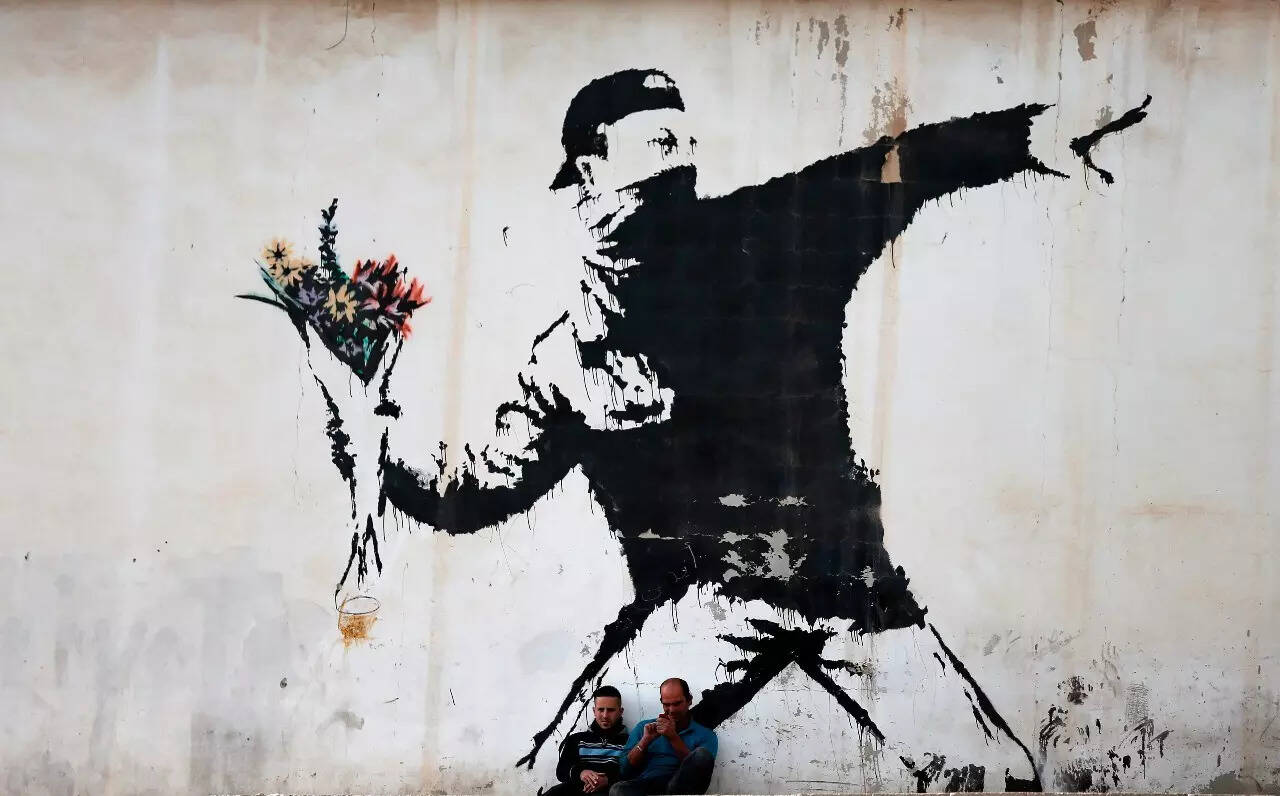
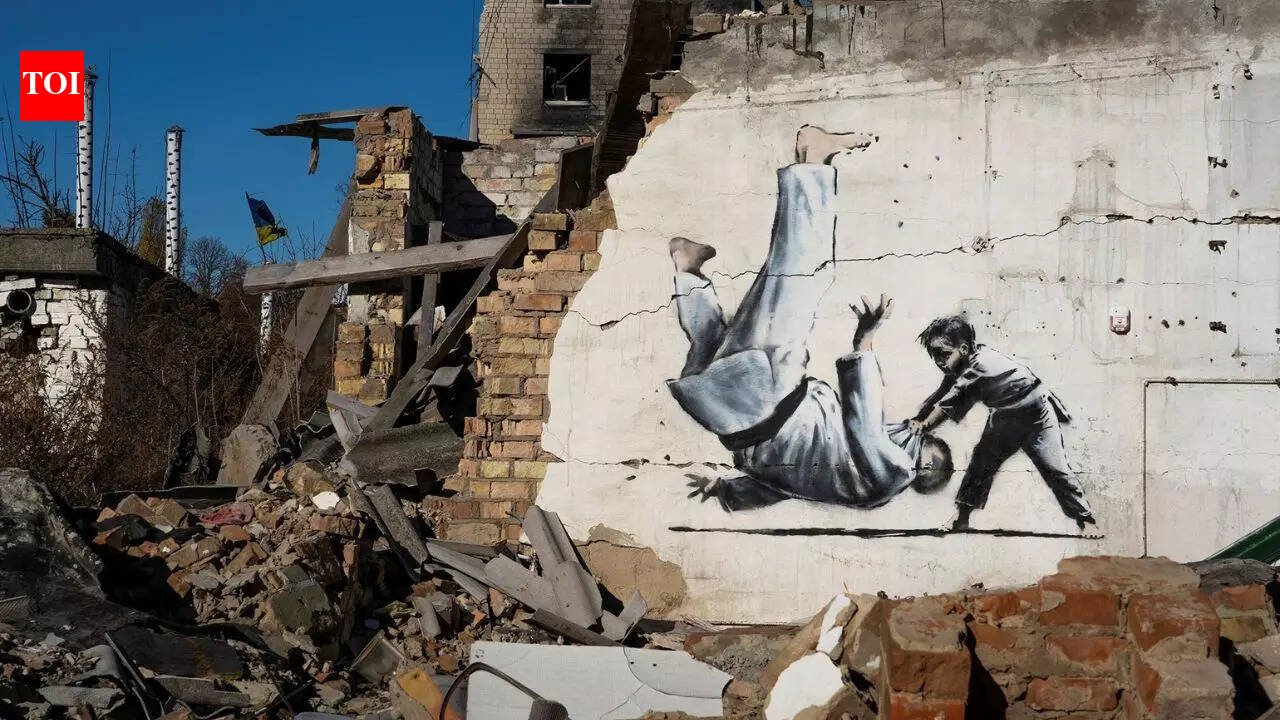
As Banksy’s murals began to appear in cities around the world, the mystery surrounding the artist intensified. Journalists and enthusiasts have suggested several candidates for the identity behind the pseudonym. One of the most enduring names is that of Robin Gunningham, a Bristol artist whose background matches the timeline of Banksy’s early career. Another was Robert Del Naja, a musician in the band Massive Attack who himself had been involved in graffiti in Bristol many years ago. The speculation grew into a small cultural industry, with entire communities analyzing travel schedules and stylistic similarities in the hope of identifying the elusive artist.Meanwhile, Banks continues to work. Murals appeared in London, Paris, New York and the Middle East, often with pointed commentary on war, immigration and political power. The anonymity remains intact long enough that it begins to seem almost supernatural. Banksy looks less like an independent artist and more like an invisible presence, able to appear wherever there is a blank wall.The modern investigation into his identity begins in an unexpected place. In 2022, several new Banksy murals appeared on damaged buildings near Kiev during the war in Ukraine. Images showed gymnasts balancing on rubble and children confronting armed soldiers. These works quickly attracted international attention. They also raised a practical issue. If Banks traveled to a war zone to create them, someone must have seen him.The reporter began talking to residents of the village where the mural appeared. Witnesses said a small group of people arrived in ambulances. Two masked painters worked quickly with stencils and spray paint, while a third man accompanied them. The man was easily identifiable because he had a prosthetic leg and an arm. It turns out he was a British war photographer who had previously collaborated with artists and musicians from Banksy’s wider circle. This detail suggests that those involved in the Ukrainian mural may have had links to the Bristol scene where Banksy first appeared.
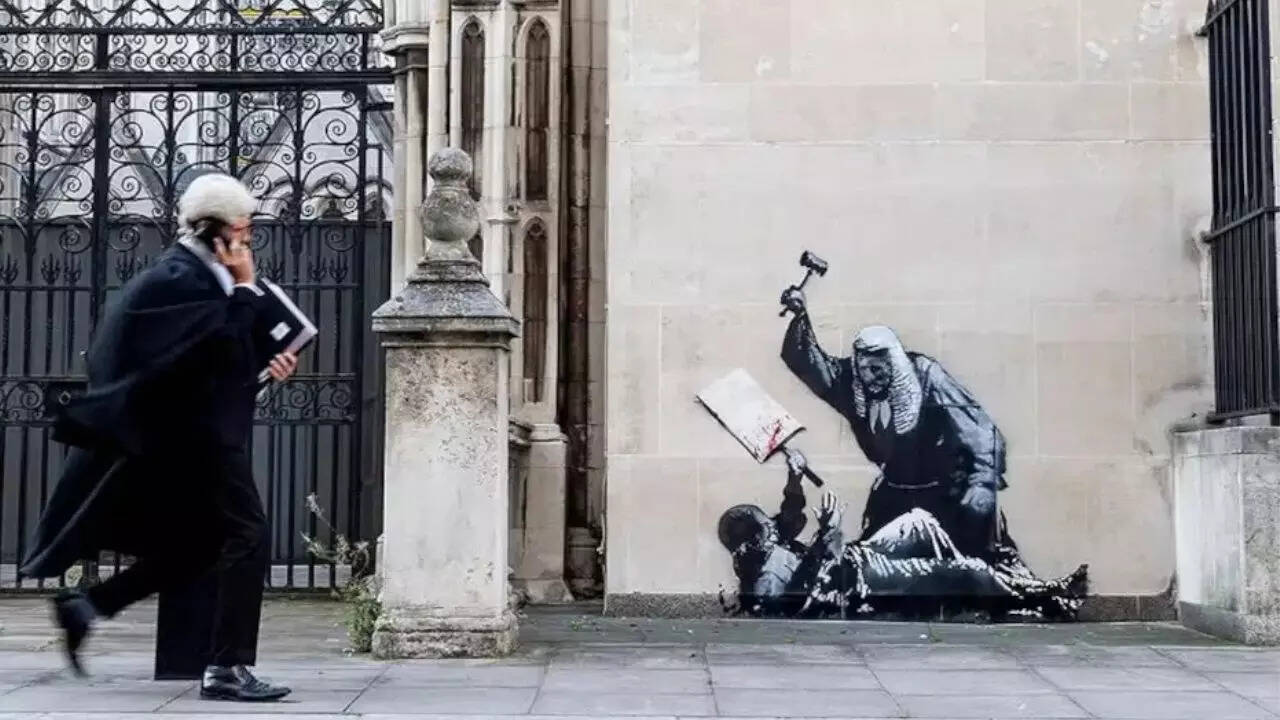
Leads quickly led to a long-time suspect. Robert Del Nadja traveled to Ukraine around the same time the murals appeared. The discovery briefly revived the idea that the musician himself might be Banksy, or at least closely connected to the workings behind the artwork. Yet the investigation eventually revealed that the real breakthrough was hidden elsewhere, hidden in a document that had languished quietly in U.S. archives for more than two decades.In September 2000, a young British graffiti artist climbed onto the roof of a Manhattan building during New York Fashion Week. A giant billboard advertising Marc Jacobs clothing stands overlooking the street. The artist began modifying the ad, adding exaggerated teeth and drawing a speech bubble next to the model’s face. Before the work was completed, he was caught on the spot by the police.At the time, the incident looked like a routine case of vandalism. The charges were reduced and the man was released after paying a small fine. No one realized that the man standing on that roof would soon become one of the most influential artists of the twenty-first century. However, the case left a valuable trace. Police files contain a handwritten confession signed by the man who defaced the billboard. The signature reads Robin Gunningham.The discovery provides the strongest evidence yet that Banks and Gunningham are the same person. The name had been floating around in rumors for years, but police documents turned speculation into something more concrete. The mysterious street artist, whose work appears across the world and whose career appears to have begun as a graffiti painter in Bristol, was once arrested while vandalizing a billboard in New York.Even this conclusion doesn’t fully resolve the story. After the mid-2000s, Robin Gunningham’s public records almost completely disappeared. Addresses, property files and other bureaucratic traces disappeared. Former colleagues later said the explanation was simple. The artist changed his legal name. The new identity was intentionally ordinary, the kind of name that would easily fit into everyday life without drawing attention to itself.Ultimately, Banksy’s story reveals a curious paradox of modern fame. The artist created some of the most recognizable images in contemporary culture, yet he himself remained invisible. His work criticizes power structures and commercial systems, even as these systems turn his paintings into high-value commodities. Banksy’s myth became as powerful as the artwork itself.Investigations tracing the identity of Robin Gunningham have not entirely dispelled the myth. Murals still appear overnight. The images still speak with the same playful voice. The artist still avoids public appearances and interviews. All that has changed is the knowledge that behind this legend stands a man who once walked the streets of Bristol with a stencil and a spray can and discovered that invisibility may be the most powerful artistic tool.