Bahrain News: Drone attack causes airport fuel tank fire during war between Iran and US-Israel

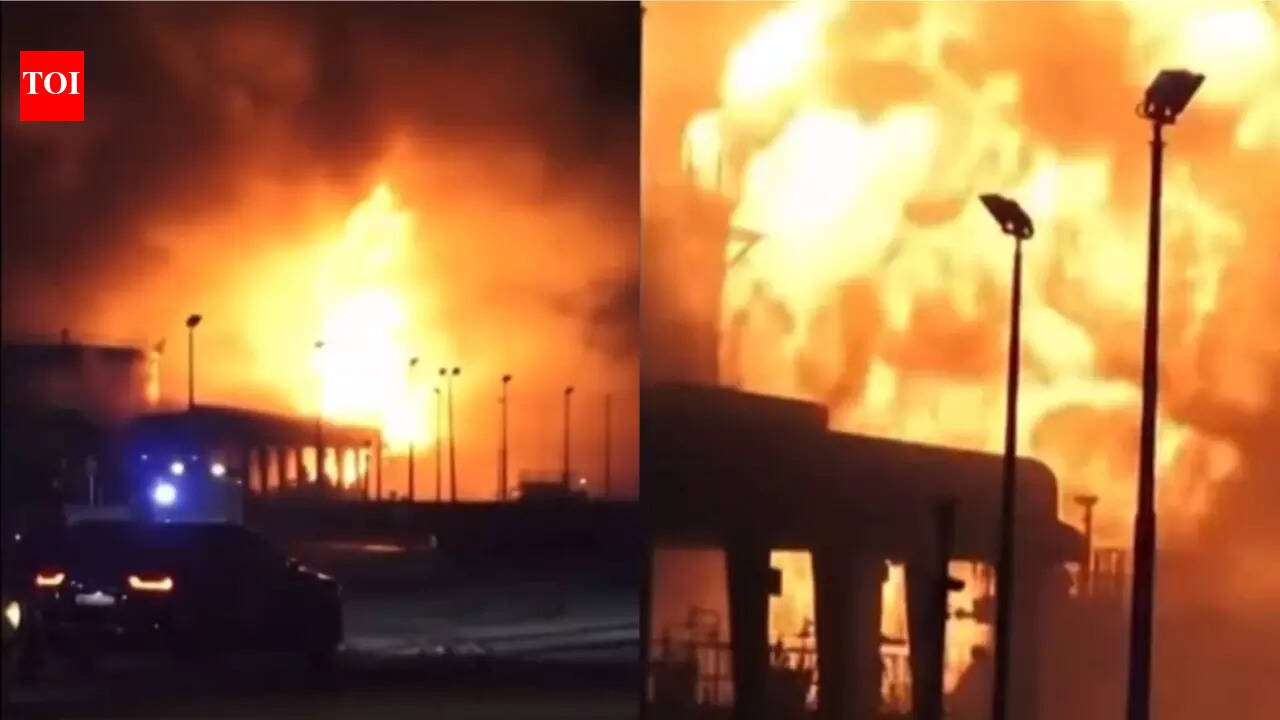
An Iranian drone reportedly struck a fuel storage facility near Bahrain’s international airport on the island of Muharraq, sparking a fire and raising concerns that critical civilian infrastructure in the Gulf is increasingly becoming a target of regional wars as the Iran-U.S.-Israeli conflict spreads to the island nation of Bahrain. The attack reportedly occurred late at night in Muharraq province, which is home to Bahrain’s main international airport and multiple energy storage facilities.According to Bahraini authorities, the drone strike hit a fuel tank in the area, sparking a fire that sent thick smoke into the sky and issued an emergency warning to nearby residents. Officials urged people living in surrounding communities to stay indoors and close their windows to avoid inhaling smoke from burning fuel.Emergency services and firefighters were quickly deployed to contain the blaze while security forces secured the scene to prevent further damage. Video circulating online showed firefighters battling the blaze throughout the night, with towering flames and thick smoke billowing from the fuel storage facility.
Iran’s Strategic Targets Against the United States and Israel near Bahrain International Airport
The location of the attack raised alarm across the Gulf because the targeted fuel facility was close to Bahrain International Airport, one of the country’s most important transportation hubs. Tanks in the Muharraq area are used to store aviation fuel and other petroleum products, supporting airport operations and the island nation’s wider energy infrastructure. Authorities confirmed the attack came amid a widening regional conflict between Iran, the United States and Israel that has triggered missile and drone attacks in several Middle Eastern countries. Although officials did not immediately report casualties from the Muharraq incident, the attack highlighted growing concerns about the vulnerability of civilian infrastructure in the increasingly volatile Gulf region, particularly airports, ports and energy facilities.
Bahrain is already on the frontline of war between Iran and US-Israel
The drone attack near Bahrain’s airport was not an isolated incident but part of a wider pattern of attacks linked to the ongoing regional war. According to reports, Iran has launched multiple missile and drone attacks in the Gulf region since late February 2026, targeting military bases, ports, oil infrastructure and transportation hubs. Bahrain, home to the U.S. Navy’s 5th Fleet, has been a particularly sensitive target due to its strategic military status and proximity to Iran across the Persian Gulf.Bahrain’s air defenses have intercepted dozens of drones and missiles targeting the country in recent weeks. Officials say Bahrain has shot down more than 100 missiles and more than 180 drones since the conflict began, reflecting the scale of the aerial threat the country faces. Despite these interceptions, several attacks caused damage to infrastructure and civilian areas.
Gulf region faces expanding drone war in Iran-U.S.-Israel war
The events in Bahrain come as drone warfare has become one of the defining features of the current conflict. span middle Eastdrones have been used to target energy facilities, shipping routes, and strategic infrastructure. Similar attacks have occurred in recent weeks in Oman, where drones targeted fuel storage tanks at the port of Salalah, and in the United Arab Emirates, where intercepted missiles and drones caused debris to fall on buildings in Dubai. Analysts said the attacks appeared aimed at damaging the Gulf region’s economic lifelines, particularly oil infrastructure and shipping routes. The Gulf handles a large portion of the world’s energy exports, with tankers passing through the Strait of Hormuz, one of the most critical chokepoints for global oil supplies. Any sustained attacks on ports, airports or fuel facilities could have a significant impact on global energy markets and international trade.
The war between Iran and the United States and Israel continues to escalate regional tensions
The drone attack on Muharraq comes amid one of the worst Middle East conflicts in recent years. The fighting began after the United States and Israel launched coordinated strikes against Iranian military and nuclear targets earlier this year. Iran has launched a series of retaliatory attacks across the region, targeting military and strategic locations linked to its adversaries.Gulf governments, however, condemned attacks on their territory, saying they violated sovereignty and threatened the safety of civilians. Bahrain’s government has repeatedly warned that attacks on its infrastructure could plunge the wider region deeper into conflict.
Security concerns grow in Gulf capitals amid Iran-U.S.-Israel war
Recent events have heightened anxiety in Gulf capitals as residents watch the conflict spread beyond traditional war zones. Airports, energy facilities and shipping hubs are all considered high-value targets in modern warfare, especially during conflicts where drones and long-range missiles can fly hundreds or even thousands of kilometers. The increasing frequency of such attacks has forced Gulf states to beef up their air defense systems and increase coordination with regional allies. For Bahrain, the drone strike near its main airport is a stark reminder that the expanding Iran-U.S.-Israel conflict is no longer limited to distant battlefields. Instead, warfare is increasingly being fought with long-range missiles, drones and cyber operations capable of reaching deep into the Gulf. Although the fire at the Muharraq fuel facility has reportedly been brought under control, the attack highlights the fragility of regional security as tensions continue to escalate.Several countries in the Middle East have reportedly been hit by drone and missile attacks, and analysts have warned that further attacks on critical infrastructure are possible, raising the risk of conflicts disrupting energy markets, air routes and global trade. At present, Gulf governments remain on high alert, hoping to prevent further escalation of the war and at the same time prepare for the possibility that strategic infrastructure in the region will continue to face new threats.