
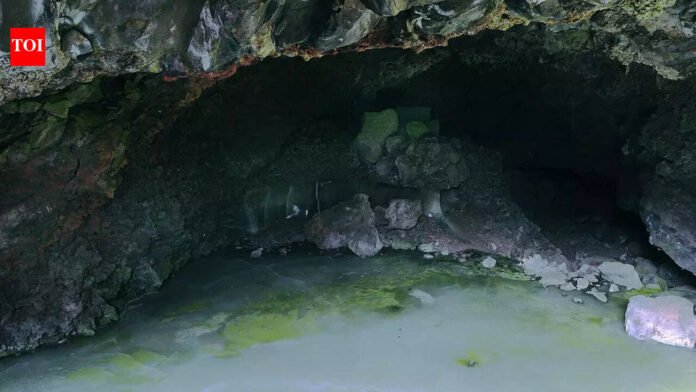
Hidden deep in the heart of New Mexico lies a frozen world at odds with its surrounding desert environment. Although outdoor temperatures soar in the summer sunshine, the Bandera Volcano Ice Caves remain chilly at 31°F (minus 0.6°C) year-round. The floor inside the cave is covered with ice up to 20 feet thick, centuries-old ice preserved due to the cave’s unique structure. Scientists say it has remained below freezing for more than 3,400 years, making it one of the oldest intact ice caves in the United States. The contrast between the scorching desert outside and the cold interior is breathtaking. Visitors step from sun-baked landscapes into natural icehouses, hidden relics of time frozen in the desert.
How New Mexico’s Bandera Ice Cave Became a Frozen Desert Wonderland
Bandera Ice Cave is a lava tube. During volcanic eruptions, lava flowed beneath the surface. As the lava on top cools, the lava below continues to flow. Eventually, the water flow disappeared, leaving a hollow tunnel. This is the cave we see today. Its shape blocks cold air, while the porous walls keep out the desert heat. Melting snow and rain seeped in and immediately froze on the icy floors. Over centuries, layers of ice were built up layer upon layer. Experts say this is why the cave remains so cold.Despite the sub-zero temperatures, the cave is not completely devoid of life. Arctic algae thrive on the icy surface. They create a vibrant blue-green layer on the frozen floor. Environmental educator Paul Mauermann says it’s remarkable that algae can survive in such a cold place. It is a tiny life that holds on to itself under extreme conditions. You wouldn’t expect it to be in the desert, but there it is. This seems to give the cave an otherworldly feel.
The unique frozen landscape of Bandera volcano ice cave
The Bandera volcano itself is now dormant, but it tells the story of explosive eruptions. The cinder cone formed a crater about 800 feet deep. The lava flow cools and hardens. Some are drained, forming tunnels and ice caves. Scientists can study these flows to understand volcanic activity over thousands of years. The surrounding lava fields stretch for 23 miles, a reminder of the primal forces that shaped this frozen oasis.This cave is more than just a frozen strange object. This is a natural laboratory. Researchers study ice preservation, microbial life and volcanic geology in one place. At the same time, visitors are mesmerized by its sheer surrealism. Imagine walking on a desert mountain road and entering a world that feels like the Arctic. It’s quiet, eerie and awe-inspiring. Some people say that time itself feels like it slows down inside.