
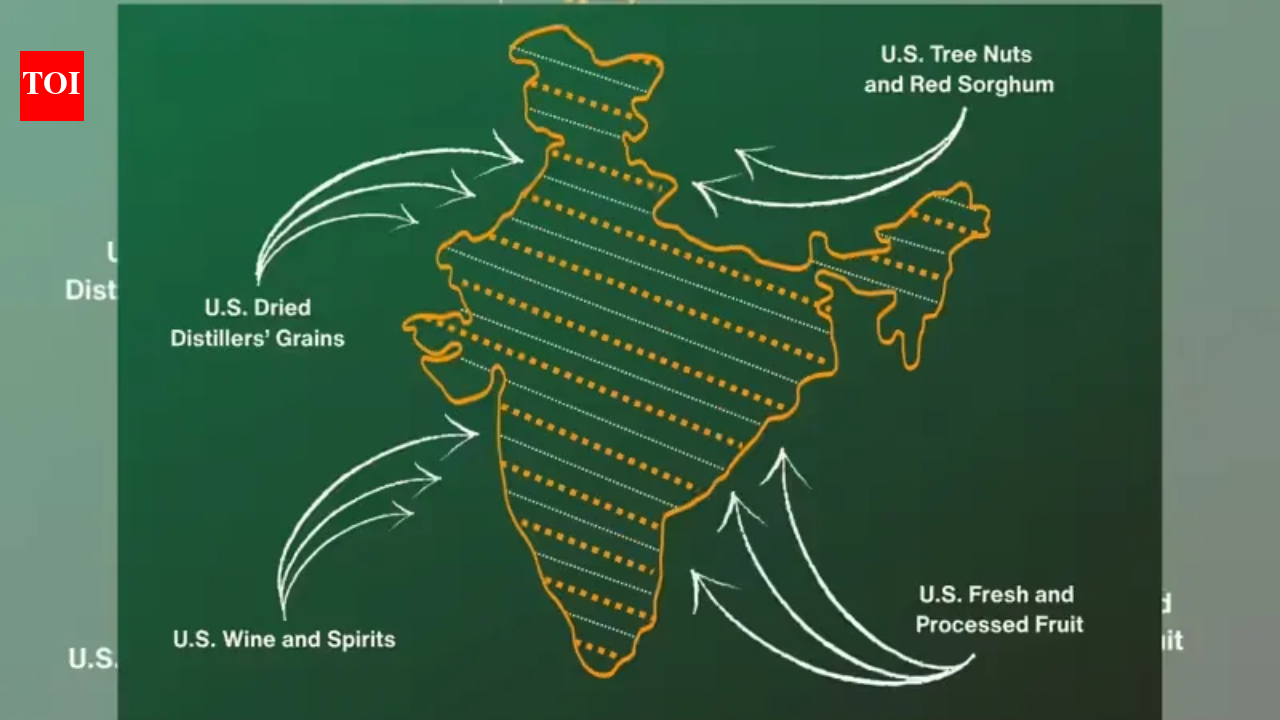
TOI reporter in Washington: In a move that combines economic diplomacy with strategic signaling, the Trump administration on Friday released a map of India depicting the entire Jammu and Kashmir region, including Pakistan-occupied Kashmir (PoK) and Aksai Chin, as an integral part of Indian territory. The United States Trade Representative (USTR) shared this image on X while also announcing the framework for an interim trade agreement between the United States and India.The map is important because it departs from historical U.S. practices, which have often made Pakistan-administered Kashmir and Aksai Chin disputed areas. Analysts saw this as a deliberate geopolitical endorsement of India’s claims, angering the two countries amid the US’s rocky relations with Pakistan and China. It also marks a return to strategic support for India as a counterweight in the Indo-Pacific—a policy that had briefly been eclipsed—especially in the wake of the recent Saudi-Pakistan deal and U.S. geopolitical outreach to Beijing in the G-2 axis (despite a raging trade war).
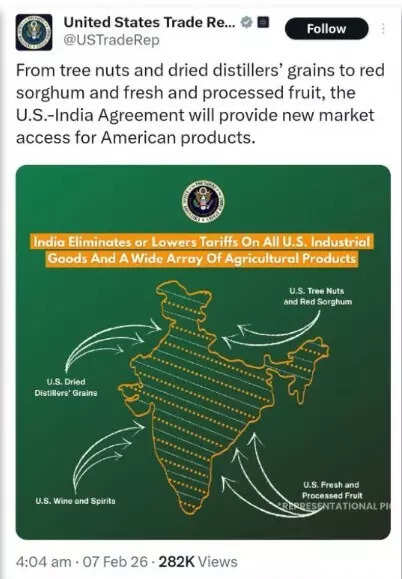
The map’s release, dubbed “cartographic diplomacy” by some, marks the clear end of decades of U.S. “neutrality” on the region’s volatile borders. The Trump administration’s explicit tying of the U.S. government’s official narrative to India’s territorial claims may effectively signal that India is no longer just a “partner” but a key regional pillar of U.S. interests in Asia. By validating India’s borders while demanding a halt to imports of Russian oil, Washington also appears to be signaling that its support is absolute – as long as the alliance is reciprocal.Analysts believe the map is a key component of the “grand bargain” struck, albeit silently, between President Trump and Prime Minister Narendra Modi. While public attention remains on the reduction of tariffs from 50% to 18% and India’s $500 billion “Buy American” commitment, the territorial confirmation represents a major diplomatic victory for New Delhi that goes beyond the trade balance. Defense analyst Major Gaurav Arya, celebrating the departure of the US position, said: “Full marks on the map for the US. Well done.”In India, the hashtag #AkhandBharat briefly trended, with nationalist supporters hailing the move as a global recognition of India’s integrity. Instead, Pakistani social media users expressed deep concern, with many seeing the map as a betrayal of a long-standing diplomatic agreement.