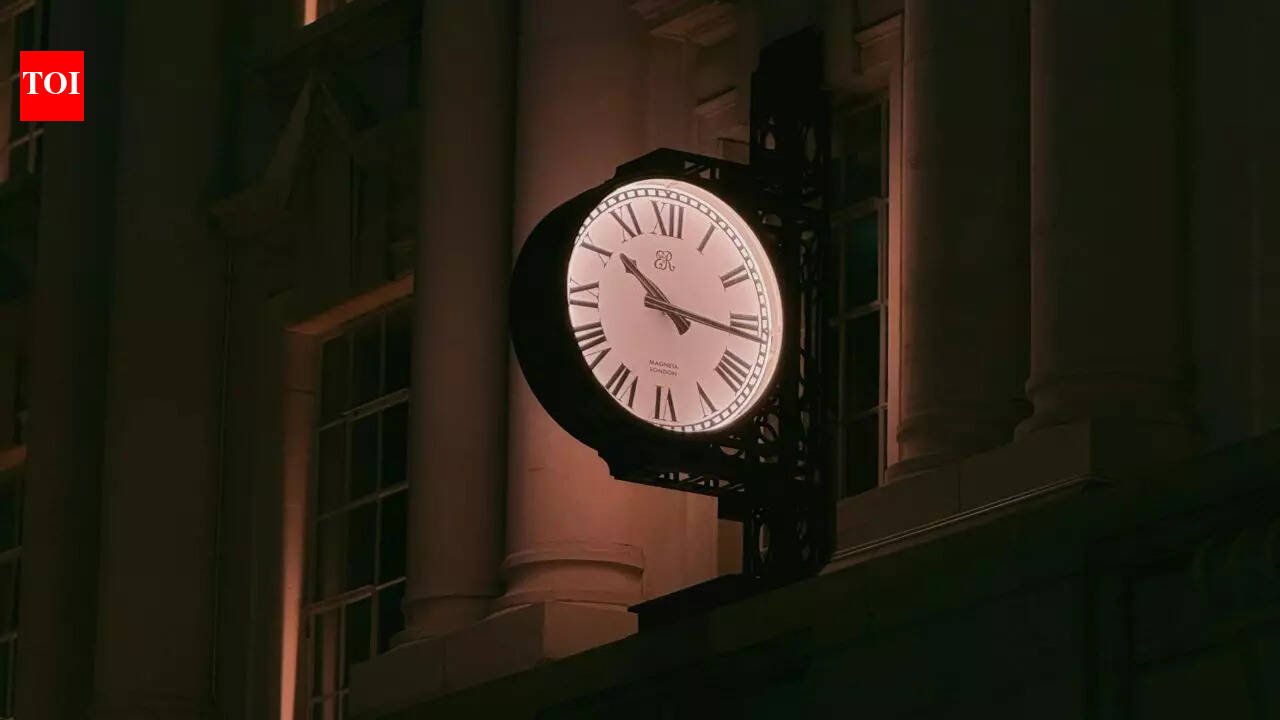
Daylight Savings Time 2026: Clocks move forward in US and Canada this Sunday; bringing longer nights and shorter sleep |


Every spring, millions of people lose an hour of sleep for reasons that have nothing to do with staying up late or setting an alarm earlier. The clock just moves forward. Daylight Savings Time will return to much of North America this weekend, bringing with it the familiar seasonal changes. Many people barely notice this because their phones and computers adjust automatically. Others still remember changing wall clocks, ovens and car dashboards before bed. The idea behind daylight saving time is fairly simple. During the warmer months, it shifts an hour of daylight from morning to evening. Supporters say it gives people longer nights to enjoy the outdoors. Critics say the system disrupts sleep and may not save much energy at all.
Daylight Saving Time: When clocks move forward to March 2026
According to Forbes, in 2026, most of the United States and Canada will implement daylight saving time starting at 2 a.m. local time on Sunday, March 8. At that moment, the clock moved forward a full hour. This means that when the clock reaches 1:59 AM, the next minute it will be 3:00 AM. An hour between these times just disappeared. Many people wake up on Sunday morning and realize that they have effectively lost an hour overnight.Most digital devices update automatically because they are connected to a time server. Still, many people notice the change when they see the time on a kitchen appliance or clock in their car being incorrect. Daylight Saving Time will last for several months. In 2026, this will continue until Sunday, November 1st. At 2 a.m. that day, clocks will be set back one hour to return to standard time, giving people an extra hour of sleep.
Daylight Saving Time: Places that do not observe daylight saving time rules
Although Daylight Saving Time covers most of North America, some places do not observe Daylight Saving Time. Hawaii doesn’t change its clocks at all. Much of Arizona also avoided the time shift.There is an interesting exception in Arizona. According to reports, daylight saving time is observed on the Navajo Nation reservation that spans parts of the state. This means that clocks there change, while surrounding areas remain on standard time. Canada essentially follows the same schedule as the United States. However, some districts choose not to participate. Some communities in British Columbia, Nunavut, Ontario, Quebec and Saskatchewan still maintain standard time year-round.Some provinces are also discussing ending the twice-yearly clock changes entirely. British Columbia has considered a permanent switch to daylight saving time, although the move may depend on coordination with neighboring regions.
Daylight saving time starts later in the UK and much of Europe
Across the Atlantic, the schedule is slightly different. The UK and most European countries start daylight saving time later this month. In 2026, the clock will turn forward on Sunday, March 29. The adjustment occurs at 01:00 UTC. For many European countries, this effectively means clocks move forward an hour in the early morning.In the UK, this transition marks the start of British Summer Time. The country is temporarily abandoning Greenwich Mean Time and adopting a summer schedule until autumn. Clocks will return to standard time on October 25, 2026.Most European countries follow the same model, although some do not participate in the system at all. Iceland, Belarus and Russia reportedly keep the same hours year-round.
Why Daylight Saving Time Still Exists
Daylight Saving Time was originally implemented to take better advantage of natural light during the longer days of spring and summer. By moving the clock forward, we can make the evenings brighter and the mornings darker.One of the main reasons for implementing this system is that more evening daylight promotes more social activities. Businesses such as restaurants, parks and sports clubs could benefit. Another reason is that we can save energy. By getting more daylight after hours, we can reduce artificial lighting. However, recent research shows that we don’t save as much as we think. Our modern use of electricity includes many devices that we didn’t even know existed at the time.However, despite these concerns, more than 70 countries are said to be using the system.