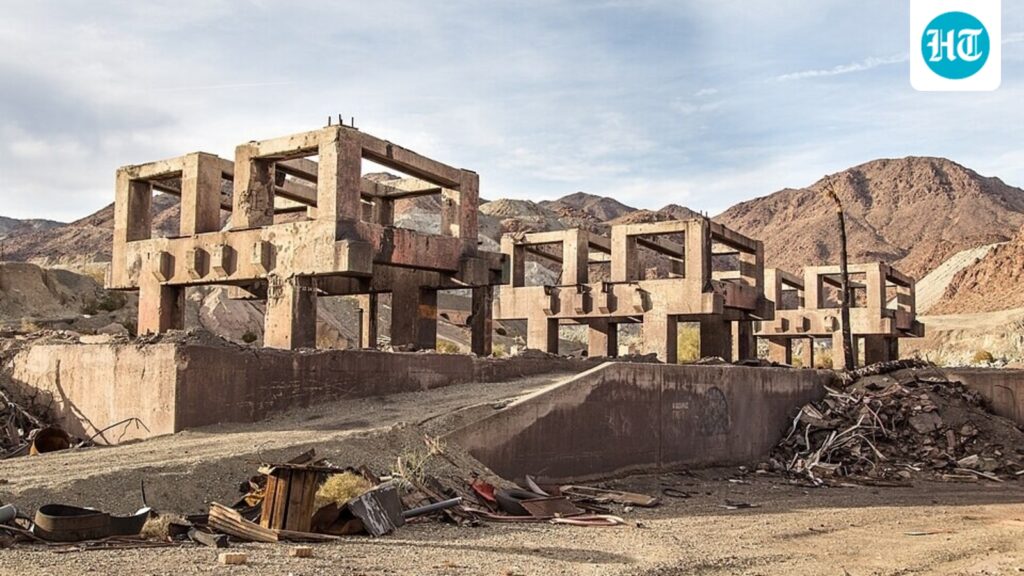

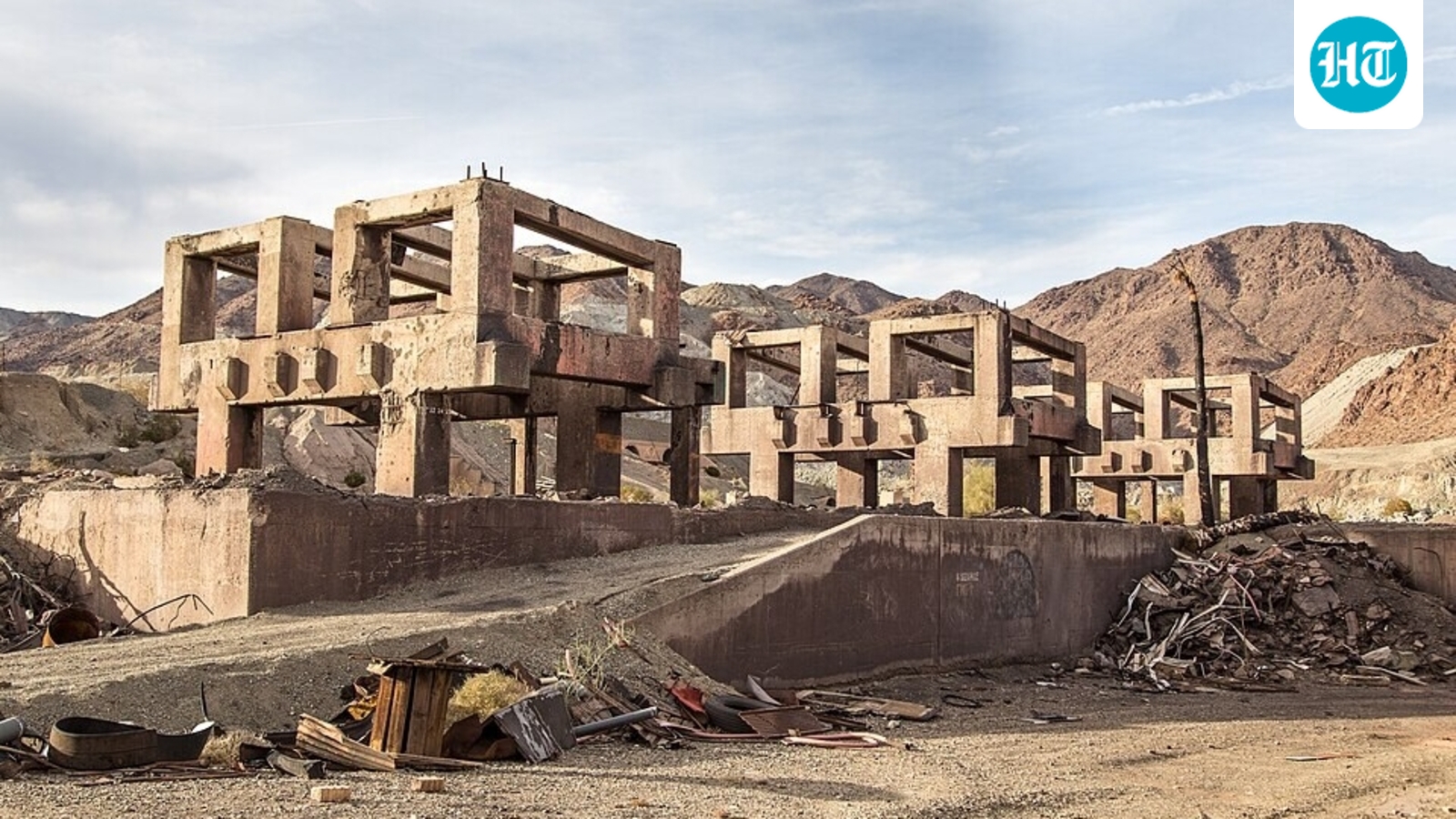
Eagle Mountain was once a thriving industrial settlement in the California desert, built to house the thousands of workers employed by the nearby iron mines established in 1948. The company town developed into a self-contained community with residential areas, schools, medical facilities, shops and public services. according to state environmental review Documents show the mining operation employed more than 4,000 people at its peak, making it an important part of the region’s industrial economy.
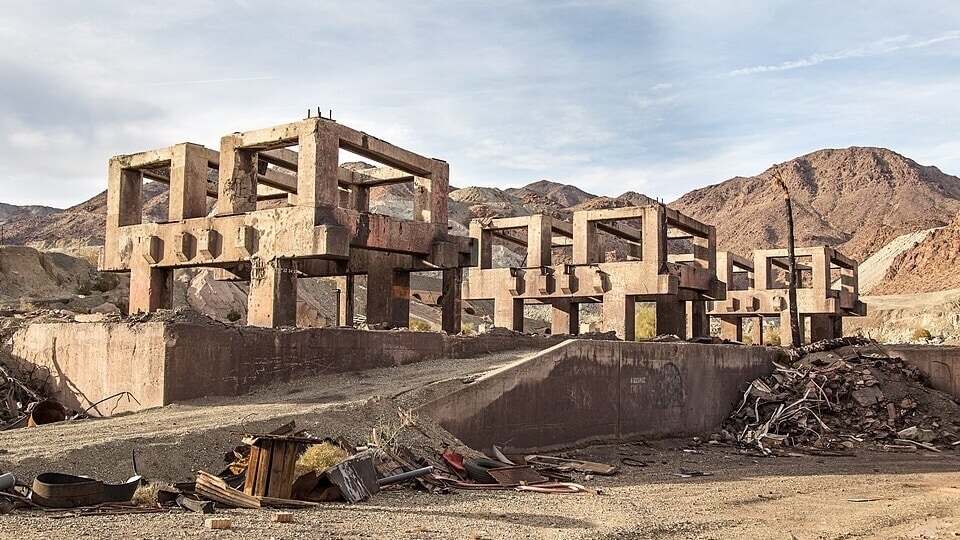
As the decades passed, the settlement took on a very different face. Empty houses, a crumbling town hall and silent streets are testament to the village’s slow decline after one of its major employers closed its doors for good. Eagle Mountain, located near Joshua Tree in Riverside County, illustrates how a single industry can build community in a remote area and how short-lived that success can be.
An enterprise city centered on iron
The creation of Eagle Mountain was closely tied to the postwar demand for steel at industrialist Henry J. Kaiser’s Fontana Works. The deposits at Eagle Mountain appear to be an ideal place to establish a large-scale mining operation. Construction began in 1947 and mining and ore transportation began in 1948. The company has created a community for employees and their families in the middle of the desert, with 416 company rentals, 185 trailers, 383 dormitories and 32 departments.
Schools, medical facilities, fire and police departments, and stores were also established to help the community become a functioning town. The settlement also houses a hospital that provides medical care to miners and their families. At its peak, the mine employed more than 4,000 people and was one of the largest employers in Riverside County. The town’s development reflects a common pattern of mine operators providing housing, waterand schools provided for miners to secure their workforce.
Mine closures transformed settlements
Eagle Mountain was a mining town whose economy depended almost entirely on the production of iron, making the community vulnerable to the fate of the steel market. Increasing international competition and changes in the economic landscape have slowly reduced mine profitability. this mining The facility closed in 1983 after approximately 35 years of operation. Its closure meant that the town’s residents no longer had jobs, causing them to move away. Neighborhoods that once housed a large workforce gradually turned into abandoned streets and crumbling buildings.
What was once a bank, several churches, a movie theater, a gas station, and even a bowling alley have become relics of town life. this School After the mining settlements were depopulated, they continued for a while, providing services to children on nearby desert ranches. This decline reflects broader challenges facing resource-dependent communities. Research discussed in geographical magazine Examine the social and economic impacts of deindustrialization, including population displacement and cuts to employer-run town services. Eagle Mountain provides an example of how when a place’s main workplace is closed, it suffers not only in terms of the labor market, but also as a community.
Reconstruction plans and an uncertain future
Since the mine closed, various attempts have been made to breathe life into the site. The biggest idea may be to convert a former mining site into a landfill and recycling facility. Los Angeles County proposed the plan and signed a purchase agreement for the property in 2000, but litigation stymied the plan. The former town was also briefly used for institutional purposes from the late 1980s to 2003, with a prison on part of the site.
Despite this, much of Eagle Mountain remains deserted, its former inhabitants long gone. The land, which covers about 10,000 acres, was sold in 2023 for nearly $22.6 million. While subsequent ownership changes and redevelopment proposals have yet to lead to a settlement, the sale has reignited interest in the property’s future. Its medical facilities, housing and other community infrastructure remain reminiscent of a town built to house thousands of workers. The mine’s closing ultimately marked the end of Eagle Mountain’s role as a functioning company town.