
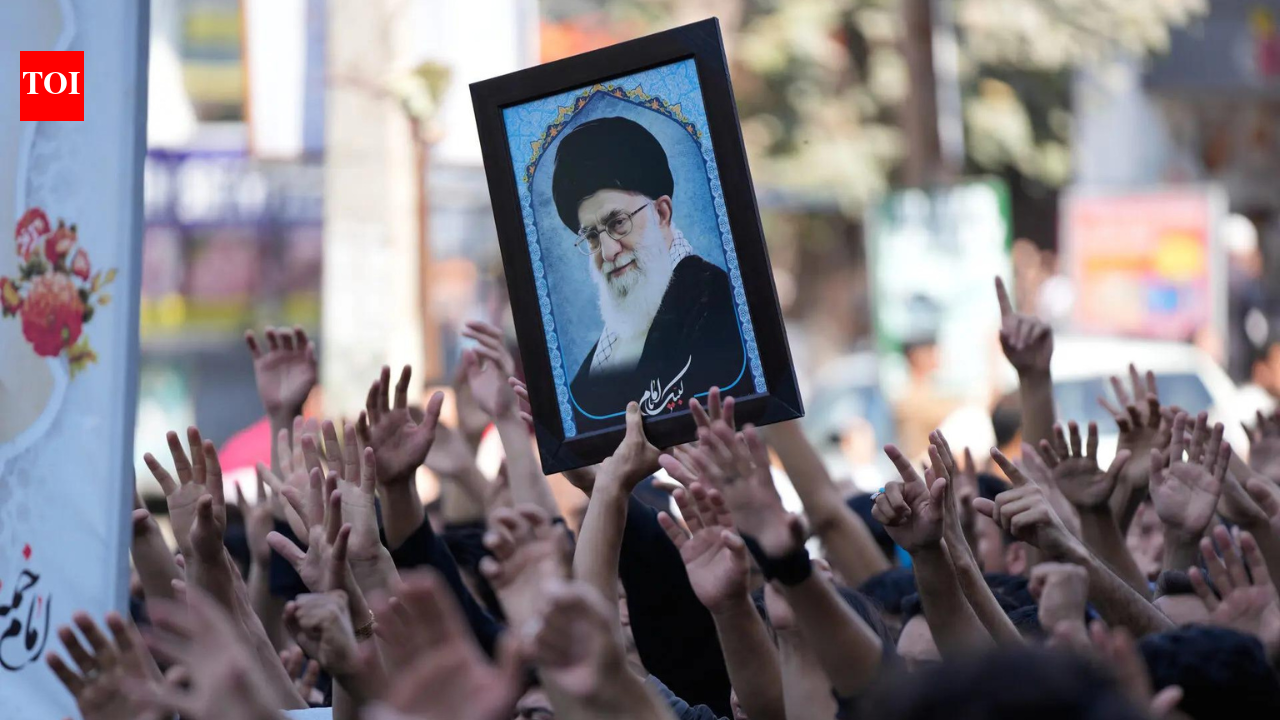
Iran’s Supreme Leader Ayatollah Ali Khamenei was killed in Sunday’s attack, an incident that sent shockwaves far beyond West Asia. Similar voices were heard in India, where parts of the Shiite community and clergy condemned the deaths.In Jammu and Kashmir, which has a large Shia population, demonstrations took place in Lal Chowk and Saida Kadar in Srinagar, as well as Budgam, Bandipora, Anantnag and Pulwama. Protesters marched through the streets, beating their chests and raising slogans, while political and religious leaders called for calm.
In Lucknow, crowds gathered near the Bala Imambara Mosque, holding posters and performing condolences. Protests were also reported in Ludhiana in Punjab, Ajmer and Jodhpur in Rajasthan, as well as in parts of New Delhi, Bihar, Jharkhand and Telangana states, with demonstrators expressing anger over the strike. In contrast, Alipur village in Karnataka’s Chikkaballapur district, which Khamenei visited in the 1980s, saw voluntary closures, with residents declaring a three-day mourning period and suspending public activities.Follow live updates on US and Israeli attacks on IranAlthough Khamenei was born in Mashhad and came to power in post-revolutionary Iran, his life and ancestry have multiple intersections with India, from ancestral links in Uttar Pradesh to visits to Kashmir and Karnataka in the early years after Iran’s 1979 revolution.
Khamenei’s ties to Kintoor
Although Iran’s Supreme Leader Ali Khamenei has no direct Indian ancestry, the clerical lineage behind Iran’s 1979 revolution can be traced back to kinturIt is a village in Barabanki district of Uttar Pradesh, about 70 kilometers from Lucknow. The village is associated with Ruhollah Khamenei’s grandfather, Syed Ahmad Musavi Hindi. Ruhollah Khamenei was born here in the early 19th century and later moved to Najaf and later settled in Khomein, Iran. Kintur, once a center of Shiite learning in the former Oudh kingdom, now has only a handful of Shiite families. The Musavi family originally immigrated to India from Nishapur in Iran in the early 18th century and settled in Kintoor. Syed Ahmad’s return to Iran around 1830 reconnected the family to its Persian roots and laid the foundation for the Khamenei lineage that would later lead the Islamic Revolution.
Khamenei visits Kashmir
Khamenei also has significant ties to Kashmir, stemming from a visit in late 1980 or early 1981. Activist Qalbi Hussain Rizvi Kashmiri wrote in his memoirs that the most defining moment of that trip was Khamenei’s participation in Sunni Friday prayers in Srinagar. He stood with Mirwaiz Maulawi Farouq in a prominent Sunni mosque and delivered a brief speech – an unprecedented move at a time when sectarian divisions between Shiites and Sunnis run deep in the valley.Rizvi described how historically the distrust between the two communities was so severe that members of one sect would avoid entering the mosques of the other sect and strictly adhere to social barriers. In this context, Khamenei’s appearance and speech took on a symbolic significance that far exceeded their duration. Rizvi said the move helped ease long-standing animosity and opened up space for greater religious interaction. In the months and years that followed, he recalled, it became more common for Shias and Sunnis to pray in each other’s mosques and participate more freely in common religious spaces—a rare period of intersectarian rapprochement, which he attributes in large part to the impact of that visit.Johnson & Johnson CM Omar Abdullah Expressed concern over Khamenei’s murder. He said people mourning his death should be allowed to mourn in peace and urged the federal territory government to “exercise maximum restraint and not use force or restrictive measures”.He said in a post: “I am deeply concerned about the developments taking place in Iran, including the killing of Iran’s Supreme Leader Ayatollah Ali Khamenei. I call on all communities to remain calm, maintain peace and avoid any actions that may lead to tension or unrest. We must also ensure that mourners in Jammu and Kashmir are able to mourn peacefully. The police and government should exercise maximum restraint and refrain from the use of force or restrictive measures.” X.J&K PDP chief Mehbooba Mufti condemned Khamenei’s death, calling it a “historical disgrace”.“Today is an extremely tragic and shameful moment in history, as Israel and the United States brag about the murder of Iran’s beloved leader, Ayatollah Ali Khamenei. What is even more shameful and shocking is that a Muslim country has chosen convenience and expediency over support of conscience, explicit or implicit. History will prove who fought for justice and who aided the oppressors.” Pray with the people of Iran. May Allah grant them strength and victory over the forces of tyranny and injustice,” she said.
Khamenei’s ties with Karnataka
Khamenei also has little-known links to Karnataka through Alipur, a Muslim-majority village in Gauri Bidanur taluk in Jikabalapur district, where Shiites make up almost the entire population.In 1981-82, Khamenei visited Alipur to inaugurate a hospital built with Iranian government aid, a moment that cemented the enduring ties between this small South Indian village and Iran’s clerical establishment. The village has long maintained spiritual, cultural and educational ties with Iran, establishing several institutions with the support of Iranian institutions.