New Delhi: For many people, aging brings with it a slight decline in memory. A forgotten name, a misplaced key. For others, memory loss becomes more severe. Yet some octogenarians are still as sharp as they were decades ago.A paper published in the journal Nature suggests that one reason for this may lie deep in the brain’s memory centers, which continue to produce new cells even late in life. The study provides strong evidence that the adult brain continues to generate new neurons in the hippocampus, a key region for learning and memory, even though this process is disrupted by Alzheimer’s disease.
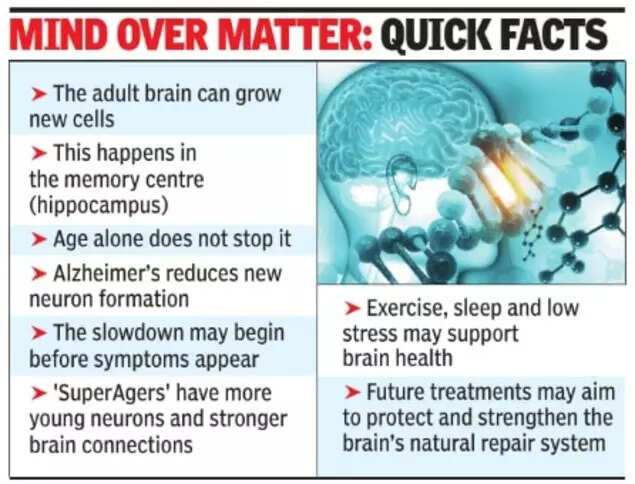
Using advanced single-cell genetic techniques, the researchers analyzed nearly 3,56,000 cells in postmortem hippocampal samples from different age groups – from young to healthy elderly, early Alzheimer’s cases, diagnosed patients and “super-aged” – to identify neural stem cells and immature neurons and trace a clear pathway from stem cells to mature neurons.Age itself does not terminate this process. Healthy older adults still show neuron formation. But in Alzheimer’s disease, there are significantly fewer immature neurons. The stem cells are still present, but their development into functional neurons appears to be impaired.Dr Manjari Tripathi, head of neurology at AIIMS, said this reflects neuronal plasticity, the brain’s ability to adapt and renew itself even in adulthood. She believes this can be enhanced through exercise, a balanced diet, adequate sleep, reduced stress, a strong social network and managing cardiovascular risk. Sleep, in particular, is critical for memory consolidation and neuronal sprouting. She noted that many “super seniors” remain mentally active and socially active.Researchers have detected early molecular changes in individuals with Alzheimer’s-related pathology but no symptoms, suggesting that the disruption of renewal may begin years before memory decline occurs.Dr. Sudhir Kumar, a neurologist at Apollo Hospitals in Hyderabad, said neurogenesis occurs at a slower rate in adults than in childhood but still serves important functions. New neurons are adaptive and help distinguish similar memories. If this regenerative capacity declines early in Alzheimer’s disease, future diagnostics might be able to detect it before symptoms appear, he added. He suggested that treatment should not only focus on clearing toxic proteins such as amyloid, but also strengthen the brain’s repair systems through targeted treatments and lifestyle measures.