
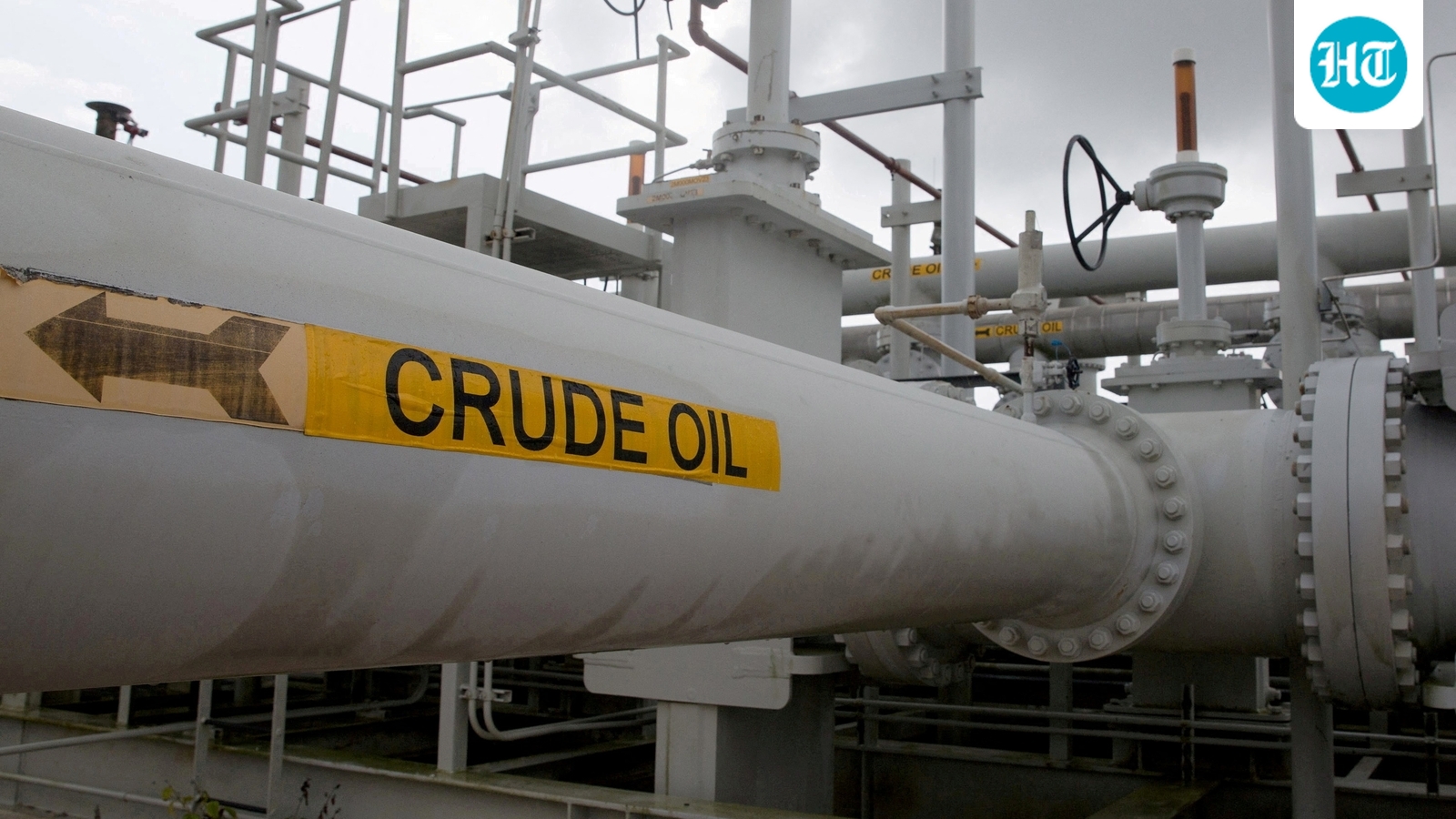
Oil prices rose on Wednesday after attacks on Saudi Arabia’s oil industry and ships near the Strait of Hormuz raised concerns about global oil supplies. The increase came after an attack on the headquarters of Saudi state-owned oil company Saudi Aramco and reports of ships being hit in waters near the important shipping route.
Brent crude prices climbed to $106.60 per barrel. Brent crude futures rose by 91 cents, or 0.9%, to $106.60 per barrel at 1110 GMT on Wednesday. US crude oil prices also increased sharply. West Texas Intermediate (WTI), the US oil benchmark, rose by $1.65, or 1.8%, to $95.79 per barrel. This was its highest level in more than two weeks, according to Reuters.
Attacks on ships near the Strait of Hormuz are adding to fears of oil supply disruptions. The Strait of Hormuz is a key shipping route for global oil supplies. Any disruption in the area could make it harder for oil-producing countries to send crude to international markets.
Military strikes involving Saudi Arabia and the Houthis are also supporting oil prices. Market participants are worried that the fighting could reduce oil exports from the region, said Giovanni Staunovo, an analyst at UBS. However, he added that oil exports had continued so far, Reuters reported.
Iranian officials said the country had started using new tactics to target ships. One Iranian official told Reuters that Iran began using different offensive methods about 10 days ago. The officials did not provide further details about the new strategy.
Also read: US gas prices hit $4.35 as diesel tops $6.27 amid global oil supply fears
Iran’s reported actions have raised questions about efforts to control oil prices. Priyanka Sachdeva, head of market insights at Phillip Nova, said Iran’s open admission of actions that could undermine US efforts to control oil prices showed its intentions behind the so-called peace talks.
Saudi Aramco attack and Houthi strikes
The Iran-allied Houthi group attacked an administrative building belonging to Saudi Aramco in Dhahran, Saudi Arabia. The attack caused a limited fire, according to Saudi Arabia’s energy ministry on Wednesday.
The Houthis have launched missiles and drones at Saudi Arabia over the past week. The attacks are retaliation for Saudi Arabia’s support for Yemeni government forces. Saudi Arabia’s international airport has reportedly been hit four times. One of the strikes, which took place on Saturday, killed 13 people, according to the Reuters report.
The attacks have increased concerns about the safety of energy facilities and transport routes in the Middle East. Continued fighting could threaten oil shipments and create further uncertainty for global energy markets.
Ship attacks near the Strait of Hormuz
A container ship sank after hitting a naval mine in waters south of the Strait of Hormuz. The vessel caught fire after striking the mine, according to a statement from Iran’s Revolutionary Guards Navy shared by Iranian state media on Wednesday.
The sinking followed reports of two other vessels being hit near the Strait of Hormuz. On Tuesday, the United Kingdom Maritime Trade Operations said a container ship and an oil tanker had been struck by unknown projectiles within the strait, Reuters reported.
The latest incidents have increased concerns about shipping through the region. If more vessels are attacked or shipping is disrupted, oil supplies could face additional pressure, supporting prices in international markets.
Russian diesel supplies and oil market outlook
Expected increases in Russian diesel exports could help limit sharp movements in oil prices. Hiroyuki Kikukawa, chief strategist at Nissan Securities Investment, said expectations that higher Russian diesel exports would ease supply pressures were likely to limit major price movements in either direction, Reuters reported.
US President Donald Trump said Russia had agreed to supply diesel to global markets. Trump announced the agreement last Friday. The US administration temporarily eased sanctions on Russian fuel. The move was intended to allow more Russian fuel into global markets, even though the sanctions had been imposed to limit Moscow’s revenue for its war in Ukraine.
Also read: US inflation to hit 3.6% in September? Why CPI data matters for Fed rate decision
Russia increased its crude oil production in September, but output remained below last year’s level. Russian production rose by 65,000 barrels per day to 8.43 million barrels per day. However, production was still 870,000 barrels per day lower than a year earlier, according to the International Energy Agency (IEA) on Wednesday.
The IEA said easing Russian diesel export restrictions may not significantly improve global supplies. A shortage of working refinery capacity in Russia means the change is unlikely to bring a major improvement in the global gasoil market balance, the agency said, according to Reuters.
Diesel supply shortages could continue well into next year. The IEA warned that limited supplies could persist, adding to uncertainty in global fuel markets.
Oil prices remain under pressure from competing supply risks and expectations of higher fuel exports. Attacks on Saudi energy infrastructure, ship strikes near the Strait of Hormuz and concerns about regional oil exports are supporting prices. At the same time, the possibility of increased Russian diesel supplies could limit further price gains.