
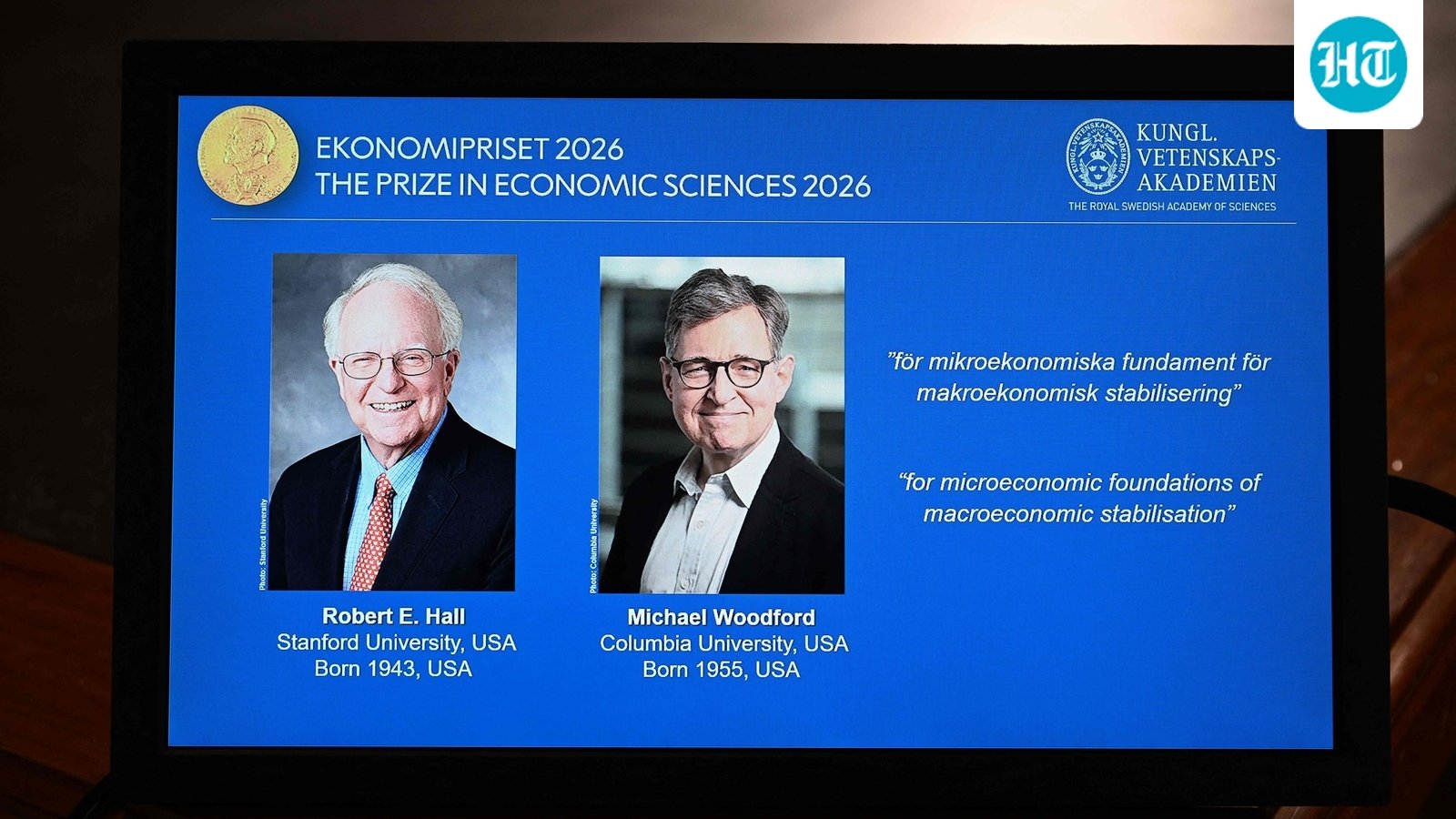
US economists Robert E. Hall and Michael Woodford jointly won the 2026 Nobel Economics Prize on Monday. They were awarded the prize for their research on how governments and central banks can manage changes in the economy.
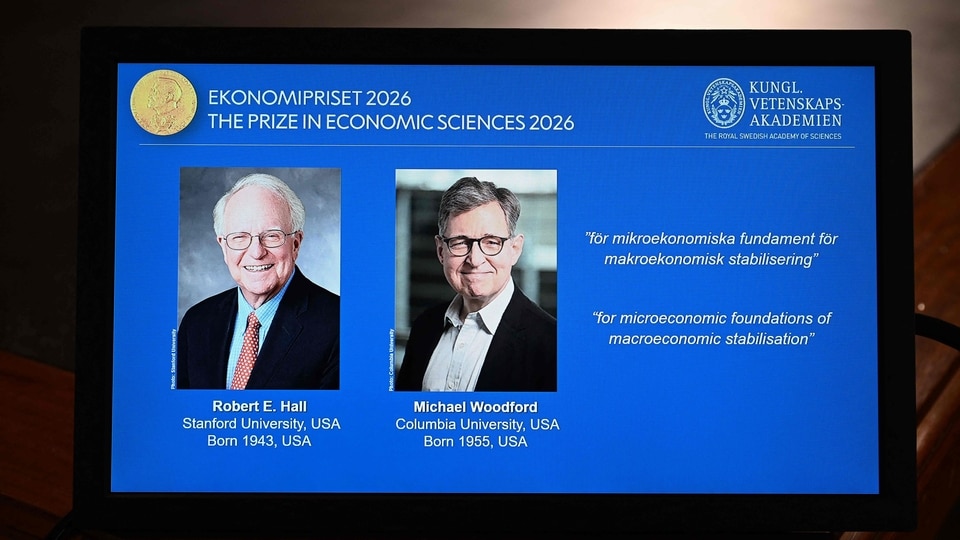
The prize is officially called the Sveriges Riksbank Prize in Economic Sciences in Memory of Alfred Nobel. Their research explains how the financial decisions made by families and businesses can affect the overall economy. It also helps governments and central banks understand how to reduce the effects of economic ups and downs.
Hall and Woodford will share prize money of 12 million Swedish kronor, worth approximately $1.2 million.
Why Hall and Woodford won the Nobel Economics Prize
The Royal Swedish Academy of Sciences said their research significantly improved the ability of governments and central banks to introduce effective policies to stabilise the economy. Their work has provided a strong theoretical foundation for economic models used by policymakers around the world, as reported by Reuters.
How their research helps control economic shocks
Their research helps policymakers understand how changes in household and business behaviour can affect the wider economy. These models can help central banks and governments decide when and how to respond to economic problems using monetary and fiscal policies.
Economic shocks are sudden events that disrupt normal economic activity. These can include energy crises or unexpected changes in how much households spend. Hall and Woodford’s research gives policymakers a stronger basis for understanding such disruptions and deciding how to respond, as quoted by Reuters.
Also read: Who is Anne Carson? Nobel Prize winner’s books, career and writing style explained
How monetary and fiscal policies reduce economic risks
The economy can grow quickly during good times and slow down sharply during difficult times. These changes can affect jobs, spending, production and prices. The academy said that governments and central banks can use economic models to make better decisions and reduce these sudden changes.
Monetary policy means the steps a central bank takes to control interest rates and borrowing. For example, a central bank can change interest rates to influence how much people and businesses borrow and spend. According to Reuters, Hall and Woodford’s research helps explain how these decisions affect the economy.
Fiscal policy means the government’s decisions on spending money and collecting taxes. Governments can use these measures to support economic activity during difficult periods or manage demand when the economy faces excessive pressure. The academy said that well-timed fiscal and monetary measures can help reduce damaging economic fluctuations.
Who are Robert Hall?
Robert Hall is an American economist born in California. He is a professor at Stanford University. His work, alongside Woodford’s, contributed to the economic models that help policymakers understand and respond to changes in economic activity.
Who is Michael Woodford?
Woodford is an American economist born in Massachusetts. He is a professor at Columbia University. He jointly received the 2026 prize with Hall for their research into the economic foundations of stabilisation policies.
How central banks and governments use their research
Their research has helped establish a theoretical foundation for models used by central banks and governments around the world. These models help policymakers examine how economic decisions interact and how policy measures may influence the economy during periods of uncertainty, as quoted by Reuters.
Who won the Nobel Economics Prize before Hall and Woodford?
Most previous winners have been from the United States. Only three women have received the prize, according to Reuters’ report. The most recent woman mentioned in the report was Claudia Goldin, who won in 2023 for her research into how gender has influenced pay and employment over time in the United States.
An analysis by the Institute for Scientific Information, part of Clarivate, had identified researchers working on monetary policy, the economics of information technology and evolutionary economic theory as possible recipients of the 2026 prize.
Joel Mokyr, Philippe Aghion and Peter Howitt won the 2025 prize for their work on “creative destruction.” Their research examined how new technologies and production methods can drive economic growth and improve living standards, according to Reuters.