DNPA Conclave 2026: Why is it still difficult to get Indian users to pay for news? indian news

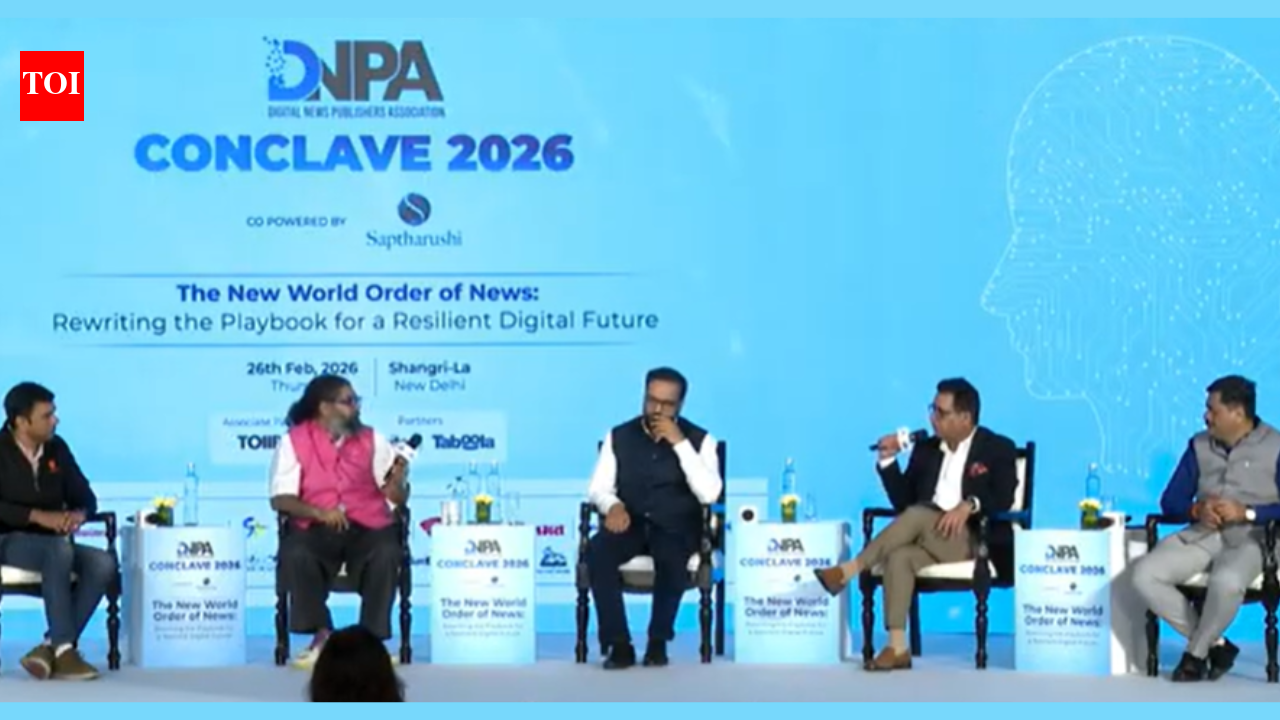
Leaders from media, technology and policy came together on Thursday to chart the future of journalism in a rapidly evolving digital environment at the 2026 DNPA Conclave. Themed “Rewriting the Playbook for a Resilient Digital Future,” the event focused on conversations around trust, innovation, artificial intelligence, regulation and sustainable growth, setting the stage for a deeper debate on the structural challenges facing the industry. In the final panel of the event titled “Making India Pay”, executives from media, technology and consumer platforms came together to confront a sobering reality: While subscriptions are widely seen as one of the industry’s long-term goals, the path to scale remains complicated.Avinash Mudaliar, CEO of OTTPLAY, puts the fight down to a behavioral level. He made a sharp contrast between news and streaming platforms, arguing that the gap lies not in technology but in psychology. “OTT addresses dopamine, news addresses cortisol,” observes Mudaliar, suggesting that entertainment platforms are designed around the reward cycle. “You’re not really hungry for attention; we’re hungry for talent. That was the bus we seemed to be missing. “He noted that OTT platforms simplify sampling for users. “News makes sampling so difficult. If you read two articles, the third one asks you to pay. OTT’s approach is simple – try it for a month, watch multiple episodes and then decide whether to stay.”Mudaliar also pushed back against the idea that video-led news subscriptions can drive growth on their own, citing the ad-supported success of platforms like YouTube. “News OTT won’t work unless you approach it in a different way – focus on the story, not just the information.”Anurag P, Vice President of Product at Swiggy, shared lessons learned from the SwiggyOne subscription model from the perspective of a consumer platform. “We’re not selling free shipping; we’re selling users psychological bandwidth,” he said, emphasizing the importance of reducing user friction.“How do you make the whole process frictionless?” he explained that was his thinking, adding that publishers would also have to identify where friction occurs in journalism, citing examples such as strict paywalls or overwhelming content richness.The panel agreed that subscriptions also need flexibility. Mudaliar emphasizes experimentation with pauses. “We have introduced a pause feature. If you have an annual subscription and want to pause, you can. This is all about being honest with users. “The conversation changed a bit with Neeraj Sharma, managing director at Accenture, who offered a pragmatic view of enterprise-level subscription opportunities. “The simple answer is no,” he said when asked about the viability of B2B news subscriptions in India. “For any business to invest broadly, it needs very unique content or depth. The same news is everywhere.”Sharma believes that in order to build paid communities, publishers must go deeper, not wider. “Build deep content through real-world opportunities and unique conversations—like a community. That’s when subscriptions might sell.”Jaideep Karnik, digital head and editor at Amar Ujala, echoed the sentiment of structural challenges. “Subscriptions really don’t work,” he admits, pointing to the historical economics of news in India.“When people pay for news, only a small portion comes from readers. Most comes from advertisers. We haven’t gotten people used to paying for news.”Kanik highlights behavioral barriers: “Even if a news source is free, people won’t pay. It’s also about habits. That’s not going to change in a day.”As the discussion continued, the panelists outlined what they believe could realistically convince Indian users to open their wallets.Jaideep Karnik highlights that news alone may not be enough to drive payment behavior. “People don’t pay for news, they pay for experience. What are you going to offer? Bundling,” he said, noting that publishers need to rethink value creation.Neeraj Sharma believes it’s depth, not volume, that can unlock the potential of subscriptions. “Depth,” he stressed the importance of specialization, high-value content and community-led products.Avinash Mudaliar emphasizes accessibility as a decisive factor. “Easy to access,” he noted.From a product perspective, Anurag P offers a more personal perspective, pointing to a utility-driven experience that resonates with users. “I’d pay for something that gives me the most important news in three minutes every morning without clutter,” he said, which shows what’s possible with personalization.The discussion ultimately suggests that success may depend less on strict paywalls and more on psychological, personalization and design experiences that users truly value.