
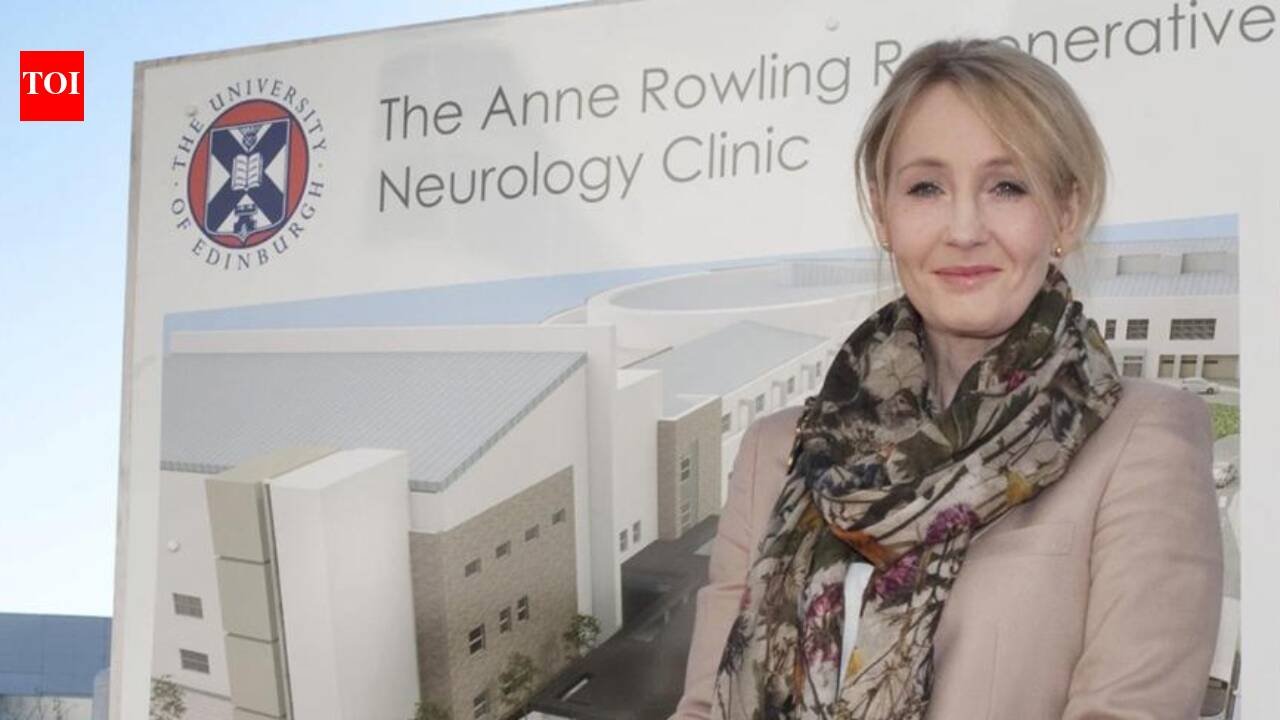
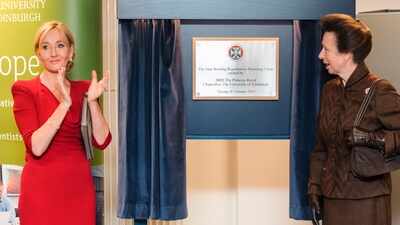
Anne Rowling died of complications from multiple sclerosis in 1990. She was only 45. Her daughter, J.K. Rowlingwas not famous yet, and the Harry Potter books were still years from publication.Anne had suffered from the disease for 15 years before her death. For J.K. Rowling, who was just a teenager at the time, her mother’s death was an ‘enormous shock’, as her mother ‘always seemed very young’. “She was very fit, she was a non-smoker, non-drinker, and I say all of this because of course then for her to be diagnosed at 35 with an illness that would kill her was just the most enormous shock to us and everyone who knew her.”The loss has shaped one of the author’s series’ central themes. In August 2010, when Rowling turned 45 herself, she donated £10 million to the University of Edinburgh in memory of her mother. Today, the Anne Rowling Regenerative Neurology Clinic combines patient care with medical research, treating people with brain conditions including multiple sclerosis, motor neurone disease, Parkinson’s disease and early-onset dementia, while working to develop and trial new treatments for neurological diseases.