
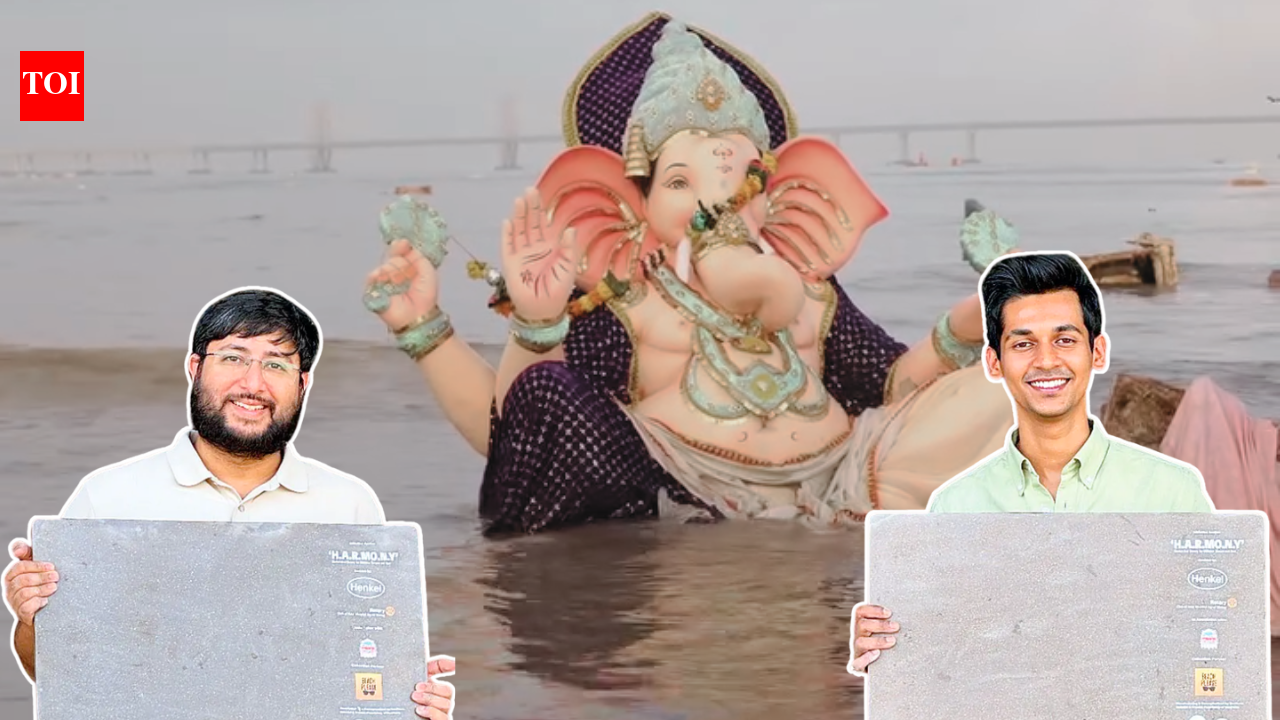
What happens to a Ganesha idol after it is immersed during Ganpati visarjan? In Mumbai and Navi Mumbai, some of the idols are getting a second use as study tables, benches and other products for children. An initiative involving Mumbai environmentalist and Beach Please founder Malhar Kaalambe and Gujarat-based recycling expert Dr Binish Desai is collecting broken and immersed Plaster of Paris (PoP) idols and processing the material into usable products. The initiative is aimed at addressing two problems at the same time: the waste generated by PoP idols after visarjan and the shortage of basic educational infrastructure in some government schools.
From immersed idols to study tables
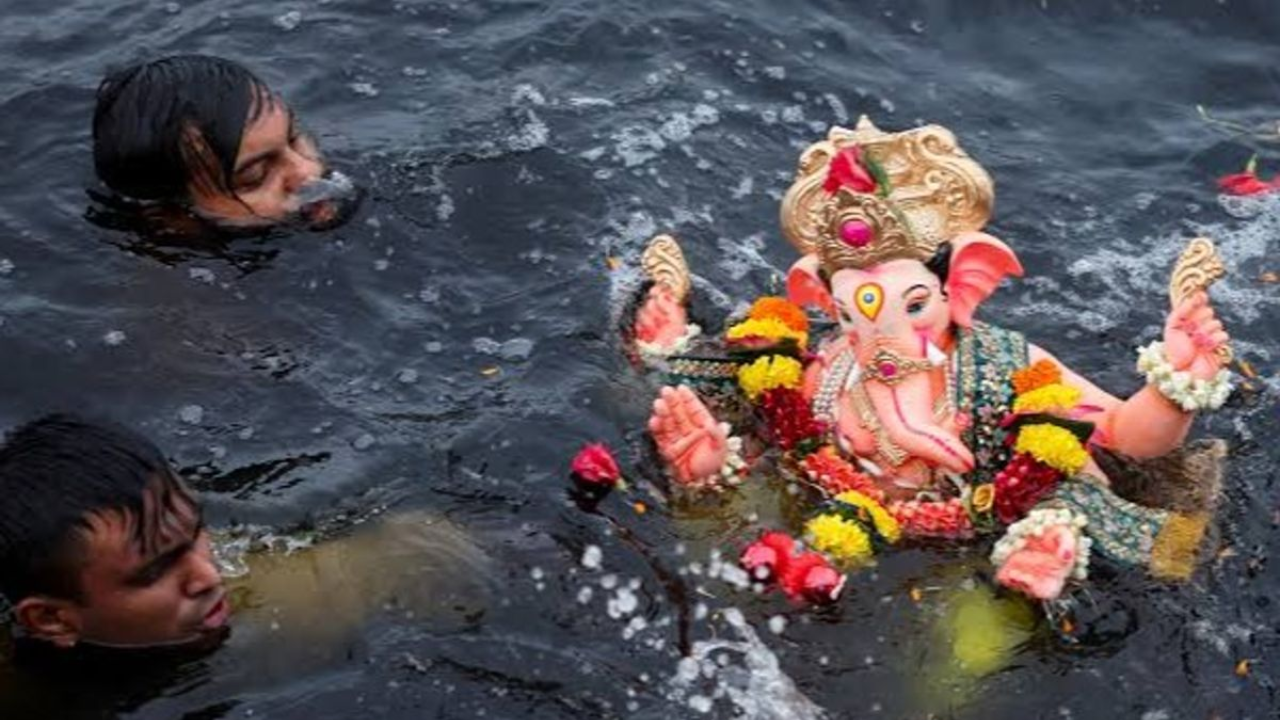
Around 3,000 kg of PoP waste was diverted during the pilot and converted into 760 study tables for economically weaker section students in NMMC schools.
According to Kaalambe and Desai, the circular-economy initiative is called ‘Visarjan Se Vidya Tak.’ The process involves recovering PoP from immersed idols, separating it from other materials and processing it into new products. The finished study tables are intended for government school students. The pilot project was carried out with the Navi Mumbai Municipal Corporation (NMMC), with support from Henkel India’s CSR division and the Rotary Club of Joy of Giving. As reported by Mid-day, around 3,000 kg of PoP waste was diverted during the pilot and converted into 760 study tables for economically weaker section students in NMMC schools. The team collected about 3,500 kg of PoP last year, of which around 3,100 kg was recycled. The material was used to make 700+ study tables, three benches, 500 keychains and more than 200 penholders, according to figures supplied by the team.
What happens to the idol material?
The recycling process does not involve simply crushing an idol and turning it directly into a table. According to Mid-Day, the PoP first has to be separated from paint, metal, cloth and other contaminants. Desai said metals are completely removed because the final products are intended for children. Paint is also removed before the material enters the recycling process. Desai told Mid-Day that for a typical 3-4 kg medium-sized idol, around 96% of the material can be recovered. The recovered material is then processed using the MurtiCycle technology developed by Pushpam.The proposed process involves recovering the PoP remnants after immersion, transporting them to a material recovery facility for drying and filtration, and then sending the refined material to a manufacturing facility in Valsad, Gujarat. There, it is made into water-resistant classroom study tables.
The project began with a small test
5,000 study tables planned for 2026
The initiative is looking to expand this year. The team already has commitments for 5,000 study tables in 2026. The products are not limited to tables. The initiative has also produced benches, keychains and penholders from the recovered material. The initiative offers one route for dealing with the large quantity of PoP generated during Ganpati visarjan, but processing the material at scale remains difficult. For now, the work by Kaalambe and Desai is creating a direct link between recovered idol material and products that can be used by children. A Ganesha idol that once stood in a home or pandal can, after visarjan and several stages of processing, return in a very different form such as a table where a child can sit and study.