
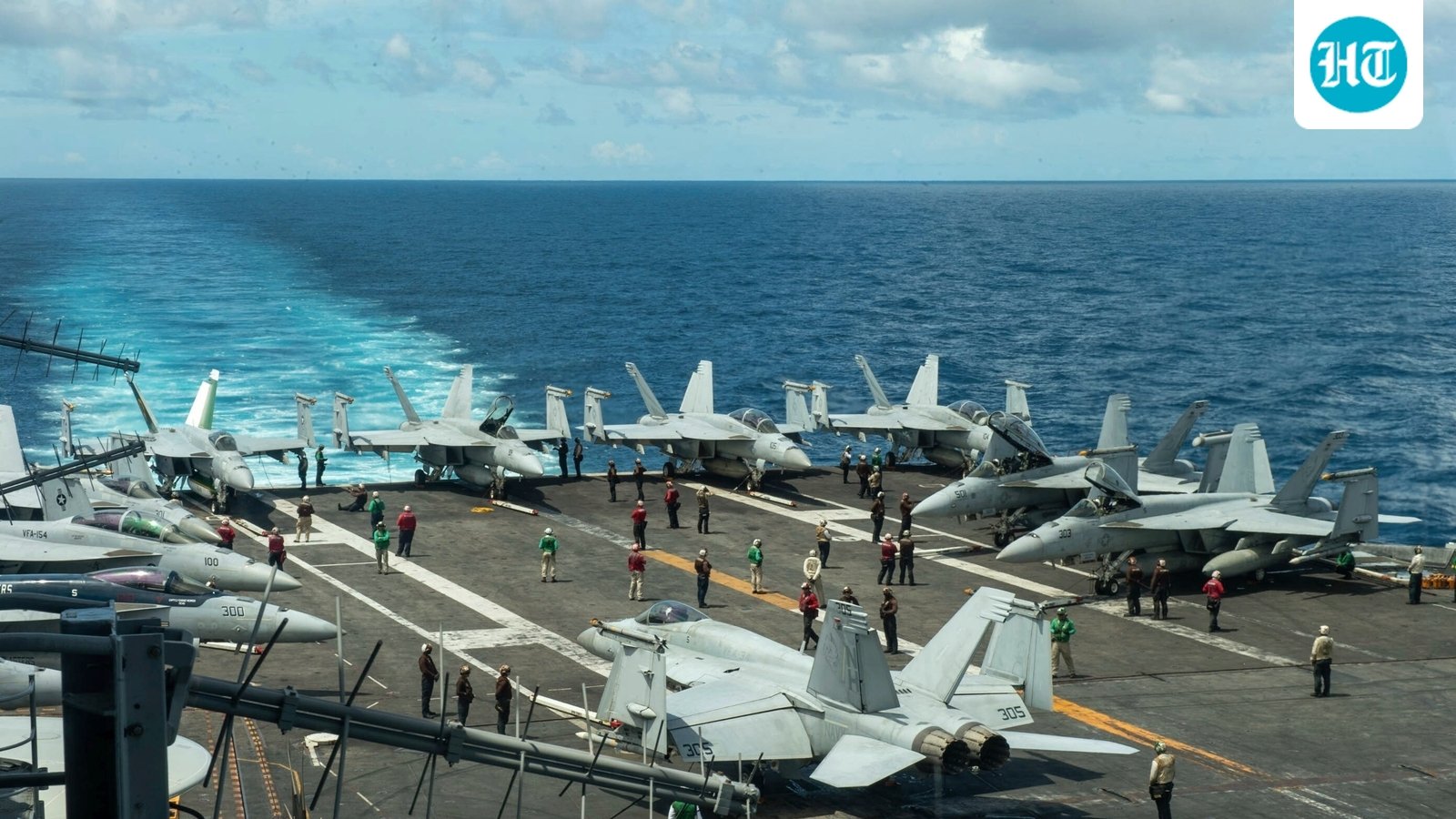
The United States is sending its third aircraft carrier, USS Theodore Roosevelt and its strike group, to the Middle East where two other US carrier strike groups are already deployed, the Axios reported.
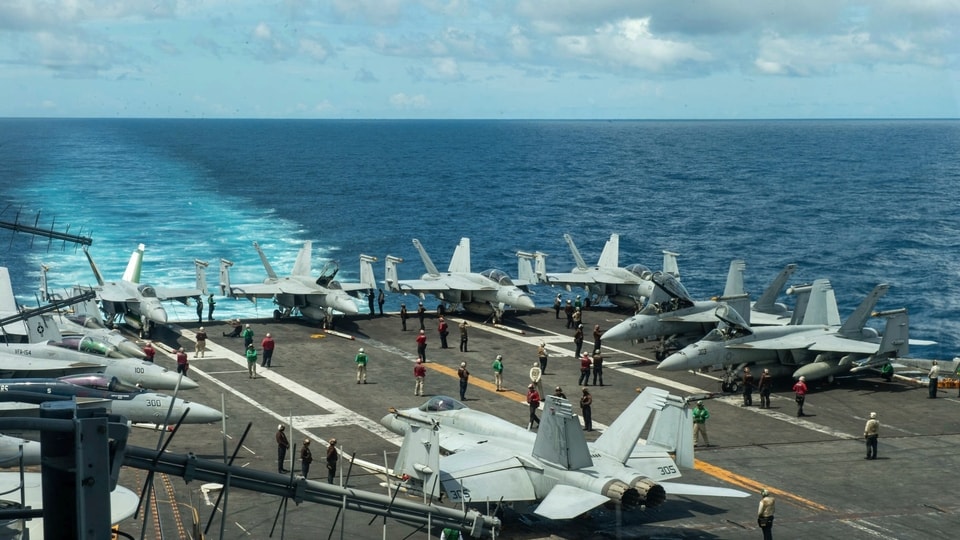
The USS Theodore Roosevelt and its strike group reportedly departed from San Diego on Sunday and is expected to reach Middle East by mid-November, a US official was quoted as saying. USS George HW Bush has been in the region since March, while USS George Washington was sent from Japan nearly a month ago.
“This means the Middle East region could potentially have up to three aircraft carrier strike groups. This is much more firepower,” the US official was quoted as saying.
However, the report quoted another US official saying that it hasn’t been determined whether the Roosevelt will replace one of the aircraft carriers currently deployed to the Middle East or whether it will be additional.
Trump’s ‘ramped’ up’ bombing warning
The third aircraft carrier’s departure for the Middle East is a significant development, particularly after US President Donald Trump said that bombing in the region could renew after the mid-term elections in November.
In an interview with the Times magazine, Trump said that ramped up military strikes against Iran after the November midterm elections were a possibility. He has lately indicated that he believed Iran was stalling on diplomatic talks until after the elections.
Asked if he would resume bombing Iran after the midterms, Trump told Time magazine in an interview published Thursday that it was “possible.”
“I can’t tell you that because look, you know, you’re asking, where are you going to bomb,” he was quoted as saying.
Trump also warned that Iran will be “hit very hard” if it is found to be linked to a pilot’s attack on a flydubai flight to Israel, AFP reported. The dramatic events saw passengers help stop the plane from crashing, making an emergency landing in Saudi Arabia before the flight’s mostly Israeli passengers were flown home to a hero’s welcome.
On whether the United States would retaliate against Iran if it was found responsible, Trump replied: “Oh, they’ll be hit very hard, don’t worry.”
Peace deal stalemate
A stalemate looms over a possible peace deal between the US and Iran as both sides are presenting different views on the proposal sent by Tehran to Washington. While Trump publicly rejected the proposal, Tehran says it has received a response from the US, which it is currently reviewing.
Four days ago, in an interview with Axios, Trump said he was open to talks with Iran, a day after rejecting the proposal. He said he remained open to negotiations with Tehran.
In New York, on the sidelines of the 81st UN General Assembly session, Araghchi and the Iranian delegation reportedly held indirect talks with US officials, with Qatar and Pakistan acting as mediators. During the meeting, Araghchi reportedly conveyed Iran’s conditions for reopening the Strait of Hormuz, but the negotiations did not yield any concrete results.